
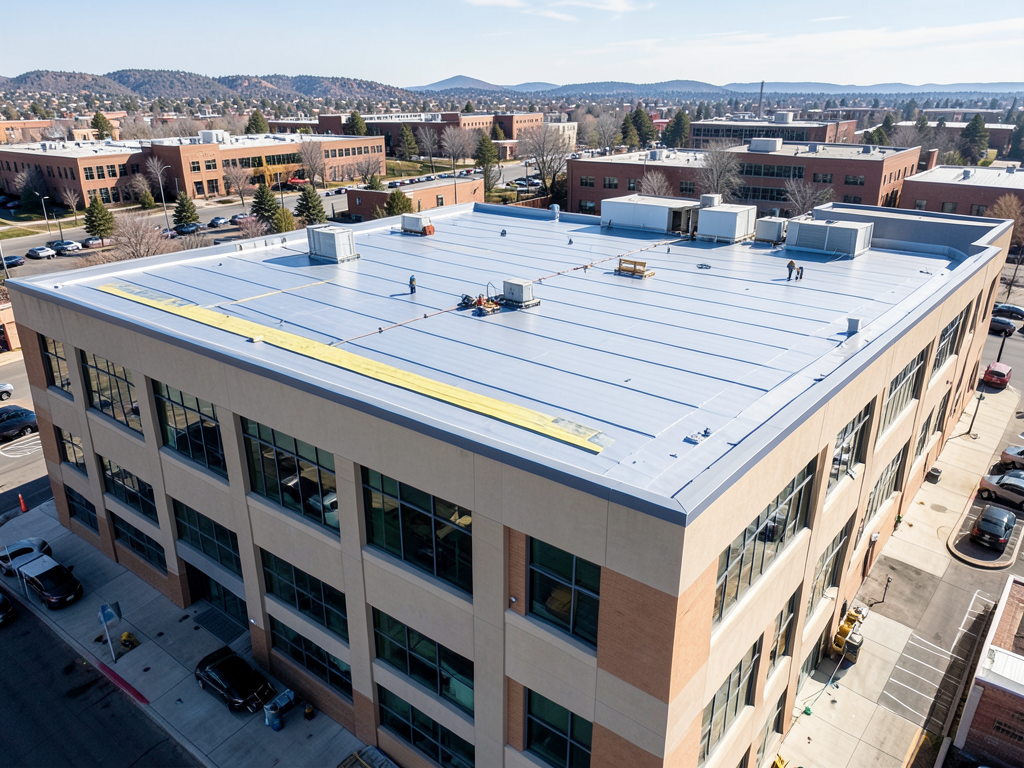
Understanding the Denver Green Building Ordinance for Commercial Roof Replacements
Commercial property owners in Denver face specific requirements when replacing roofs on buildings over 25,000 square feet. The Denver Green Building Ordinance creates clear paths for compliance that affect your project timeline, material selection, and budget. Understanding these requirements before you start saves you from costly delays and rework. Denver Community Planning and Development.
Does the Denver Green Building Ordinance Apply to Your Roof?
The ordinance applies to new construction and existing buildings undergoing roof replacement. Your building must meet one of five compliance paths to receive a permit from Denver Community Planning and Development. How Much a Full Roof Replacement Actually Costs in Denver Right Now.
The 25,000 Square Foot Threshold
The ordinance triggers when your building has a roof area exceeding 25,000 square feet. This measurement includes the entire roof surface, not just the replacement section. For buildings with multiple structures, the threshold applies to each individual building. Industrial Roof Replacement.
New Construction vs. Existing Building Roof Replacements
New construction projects must comply from the start. Existing buildings undergoing roof replacement have more flexibility but still must meet one compliance path. The key difference: new construction cannot use certain exemptions available to existing buildings.
Exemptions and Specific Use Cases
Some buildings qualify for exemptions. Historic structures, single-family homes, and buildings under 25,000 square feet are exempt. Agricultural buildings and temporary structures also qualify for exemptions. However, once you exceed the threshold, compliance becomes mandatory.
The Five Compliance Paths for Denver Roofing Projects
Denver offers five ways to meet the Green Building Ordinance requirements. Each path has different costs, benefits, and implementation requirements.
1. Cool Roof Requirement (The Default Standard)
The cool roof path requires installing materials with high solar reflectance. These materials reflect sunlight rather than absorbing heat, reducing urban heat island effects. This is often the most cost-effective compliance path for existing buildings. Cool Roof Rating Council.
2. Solar Energy Installation
Installing photovoltaic panels generates renewable energy and meets compliance requirements. This path requires structural evaluation to ensure your roof can support the additional weight. Xcel Energy offers interconnection services for grid-tied systems.. Read more about What Happens to Your Solar Panels When It Is Time for a New Roof in Central Park?.
3. Vegetated (Green) Roof Space
Green roofs provide insulation, manage stormwater, and create habitat. This path requires structural engineering to verify load-bearing capacity. The Denver Botanic Gardens offers resources on plant selection for our climate.
4. Energy Efficiency Program Enrollment
Enrolling in programs like Xcel Energy’s commercial efficiency initiatives can satisfy compliance. This path often works well for buildings already pursuing energy upgrades.
5. LEED Gold or Equivalent Certification
Achieving LEED Gold certification demonstrates comprehensive sustainability. This path requires documentation and third-party verification but provides the most comprehensive environmental benefits.
Technical Requirements: Solar Reflectance Index (SRI) Values
The cool roof compliance path requires specific Solar Reflectance Index values. These numbers measure how well materials reflect solar heat.
Low-slope roof SRI requirements (Initial vs. 3-year aged)
Low-slope roofs need an initial SRI of 78 and must maintain at least 64 after three years of weathering. This ensures long-term performance in Denver’s intense UV environment.
Steep-slope roof SRI requirements
Steep-slope roofs require an initial SRI of 29 and must maintain at least 20 after three years. These lower values reflect the different heat absorption patterns on sloped surfaces.
Material-specific standards (TPO, PVC, EPDM, Metal)
Different materials achieve compliance through various means. White TPO membranes typically achieve the highest SRI values. Some EPDM products use special coatings to meet requirements. Metal roofs need specific paint formulations or additional coatings.
The Permitting Process with Denver Community Planning and Development (CPD)
Denver Community Planning and Development manages the permitting process. Understanding their requirements prevents project delays.
Step-by-Step Permit Application
First, determine your compliance path and gather required documentation. Next, submit your application through Denver’s online portal. The review process typically takes 2-4 weeks. Once approved, you can schedule inspections throughout construction.
Required Documentation
Permit applications need detailed roof plans, material specifications showing SRI values, and proof of compliance with one of the five paths. For solar installations, you need electrical diagrams and structural calculations.. Read more about Can You Actually Install a Living Green Roof on a Home in RiNo?.
Common Approval Delays
Missing SRI documentation causes the most frequent delays. Incomplete structural calculations for green roofs or solar installations also slow approvals. Starting the permitting process early prevents timeline issues.
Local Case Study: Navigating GBO in Downtown Denver
A recent project in the Golden Triangle neighborhood demonstrates practical compliance. The 35,000 square foot office building chose the cool roof path to minimize costs while meeting requirements.
The property manager selected a white TPO membrane with an initial SRI of 85. This exceeded the minimum requirement and provided additional energy savings. The installation included enhanced insulation to improve overall building performance.
The permitting process took three weeks due to initial documentation gaps. Once corrected, the project proceeded smoothly. The building now meets all ordinance requirements while reducing cooling costs by approximately 15%.
Cost-Benefit Analysis of Compliance Paths
Each compliance path carries different costs and benefits. Understanding these trade-offs helps you make informed decisions.
Cool Roof vs. Solar vs. Green Space
Cool roofs typically cost 5-10% more than standard materials but offer immediate energy savings. Solar installations require larger upfront investments but generate long-term energy credits. Green roofs have the highest initial costs but provide stormwater management and aesthetic benefits.
Long-term ROI Considerations
Cool roofs reduce cooling costs and extend roof life by reducing thermal stress. Solar installations generate electricity and may qualify for tax incentives. Green roofs can increase property values and provide marketing benefits for environmentally conscious tenants.
Maintenance Requirements
Cool roofs need regular cleaning to maintain SRI values. Solar panels require occasional cleaning and inspection. Green roofs need irrigation systems, plant maintenance, and structural monitoring.
Material Selection Guide for Denver Compliance
Choosing the right materials ensures compliance while maximizing performance in Denver’s climate.
Top Performing Materials
White TPO membranes consistently achieve the highest SRI values and perform well in our UV-intensive climate. PVC membranes offer similar performance with enhanced chemical resistance. Some specialized coatings can improve existing roof performance.
Climate Considerations
Denver’s high altitude increases UV exposure by approximately 25% compared to sea level. This accelerates material degradation but also makes high-SRI materials more effective at reducing heat gain.
Installation Best Practices
Proper installation ensures long-term compliance. Seams must be welded correctly to prevent moisture infiltration. Flashing details need special attention in our freeze-thaw climate. Ventilation requirements increase at our elevation.
Frequently Asked Questions
What happens if I don’t comply with the ordinance?
Denver can deny your permit application and may issue fines for non-compliance. You cannot legally complete your roof replacement without meeting one compliance path.
How long does the permitting process take?
Standard review takes 2-4 weeks. Complex projects or incomplete applications can extend this timeline significantly.
Can I switch compliance paths mid-project?
Switching paths requires new permit approval and may cause delays. It’s best to finalize your compliance path before starting.
Do smaller buildings need to comply?
Buildings under 25,000 square feet are exempt from the ordinance requirements.
Where can I find the official requirements?
The Denver Community Planning and Development website provides current ordinance details and permit applications.
You may also find this helpful. Everything You Need to Know About Internal Roof Drains for RiNo Warehouses.
You may also find this helpful. Evaluating if Your RiNo Townhome Roof Can Actually Support a Heavy Container Garden.
{
“@context”: “https://schema.org”,
“@type”: “BlogPosting”,
“headline”: “Understanding the Denver Green Building Ordinance for Commercial Roof Replacements”,
“description”: “Learn how Denver’s Green Building Ordinance impacts commercial roof replacements. Understand compliance paths, SRI requirements, and permitting with local expertise.”,
“wordCount”: 1183,
“datePublished”: “2026-06-03T12:51:00.000Z”,
“dateModified”: “2026-06-03T12:51:00.000Z”,
“inLanguage”: “en-US”,
“mainEntityOfPage”: {
“@type”: “WebPage”,
“@id”: “https://apexroofingdenver.com”
},
“publisher”: {
“@type”: “LocalBusiness”,
“name”: “Apex Roofing Denver”,
“url”: “https://apexroofingdenver.com”
},
“author”: {
“@type”: “Organization”,
“name”: “Apex Roofing Denver”,
“url”: “https://apexroofingdenver.com”
},
“image”: {
“@type”: “ImageObject”,
“url”: “https://apexroofingdenver.com/wp-content/uploads/2026/03/understanding-the-denver-green-building-ordinance-1.png”
}
}
{
“@context”: “https://schema.org”,
“@type”: “RoofingContractor”,
“name”: “Apex Roofing Denver”,
“url”: “https://apexroofingdenver.com”,
“address”: {
“@type”: “PostalAddress”,
“addressLocality”: “Denver”
},
“areaServed”: {
“@type”: “City”,
“name”: “Denver”
}
}
{
“@context”: “https://schema.org”,
“@type”: “FAQPage”,
“mainEntity”: [
{
“@type”: “Question”,
“name”: “Does the Denver Green Building Ordinance Apply to Your Roof?”,
“acceptedAnswer”: {
“@type”: “Answer”,
“text”: “The ordinance applies to new construction and existing buildings undergoing roof replacement. Your building must meet one of five compliance paths to receive a permit from Denver Community Planning and Development. How Much a Full Roof Replacement Actually Costs in Denver Right Now.”
}
},
{
“@type”: “Question”,
“name”: “What happens if I don’t comply with the ordinance?”,
“acceptedAnswer”: {
“@type”: “Answer”,
“text”: “Denver can deny your permit application and may issue fines for non-compliance. You cannot legally complete your roof replacement without meeting one compliance path.”
}
},
{
“@type”: “Question”,
“name”: “How long does the permitting process take?”,
“acceptedAnswer”: {
“@type”: “Answer”,
“text”: “Standard review takes 2-4 weeks. Complex projects or incomplete applications can extend this timeline significantly.”
}
},
{
“@type”: “Question”,
“name”: “Can I switch compliance paths mid-project?”,
“acceptedAnswer”: {
“@type”: “Answer”,
“text”: “Switching paths requires new permit approval and may cause delays. It’s best to finalize your compliance path before starting.”
}
},
{
“@type”: “Question”,
“name”: “Do smaller buildings need to comply?”,
“acceptedAnswer”: {
“@type”: “Answer”,
“text”: “Buildings under 25,000 square feet are exempt from the ordinance requirements.”
}
},
{
“@type”: “Question”,
“name”: “Where can I find the official requirements?”,
“acceptedAnswer”: {
“@type”: “Answer”,
“text”: “The Denver Community Planning and Development website provides current ordinance details and permit applications.”
}
}
]
}
{
“@context”: “https://schema.org”,
“@type”: “BreadcrumbList”,
“itemListElement”: [
{
“@type”: “ListItem”,
“position”: 1,
“name”: “Home”,
“item”: “https://apexroofingdenver.com”
},
{
“@type”: “ListItem”,
“position”: 2,
“name”: “Blog”,
“item”: “https://apexroofingdenver.com/blog”
},
{
“@type”: “ListItem”,
“position”: 3,
“name”: “Understanding the Denver Green Building Ordinance for Commercial Roof Replacements”
}
]
}
{
“@context”: “https://schema.org”,
“@type”: “Service”,
“serviceType”: “Roofing”,
“provider”: {
“@type”: “LocalBusiness”,
“name”: “Apex Roofing Denver”,
“url”: “https://apexroofingdenver.com”
},
“areaServed”: {
“@type”: “City”,
“name”: “Denver”
},
“description”: “Learn how Denver’s Green Building Ordinance impacts commercial roof replacements. Understand compliance paths, SRI requirements, and permitting with local expertise.”
}