





Menu

TPO Roofing Installation in Denver – Minimize Downtime and Maximize Asset Protection for Your Commercial Property

Apex Roofing Denver delivers industrial-grade single-ply TPO roofing systems engineered for Colorado's extreme temperature swings, UV exposure, and rapid project timelines that keep your business operational.

Slider Image 1
Slider Image 2
Slider Image 3
Slider Image 4
Slider Image 5
Slider Image 7
Slider Image 8
Slider Image 9
Slider Image 10
Slider Image 11

Why Commercial TPO Roofing Installation Demands Precision in Denver's High-Altitude Climate

Denver sits at 5,280 feet, where UV radiation is 25% stronger than at sea level. This accelerates membrane degradation on flat and low-slope commercial roofs. Your existing built-up roof or modified bitumen system may be cracking, ponding water, or failing at the seams, which translates to inventory damage, HVAC inefficiency, and potential business interruption.

Thermoplastic Polyolefin installation solves this. TPO membrane roofing is heat-welded, not glued, which creates a monolithic barrier that withstands Denver's 60-degree temperature swings between day and night. Unlike EPDM or PVC, TPO reflects sunlight, reducing cooling loads by up to 30% in summer months when Denver sees 15+ days above 90 degrees.

Commercial TPO roof systems are the default for warehouses, retail centers, and multi-tenant buildings across the Front Range because they meet IBC and IRC wind uplift requirements for Denver's 90 mph gust zones. Single-ply TPO roofing also accommodates HVAC retrofits and rooftop equipment without compromising the seal.

If your facility is experiencing leaks near HVAC curbs, at parapet walls, or around penetrations, the issue is typically flashing failure or improper membrane attachment. TPO flat roof installation corrects these failure points with mechanically fastened or fully adhered systems that distribute wind load and prevent blow-offs during Colorado's spring Chinook wind events.

You need a roof that protects assets, maintains energy efficiency, and complies with Denver's commercial building codes. That requires precision during substrate prep, membrane selection, and seam welding.

Why Commercial TPO Roofing Installation Demands Precision in Denver's High-Altitude Climate
How Apex Roofing Denver Executes Commercial TPO Roof Systems for Long-Term Performance

How Apex Roofing Denver Executes Commercial TPO Roof Systems for Long-Term Performance

We do not install TPO membrane roofing over compromised decking. Our process starts with infrared moisture scanning to identify saturated insulation or decking rot. If your roof has ponding water or deflection, we address structural issues before membrane installation. This prevents callback warranties and ensures the new system performs for 20+ years.

Substrate preparation includes power washing, mechanical fastening of ISO boards, and tapered insulation design to eliminate standing water. Denver's freeze-thaw cycles cause ice damming at roof edges, so we install two-ply edge details and mechanically fasten perimeter rows at 6-inch spacing to meet wind uplift requirements.

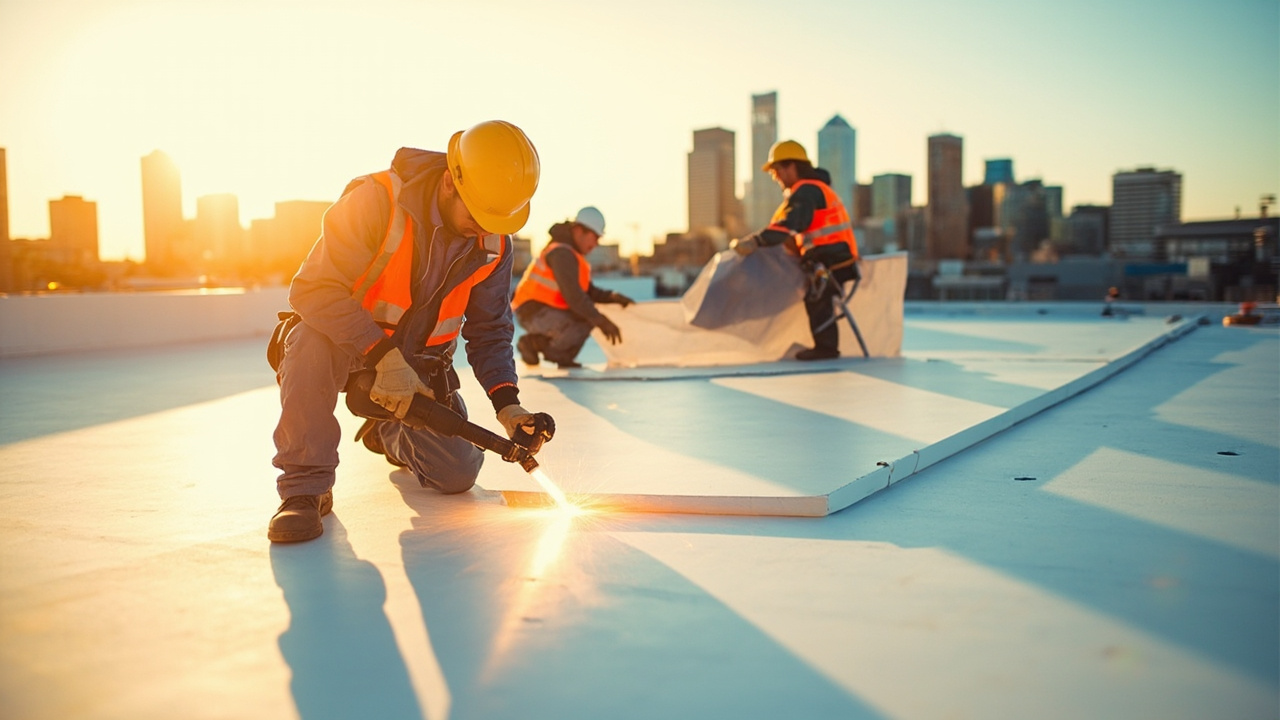
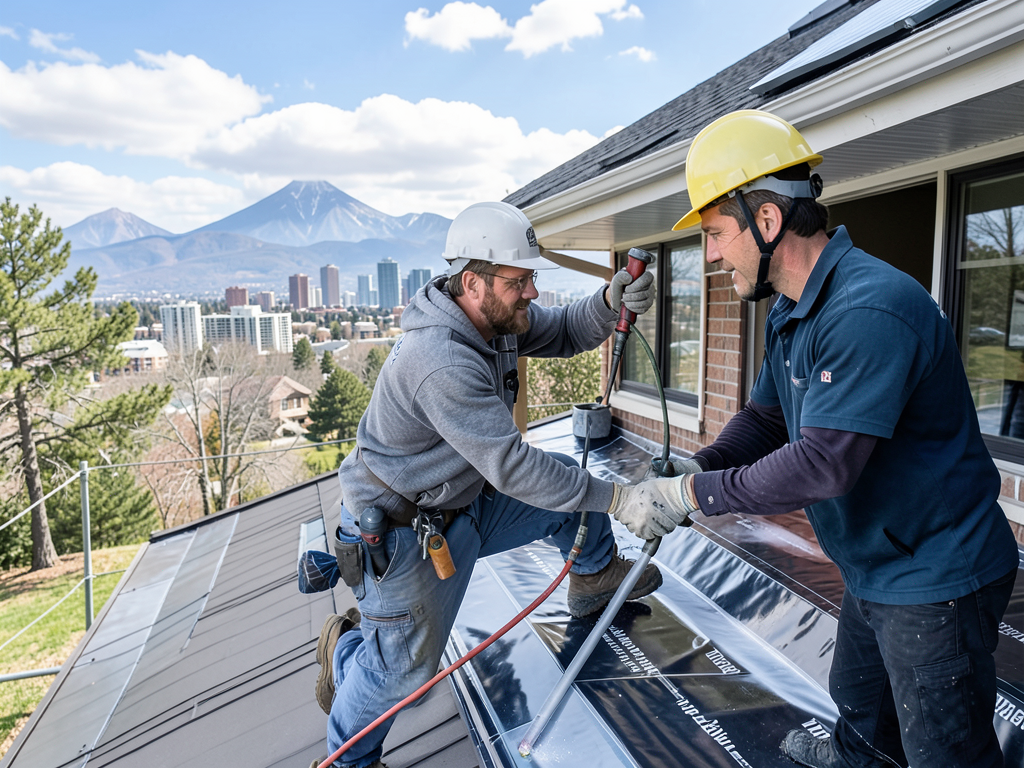
Thermoplastic Polyolefin installation uses hot-air welding at 900+ degrees Fahrenheit to fuse seams. We pull-test every seam to verify a minimum 8-pound peel strength per ASTM D6214 standards. This is critical in Denver's high-wind environment where improperly bonded seams delaminate during spring storms.

Flashing details at HVAC curbs, vents, and parapet walls use prefabricated TPO accessories, not field-fabricated patches. We install walkway pads at high-traffic areas to prevent membrane punctures from maintenance crews accessing rooftop units. All penetrations receive termination bars and sealant per manufacturer specs to maintain system warranties.

We work during overnight or weekend shifts to avoid disrupting your operations. For retail and cold storage facilities, this prevents interior temperature fluctuations that affect product integrity. Our crews coordinate with your facility manager to stage materials, control dust, and maintain site safety protocols that meet OSHA requirements for commercial job sites.

What to Expect During Your Commercial TPO Membrane Installation

TPO Roofing Installation in Denver – Minimize Downtime and Maximize Asset Protection for Your Commercial Property
01

Pre-Installation Roof Assessment

We conduct a structural load analysis and infrared scan to map moisture in the existing roof assembly. This identifies saturated insulation, failed flashings, and deck deflection. You receive a detailed report with photos, thermal imaging results, and a scope of work that addresses structural repairs before membrane installation. This prevents change orders and ensures your new single-ply TPO roofing system installs over a dry, stable substrate that meets Denver building codes.
02

Membrane Installation and Welding

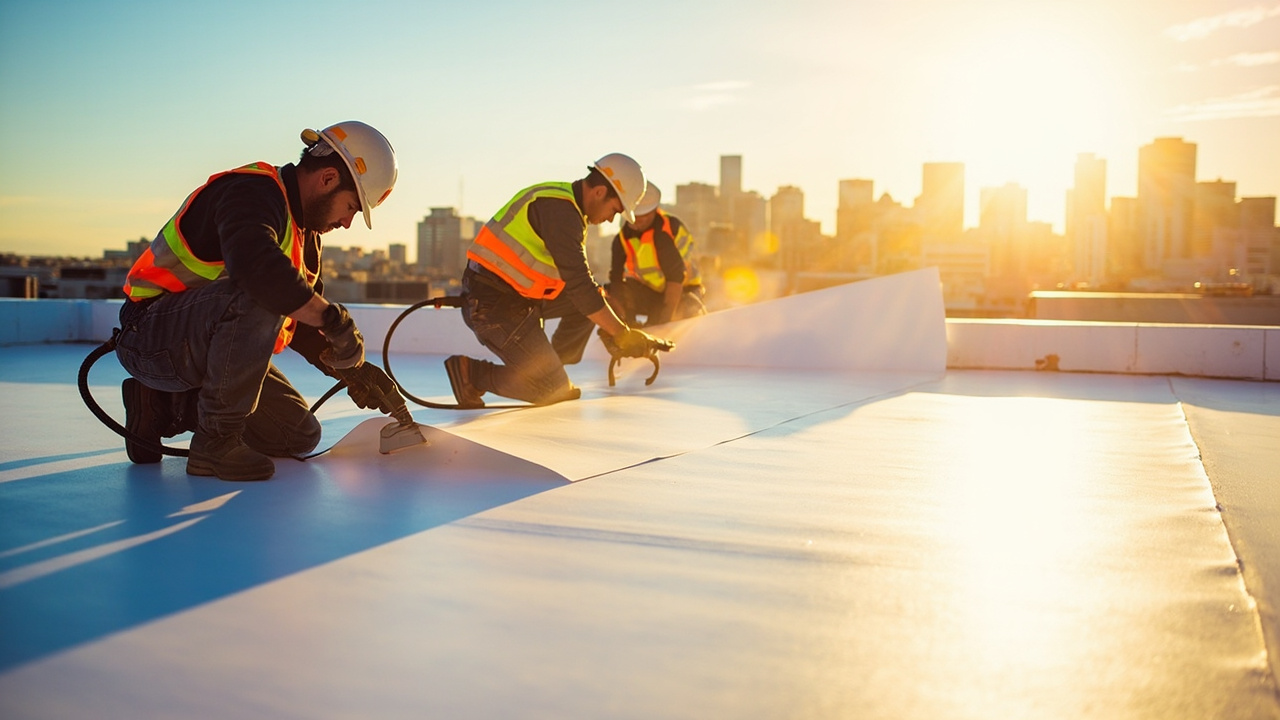
Our crews mechanically fasten or fully adhere TPO sheets, then hot-air weld all seams at controlled temperatures. We pull-test seams every 50 feet to verify bond strength exceeds manufacturer minimums. All penetrations receive prefabricated boots and termination bars. Roof edges get two-ply reinforcement to resist Denver's wind uplift forces. We install walkway pads and pipe collars to protect high-traffic areas from punctures during future HVAC maintenance or equipment replacements.
03

Final Inspection and Documentation

After installation, we flood-test all roof drains, inspect flashings, and document seam welds with photos. You receive as-built drawings, warranty registration, and a maintenance protocol for your facilities team. We schedule a walkthrough with your property manager to review access points, drain maintenance, and HVAC equipment placement. This documentation is required for Denver building permit closeouts and ensures your TPO flat roof installation qualifies for manufacturer warranties that protect your investment.

Why Denver Facility Managers Choose Apex Roofing Denver for Commercial TPO Projects

You need a contractor who understands Denver's commercial building codes, high-altitude weather patterns, and the operational realities of keeping a business running during a roof replacement. We have installed commercial TPO roof systems on warehouses in Commerce City, retail centers along the I-25 corridor, and multi-family properties in Stapleton.

Denver requires commercial reroofing permits that include structural calculations, energy compliance forms, and contractor licensing verification. We handle permit submissions, coordinate with city inspectors, and ensure your project meets Title 24 energy standards for cool roof reflectivity. This prevents project delays and compliance issues that can halt operations.

Our crews are OSHA-30 certified and trained in fall protection for commercial job sites. We use edge protection systems, monitor weather conditions, and coordinate deliveries to avoid disrupting parking or loading docks. For occupied buildings, we install dust barriers, control noise during business hours, and provide daily progress updates to your facilities team.

We source TPO membrane roofing from manufacturers with regional distribution in Denver, which reduces lead times and ensures material availability for large-scale projects. Our relationships with suppliers mean you get bulk pricing on materials without sacrificing quality or warranty coverage.

Apex Roofing Denver carries commercial general liability coverage and workers' compensation that meets Denver's contractor requirements. You receive certificates of insurance before work begins, which protects your business from liability during the installation process. We also provide lien waivers and payment bonds for projects that require financial documentation for property ownership transfers or refinancing.

What Your Commercial TPO Roofing Installation Includes

Project Timeline and Scheduling

Most commercial TPO installations complete in 5 to 14 days, depending on roof size, structural repairs, and weather windows. We schedule work during off-hours to minimize disruption to your operations. For retail or hospitality properties, we coordinate with your management team to avoid peak business periods. Our project manager provides a detailed timeline before work begins, including material delivery dates, crew schedules, and inspection milestones. If Denver weather delays the project, we adjust schedules and communicate changes immediately to avoid surprises.

Initial Roof Evaluation Process

We start with a site visit to assess roof access, measure square footage, and identify structural concerns. Our evaluation includes core samples to test insulation condition, deck integrity checks, and drainage analysis. You receive a written proposal that breaks down material costs, labor, and any structural repairs needed before membrane installation. We also provide energy savings projections based on TPO reflectivity compared to your existing roof. This data helps you justify the investment to ownership or board members who need ROI documentation.

Quality Control and Performance Standards

Every seam gets pull-tested to verify bond strength. We document all welds with photos and maintain a project log that tracks weather conditions, material batches, and crew assignments. Your final inspection includes a drone survey that captures the entire roof surface, flashings, and penetrations. This documentation becomes part of your building records and proves compliance with manufacturer installation standards. We guarantee all workmanship for two years and provide emergency contact numbers for your facilities team if issues arise after project completion.

Warranty Coverage and Maintenance Plans

TPO manufacturers offer material warranties ranging from 10 to 30 years, depending on membrane thickness and installation method. We register your warranty directly with the manufacturer and provide copies of all documentation. Apex Roofing Denver also offers maintenance agreements that include biannual inspections, drain cleaning, and minor repairs. These plans extend roof life and prevent small issues from becoming expensive failures. Scheduled maintenance also preserves warranty coverage, which often requires annual inspections to remain valid. We track maintenance dates and send reminders to your facilities team.

Frequently Asked Questions

You Have Questions,
We Have Answers

What are the disadvantages of TPO roofing? +

TPO roofing has several disadvantages you should weigh before committing. Seam failure is the primary concern. TPO seams are heat-welded, and poor installation leads to leaks. Material inconsistency is another issue. TPO formulations vary by manufacturer, making quality unpredictable. Denver's intense UV exposure and temperature swings can degrade lower-grade TPO membranes faster than expected. Puncture resistance is weaker compared to other commercial membranes. TPO also lacks a long track record compared to EPDM or built-up roofing systems. If you prioritize upfront cost savings, TPO works. If you need proven longevity for a high-value commercial property, consider alternatives or invest in premium-grade TPO with certified installers.

What goes under a TPO roof? +

A proper TPO roof assembly starts with the structural deck, typically corrugated metal or plywood on commercial buildings in Denver. Next is a layer of insulation, usually polyisocyanurate or expanded polystyrene, which provides thermal resistance and creates the necessary slope for drainage. A cover board goes over the insulation to protect it from punctures and distribute load. Then comes the TPO membrane itself. Some installations include a vapor barrier beneath the insulation to prevent moisture intrusion from the interior. The specific layering depends on building code requirements, existing roof structure, and your energy efficiency goals. Skipping insulation or cover board to save money compromises roof performance and lifespan.

Should TPO roofing be glued down? +

TPO roofing can be mechanically attached, fully adhered with adhesive, or ballasted. Gluing down TPO with adhesive offers superior wind uplift resistance, which matters in Denver where high winds are common along the Front Range. Fully adhered systems also reduce membrane movement and stress on seams. However, adhesive application requires dry conditions and precise temperature control during installation. Mechanical attachment is faster and more forgiving in cooler weather. The choice depends on your building's wind zone rating, roof access limitations, and budget. For high-rise commercial buildings or properties in exposed areas, fully adhered TPO provides the most reliable performance and minimizes liability from blow-offs.

Can you put TPO directly over plywood? +

You can install TPO directly over plywood if the substrate is sound, dry, and code-compliant, but it is rarely advisable for commercial applications. Plywood lacks the dimensional stability of concrete or metal decking. Denver's freeze-thaw cycles and moisture fluctuations cause plywood to expand and contract, stressing TPO seams and fasteners. Direct application also sacrifices insulation, reducing energy efficiency and failing to meet commercial building codes in most cases. A better approach is to install rigid insulation and a cover board over the plywood, then apply the TPO membrane. This provides thermal performance, protects the substrate, and extends membrane lifespan. Skipping insulation to save money creates long-term performance and compliance issues.

How many years does a TPO roof last? +

A properly installed TPO roof lasts 15 to 25 years, depending on membrane thickness, installation quality, and maintenance. Thicker membranes, typically 60 mil or 80 mil, perform better in Denver's harsh climate with intense UV exposure and temperature swings. Low-quality installations with poor seam welding or inadequate insulation fail early, sometimes within 10 years. Regular maintenance extends lifespan. Inspect seams annually, clear drains, and address ponding water immediately. Denver's high altitude increases UV degradation, so choosing a high-grade TPO with UV stabilizers is critical. Budget for re-coating or replacement after 20 years. TPO is cost-effective upfront but requires diligence to reach its full lifespan potential.

Why do insurance companies not like flat roofs? +

Insurance companies scrutinize flat roofs because they have higher claim rates than sloped roofs. Ponding water, poor drainage, and membrane failures lead to leaks and interior damage. Flat roofs also accumulate snow and ice in Denver winters, increasing collapse risk if structural loading is inadequate. Insurers view flat roofs as higher liability, which translates to higher premiums or coverage exclusions. Commercial property owners can mitigate this by providing proof of proper installation, regular maintenance records, and adequate drainage design. Installing TPO with tapered insulation to eliminate ponding and scheduling annual inspections demonstrates risk management. Insurers reward proactive maintenance with better rates and fewer claim disputes.

Can water sit on a TPO roof? +

Water should never sit on a TPO roof for more than 48 hours after rainfall. Ponding water accelerates membrane degradation, weakens seams, and promotes algae growth. Denver's intense UV exposure combined with standing water creates a destructive cycle that shortens TPO lifespan. Proper drainage is non-negotiable. Tapered insulation systems create positive slope toward drains and scuppers. If ponding persists, you have a design or installation flaw. Address it immediately by adding crickets, upgrading drains, or installing additional tapered insulation. Ignoring ponding water voids most manufacturer warranties and increases leak risk. Commercial property owners face liability if water intrusion damages tenant spaces or inventory. Fix drainage problems before they become insurance claims.

Which roof is better, EPDM or TPO? +

TPO and EPDM both work for commercial flat roofs, but they serve different priorities. EPDM is proven, flexible, and performs reliably in Denver's temperature extremes. It has a 40-year track record and resists punctures better than TPO. TPO offers superior heat reflectivity, reducing cooling costs in summer, and is easier to repair. EPDM seams use adhesive or tape, which can fail over time. TPO seams are heat-welded, creating stronger bonds when installed correctly. For long-term reliability and minimal maintenance, choose EPDM. For energy efficiency and lower upfront cost, choose TPO. Your building's use, budget, and risk tolerance determine the better option. Both require professional installation to perform as designed.

Can TPO go on plywood? +

Yes, TPO can go on plywood, but only with proper preparation and insulation layers. Plywood alone is not a suitable substrate for commercial TPO applications. You need rigid insulation, typically polyisocyanurate, installed over the plywood to provide thermal resistance and create a stable base. A cover board goes over the insulation to protect it from mechanical damage and provide a smooth surface for the TPO membrane. This assembly meets Denver building codes and ensures proper performance. Direct application of TPO to plywood compromises energy efficiency, violates code in most commercial buildings, and increases risk of membrane failure due to substrate movement. Do not skip insulation to save money. It always costs more to fix later.

Why does a TPO roof leak? +

TPO roofs leak due to seam failure, punctures, or improper flashing details. Seams are the weakest point. Poor heat welding during installation leaves gaps where water infiltrates. Denver's temperature swings cause TPO to expand and contract, stressing poorly welded seams until they separate. Punctures from roof traffic, hail, or debris create entry points for water. Flashing around penetrations, parapets, and drains often fails when installers rush or lack experience. Ponding water accelerates all these failure modes. Preventing leaks requires certified installers who follow manufacturer specifications, proper drainage design, and annual inspections to catch problems early. Most TPO leaks are installation errors, not material defects. Choose experienced contractors to avoid costly repairs.

How Denver's Intense UV Exposure and Temperature Swings Impact Commercial TPO Performance

Denver receives 300 days of sunshine annually, and UV intensity at 5,280 feet is significantly higher than at lower elevations. This accelerates chalking and embrittlement in roofing membranes not designed for high-altitude exposure. Commercial TPO roof systems use UV stabilizers and reinforced scrim layers that resist degradation from constant sun exposure. Single-ply TPO roofing also handles Denver's temperature extremes, where rooftop surfaces can reach 160 degrees in summer and drop to -10 degrees in winter. This thermal cycling causes expansion and contraction that can crack brittle membranes, but TPO remains flexible across this range, preventing seam failure and membrane splitting.

Denver's commercial building codes require roof systems to meet FM Global wind uplift ratings for the Front Range wind zone. TPO flat roof installation allows for mechanically fastened systems that distribute wind loads across the deck, which prevents membrane blow-offs during Chinook wind events that can gust to 100 mph. Local building inspectors verify fastener spacing, edge securement, and parapet flashing details during permit inspections. Working with a contractor who understands Denver's inspection requirements prevents failed inspections and project delays. Apex Roofing Denver maintains relationships with city building departments and knows the specific documentation required for commercial reroofing permits in Denver, Aurora, and Lakewood.
Roofing Services in The Denver Area

Looking for trusted roofing services near you? Apex Roofing Denver proudly serves homeowners and businesses across the greater Denver area with expert roof repairs, replacements, inspections, and storm damage restoration. From Aurora to Lakewood and Thornton to Centennial, our experienced roofing team is ready to deliver fast, dependable solutions. Use the map below to explore our service areas and find top-rated roofing help near your neighborhood.

Address:
Apex Roofing Denver, 2301 Blake St, Denver, CO, 80205

Additional Services We Offer

Our news updates

Latest Articles & News from The Blogs

Lorem ipsum dolor sit amet. Aut expedita quaerat quo eligendi numquam et laudantium perspiciatis qui minima expedita rem consequatur ducimus.…

Test Blog 4

Lorem ipsum dolor sit amet. Aut expedita quaerat quo eligendi numquam et laudantium perspiciatis qui minima expedita rem consequatur ducimus.…

Test Blog 3

Lorem ipsum dolor sit amet. Aut expedita quaerat quo eligendi numquam et laudantium perspiciatis qui minima expedita rem consequatur ducimus.…

Test Blog 2

Lorem ipsum dolor sit amet. Aut expedita quaerat quo eligendi numquam et laudantium perspiciatis qui minima expedita rem consequatur ducimus.…

Contact Us

Schedule a no-cost roof evaluation and energy analysis. Call Apex Roofing Denver at (720) 484-8300 to discuss your project timeline, structural concerns, and warranty options. We provide detailed proposals within 48 hours.