
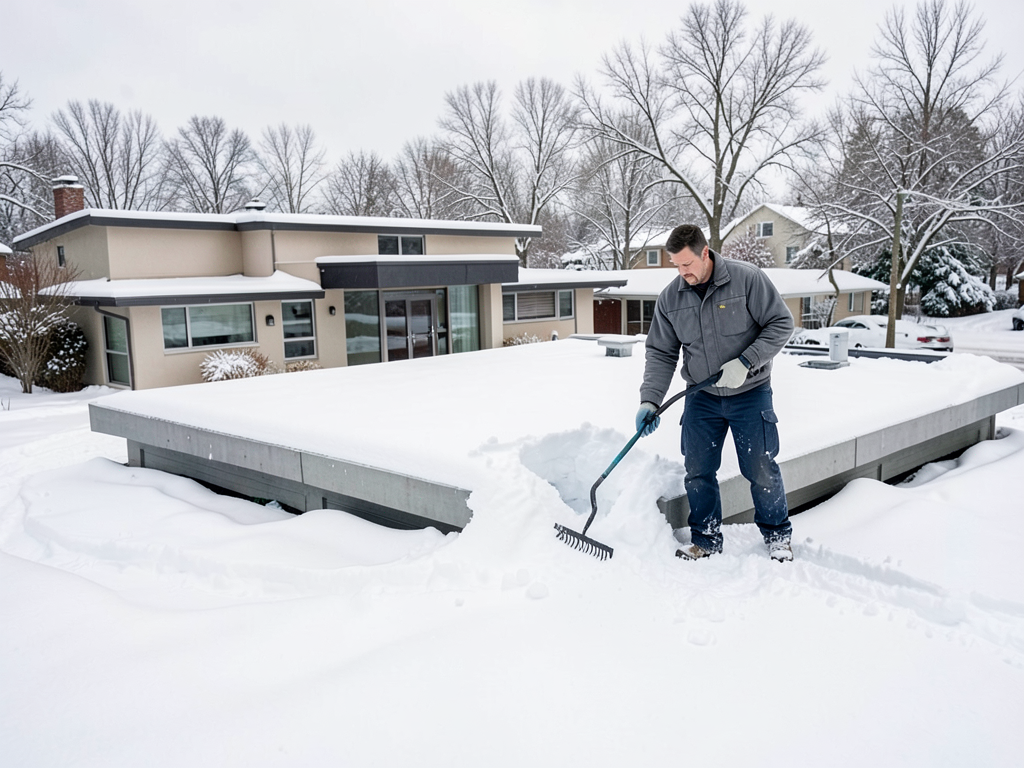
Keeping Your Mid-Century Modern Roof in Harvey Park Safe from Heavy Snow Loads
Harvey Park’s mid-century modern homes face unique challenges when Denver’s heavy snow arrives. These homes built between the 1950s and 1970s feature distinctive low-slope or flat roofs that handle snow differently than traditional pitched designs. Understanding how to protect your MCM roof from heavy snow loads helps prevent costly structural damage.. Read more about Why Your Attic is Damp in the Middle of a Cold Denver Winter.
Why Harvey Park’s Mid-Century Homes Need Special Snow Protection
Harvey Park contains Denver’s largest collection of Cliff May-designed homes. These post-and-beam structures feature wide roof overhangs and minimal attic space. The flat or low-slope designs create specific vulnerabilities during Colorado’s snow seasons.. Read more about How the Colorado Freeze Thaw Cycle Destroys Standard Roof Flashing.
Traditional pitched roofs naturally shed snow through gravity. Your MCM roof however sits nearly level with the ground. Snow accumulates in layers creating significant weight pressure on the roof deck and supporting beams. The lack of steep angles means snow removal becomes essential after major storms.
Denver’s climate compounds these challenges. Our altitude creates heavier wetter snow compared to lower elevations. When temperatures fluctuate rapidly snow melts during the day and refreezes at night. This freeze-thaw cycle adds ice layers beneath the snow increasing total weight dramatically.
Harvey Park’s homes often feature tongue-and-groove ceilings without traditional attic ventilation. This design means snow load stress transfers directly to the roof structure rather than being distributed through an attic space. The post-and-beam construction that gives MCM homes their open feel also means fewer load-bearing walls to help support snow weight.
Common Snow Load Problems in Mid-Century Modern Homes
Harvey Park residents report several recurring issues during heavy snow seasons. Understanding these problems helps you identify warning signs before serious damage occurs.
Sagging roof sections indicate excessive snow weight. You might notice dips or waves in what should be flat roof surfaces. These deformations suggest the roof deck struggles under current snow loads.
Ceiling cracks inside your home often signal roof stress. The tongue-and-groove ceilings in MCM homes transfer movement directly to interior surfaces. Small cracks that appear after heavy snow usually indicate structural shifting.
Water infiltration becomes more likely with heavy snow. As snow melts from interior heat it can pool on flat surfaces. When temperatures drop again this water freezes expanding and creating gaps in seals and flashing.
Ice dam formation poses serious risks for Harvey Park homes. Snow melts from heat escaping through the roof then refreezes at the colder edges. These ice dams force water back under roofing materials causing leaks and rot. Fixing Flat Roof Leaks in LoHi and Modern Denver Homes.
Protecting Your Harvey Park MCM Roof from Snow Damage
Preventing snow damage requires a proactive approach. Harvey Park’s unique architectural features demand specific protection strategies.
Regular snow removal represents your first defense. After storms exceeding six inches you should remove snow from your roof. This prevents dangerous accumulation and reduces structural stress. Use plastic snow rakes with extended handles to avoid damaging roofing materials. Roofing Sheridan.
Improving roof insulation helps prevent ice dams. Many Harvey Park homes lack adequate insulation due to their original construction. Adding rigid foam insulation beneath the roof surface reduces heat transfer that causes snow melting and refreezing cycles.
Installing proper drainage systems becomes critical for flat roofs. Scuppers and internal drains must remain clear of ice and debris. Consider heating cables along roof edges and around drains to prevent freeze blockages.
Professional snow load assessments identify potential weaknesses. A qualified roofing contractor can evaluate your specific structure and recommend reinforcement if needed. This becomes especially important for older MCM homes that may have settled over decades.
Emergency snow removal services provide peace of mind during major storms. Many Harvey Park residents keep contact information for contractors who can safely remove heavy snow when it becomes unsafe to do so yourself.
Best Roofing Materials for Harvey Park’s Climate
Selecting appropriate roofing materials protects your MCM home from Denver’s harsh weather. The right materials handle snow loads while maintaining your home’s architectural integrity.
TPO membranes offer excellent snow performance for flat roofs. These thermoplastic materials resist UV damage from Denver’s high altitude and provide superior waterproofing. TPO’s white surface reflects sunlight reducing ice dam formation.
EPDM rubber roofing provides another solid option. This material handles temperature extremes well and remains flexible in cold conditions. EPDM’s dark color absorbs heat helping melt snow but requires proper drainage to prevent ice dam issues.
Modified bitumen systems work well for low-slope applications. These multi-layer systems provide excellent waterproofing and handle snow loads effectively. The granulated surface offers good traction for maintenance access.
Standing seam metal roofing suits some MCM designs. Metal’s smooth surface allows snow to slide off naturally. However this can create dangerous snow slides near entryways and requires snow guards to control release.
Proper underlayment becomes crucial for snow protection. Ice and water shield applied along roof edges and around penetrations prevents water infiltration from melting snow. This self-adhering membrane creates a waterproof barrier beneath your primary roofing material.
Denver Building Codes and Snow Load Requirements
Denver’s building codes address snow load requirements for residential structures. Understanding these requirements helps ensure your MCM home meets safety standards.
Denver County requires roofs to support minimum snow loads of thirty pounds per square foot. However Harvey Park’s older MCM homes may not meet current standards. A professional assessment determines if your roof requires reinforcement.
Local building permits become necessary for major roofing work. Harvey Park’s historic district status may impose additional requirements for exterior modifications. Always check with Denver’s Community Planning and Development office before undertaking significant roof work.
Energy codes affect insulation requirements for new roofing installations. Denver’s Green Building Ordinance mandates specific R-values for roof assemblies. These requirements help reduce heat loss that contributes to ice dam formation.
Fire safety codes influence roofing material choices. Class A fire-rated materials provide maximum protection and may be required in certain areas. This becomes especially important for homes with cedar siding or other combustible exterior materials common in MCM designs. Cedar Shake Roof Restoration for Homes in Ken Caryl.
Accessibility requirements affect snow removal planning. Denver codes mandate clear pathways for emergency access. Your snow removal strategy must maintain these required clearances while protecting your roof structure.
Emergency Snow Load Situations
Recognizing emergency snow load situations saves your Harvey Park home from catastrophic damage. Quick action prevents structural failures and water damage.
Sagging ceiling areas indicate immediate danger. If you notice ceiling materials bowing downward evacuate the area and contact emergency services. This suggests the roof structure approaches failure point.
Cracking sounds from above warrant immediate attention. Loud pops or creaks suggest roof components under extreme stress. These noises often precede structural failures.
Water dripping inside during freezing weather indicates ice dam problems. As ice dams grow they force water under roofing materials. This water then enters your home as temperatures fluctuate.
Doors or windows becoming difficult to open suggest structural shifting. As roof loads increase they can twist the entire building frame. This twisting causes frames to bind making openings stick or jam.
Professional emergency services handle dangerous snow removal situations. Never attempt to climb onto a snow-loaded roof yourself. The combination of height, slippery surfaces, and uncertain structural integrity creates extreme hazards.
Harvey Park Snow Load Prevention Checklist
Following a systematic approach to snow load prevention protects your MCM home throughout Denver’s winter season.
- Schedule professional roof inspection before winter arrives
- Clean all gutters and downspouts in late fall
- Install heating cables along roof edges if ice dams have been problematic
- Trim tree branches that could fall on your roof under snow weight
- Mark roof access points and utilities before snow covers them
- Keep roof rake and snow removal tools easily accessible
- Monitor weather forecasts for major snow events
- Establish relationship with emergency snow removal service
- Document your roof’s condition with photos before winter
- Plan snow removal strategy for your specific roof configuration
Cost Factors for Snow Load Protection
Investing in snow load protection requires understanding various cost factors. Harvey Park’s MCM homes present specific financial considerations.
Professional roof inspections typically range from $200 to $500. These assessments identify structural weaknesses and recommend specific protection measures for your home’s unique configuration.
Adding insulation beneath existing roofing costs between $3,000 and $8,000 depending on your home’s size. This investment reduces ice dam formation and improves energy efficiency year-round.
Heating cable installation runs $500 to $1,500 for typical Harvey Park homes. These systems prevent ice dam formation but increase electrical costs during operation.
Emergency snow removal services charge $300 to $800 per visit. Many Harvey Park residents contract for seasonal service at discounted rates compared to individual emergency calls.
Structural reinforcement becomes necessary for some older MCM homes. This work can cost $5,000 to $15,000 but prevents much more expensive damage from roof collapse.
Insurance considerations affect your overall costs. Some policies offer discounts for snow protection measures. Others may exclude snow damage if you haven’t maintained your roof properly.
Long-Term Maintenance for Snow Protection
Maintaining your MCM roof’s snow protection requires ongoing attention. Regular maintenance prevents small issues from becoming major problems.
Annual roof inspections identify developing issues before winter arrives. Look for damaged flashing, deteriorated seals, and areas where snow might accumulate excessively.
Gutter cleaning becomes especially important for snow protection. Clogged gutters cause ice dam formation as melting snow cannot drain properly. Clean gutters at least twice yearly and after major storms. Reliable Gutter Installation for New Builds in Central Park.
Seal inspections prevent water infiltration. Check seals around vents, skylights, and other roof penetrations. Replace deteriorated seals before they allow water entry during snow melt cycles.
Tree maintenance reduces snow load risks. Overhanging branches collect snow and ice creating additional weight on your roof. They also damage roofing materials when they break under snow weight.
Documentation helps track your roof’s condition over time. Keep records of inspections, repairs, and snow removal activities. This information proves valuable for insurance claims and future maintenance planning. EPA.
Professional relationships provide valuable expertise. Establishing connections with roofing contractors familiar with Harvey Park’s MCM homes ensures you receive appropriate advice and service when needed.
Climate Change and Future Snow Considerations
Changing climate patterns affect snow load planning for Harvey Park homes. Understanding these trends helps you prepare for future conditions.
Denver experiences more frequent extreme weather events. This includes heavier snowfalls that stress older roofing structures. Planning for these extremes rather than average conditions provides better protection.
Temperature fluctuations increase ice dam formation risks. More frequent freeze-thaw cycles create conditions where ice dams form more readily. This requires enhanced prevention strategies beyond traditional methods.
Moisture patterns shift affecting roofing material performance. Some materials that worked well historically may need replacement with options better suited to changing conditions. How Much a Full Roof Replacement Actually Costs in Denver Right Now.
Building codes continue evolving to address climate impacts. Future requirements may mandate stronger structures or specific protection measures for snow loads. Staying informed about these changes helps you plan appropriate upgrades.
Energy efficiency standards affect roofing choices. As insulation requirements increase, roof structures must support additional weight. Planning for these upgrades during other work prevents costly modifications later.
Harvey Park Community Resources
Harvey Park residents benefit from community resources focused on preserving MCM architecture while addressing modern challenges like snow protection.
The Harvey Park South Neighborhood Association provides information about local contractors experienced with MCM homes. Their recommendations help you find qualified professionals familiar with your home’s specific needs.
Denver’s historic preservation office offers guidance for exterior modifications in Harvey Park. While primarily focused on aesthetics, they can advise about snow protection measures that maintain your home’s architectural integrity.
Local building supply companies stock materials appropriate for MCM roof repairs and upgrades. Their staff often understand the specific requirements of Harvey Park’s unique housing stock.
Neighborhood social media groups share real-time information about snow conditions and contractor availability. This community knowledge proves invaluable during major storms when quick decisions become necessary.
Denver’s building department provides information about permits and requirements for snow protection modifications. Their staff can clarify which improvements need permits and which fall under maintenance allowances.
Making the Right Decisions for Your Home
Protecting your Harvey Park MCM home from snow loads requires balancing multiple factors. Understanding these considerations helps you make informed decisions.
Budget constraints affect your protection options. While comprehensive snow protection provides maximum safety, phased approaches allow you to address the most critical issues first while planning for future improvements.
Historical preservation values influence modification choices. Harvey Park’s MCM homes deserve protection that maintains their architectural significance. Work with contractors who understand how to provide modern protection without compromising historical integrity.
Energy efficiency goals intersect with snow protection. Many snow prevention measures also improve your home’s overall energy performance. This dual benefit often justifies investment in comprehensive solutions.
Personal risk tolerance affects your approach. Some homeowners accept higher risk for lower costs while others prioritize maximum protection regardless of expense. Understanding your comfort level with risk helps guide your decisions.
Future plans influence investment levels. If you plan to stay in your home long-term, comprehensive protection makes more sense than if you plan to sell soon. Consider how your decisions affect both immediate safety and long-term property value.
Frequently Asked Questions
How much snow weight can my Harvey Park MCM roof handle?
Most Harvey Park MCM homes were built to handle thirty pounds per square foot of snow load. However age, previous modifications, and specific construction details affect actual capacity. A professional assessment provides your home’s specific limits.
When should I remove snow from my flat roof?
Remove snow when accumulation exceeds six inches or when you notice any sagging or cracking sounds. Don’t wait for official guidelines since your specific roof may have lower capacity than standard designs.
Can I install heating cables myself to prevent ice dams?
While DIY installation seems possible, improper installation creates fire hazards and may void warranties. Professional installation ensures proper coverage, electrical safety, and integration with your roof’s specific configuration.
Will snow removal damage my roofing materials?
Improper snow removal definitely damages roofing materials. Always use plastic roof rakes rather than metal tools. Never chip at ice with sharp instruments. Professional snow removal services use techniques that protect your roof while removing dangerous accumulations.
How do I find contractors familiar with Harvey Park MCM homes?
Start with the Harvey Park South Neighborhood Association for recommendations. Look for contractors with experience in historic districts and specifically ask about their familiarity with mid-century modern construction techniques and materials.
What insurance coverage do I need for snow damage?
Standard homeowner’s policies cover sudden accidental damage but may exclude damage from lack of maintenance. Document your snow protection efforts and maintain records of professional inspections to support claims if needed.
Are there any financial assistance programs for snow protection improvements?
Denver offers various energy efficiency programs that may apply to snow protection improvements. Check with the city’s sustainability office and local utility companies for current incentive programs that could offset your costs.
How often should I have my MCM roof inspected for snow readiness?
Schedule professional inspections annually in late fall before snow season. Additionally inspect your roof after any major weather events that might have caused damage. Regular monitoring helps you address issues before they become emergencies. For more information, visit FEMA.
{
“@context”: “https://schema.org”,
“@type”: “BlogPosting”,
“headline”: “Keeping Your Mid-Century Modern Roof in Harvey Park Safe from Heavy Snow Loads”,
“description”: “Harvey Park’s mid-century homes need special care for Denver’s heavy snow. Learn how to protect your flat or low-slope roof from structural damage.”,
“wordCount”: 2545,
“datePublished”: “2026-05-10T14:50:00.000Z”,
“dateModified”: “2026-05-10T14:50:00.000Z”,
“inLanguage”: “en-US”,
“mainEntityOfPage”: {
“@type”: “WebPage”,
“@id”: “https://apexroofingdenver.com”
},
“publisher”: {
“@type”: “LocalBusiness”,
“name”: “Apex Roofing Denver”,
“url”: “https://apexroofingdenver.com”
},
“author”: {
“@type”: “Organization”,
“name”: “Apex Roofing Denver”,
“url”: “https://apexroofingdenver.com”
},
“image”: {
“@type”: “ImageObject”,
“url”: “https://apexroofingdenver.com/wp-content/uploads/2026/03/keeping-your-mid-century-modern-roof-in-harvey-par-1.png”
}
}
{
“@context”: “https://schema.org”,
“@type”: “RoofingContractor”,
“name”: “Apex Roofing Denver”,
“url”: “https://apexroofingdenver.com”,
“address”: {
“@type”: “PostalAddress”,
“addressLocality”: “Denver”
},
“areaServed”: {
“@type”: “City”,
“name”: “Denver”
}
}
{
“@context”: “https://schema.org”,
“@type”: “FAQPage”,
“mainEntity”: [
{
“@type”: “Question”,
“name”: “How much snow weight can my Harvey Park MCM roof handle?”,
“acceptedAnswer”: {
“@type”: “Answer”,
“text”: “Most Harvey Park MCM homes were built to handle thirty pounds per square foot of snow load. However age, previous modifications, and specific construction details affect actual capacity. A professional assessment provides your home’s specific limits.”
}
},
{
“@type”: “Question”,
“name”: “When should I remove snow from my flat roof?”,
“acceptedAnswer”: {
“@type”: “Answer”,
“text”: “Remove snow when accumulation exceeds six inches or when you notice any sagging or cracking sounds. Don’t wait for official guidelines since your specific roof may have lower capacity than standard designs.”
}
},
{
“@type”: “Question”,
“name”: “Can I install heating cables myself to prevent ice dams?”,
“acceptedAnswer”: {
“@type”: “Answer”,
“text”: “While DIY installation seems possible, improper installation creates fire hazards and may void warranties. Professional installation ensures proper coverage, electrical safety, and integration with your roof’s specific configuration.”
}
},
{
“@type”: “Question”,
“name”: “Will snow removal damage my roofing materials?”,
“acceptedAnswer”: {
“@type”: “Answer”,
“text”: “Improper snow removal definitely damages roofing materials. Always use plastic roof rakes rather than metal tools. Never chip at ice with sharp instruments. Professional snow removal services use techniques that protect your roof while removing dangerous accumulations.”
}
},
{
“@type”: “Question”,
“name”: “How do I find contractors familiar with Harvey Park MCM homes?”,
“acceptedAnswer”: {
“@type”: “Answer”,
“text”: “Start with the Harvey Park South Neighborhood Association for recommendations. Look for contractors with experience in historic districts and specifically ask about their familiarity with mid-century modern construction techniques and materials.”
}
},
{
“@type”: “Question”,
“name”: “What insurance coverage do I need for snow damage?”,
“acceptedAnswer”: {
“@type”: “Answer”,
“text”: “Standard homeowner’s policies cover sudden accidental damage but may exclude damage from lack of maintenance. Document your snow protection efforts and maintain records of professional inspections to support claims if needed.”
}
},
{
“@type”: “Question”,
“name”: “How often should I have my MCM roof inspected for snow readiness?”,
“acceptedAnswer”: {
“@type”: “Answer”,
“text”: “Schedule professional inspections annually in late fall before snow season. Additionally inspect your roof after any major weather events that might have caused damage. Regular monitoring helps you address issues before they become emergencies. For more information, visit FEMA.”
}
}
]
}
{
“@context”: “https://schema.org”,
“@type”: “BreadcrumbList”,
“itemListElement”: [
{
“@type”: “ListItem”,
“position”: 1,
“name”: “Home”,
“item”: “https://apexroofingdenver.com”
},
{
“@type”: “ListItem”,
“position”: 2,
“name”: “Blog”,
“item”: “https://apexroofingdenver.com/blog”
},
{
“@type”: “ListItem”,
“position”: 3,
“name”: “Keeping Your Mid-Century Modern Roof in Harvey Park Safe from Heavy Snow Loads”
}
]
}
{
“@context”: “https://schema.org”,
“@type”: “Service”,
“serviceType”: “Roofing”,
“provider”: {
“@type”: “LocalBusiness”,
“name”: “Apex Roofing Denver”,
“url”: “https://apexroofingdenver.com”
},
“areaServed”: {
“@type”: “City”,
“name”: “Denver”
},
“description”: “Harvey Park’s mid-century homes need special care for Denver’s heavy snow. Learn how to protect your flat or low-slope roof from structural damage.”
}