
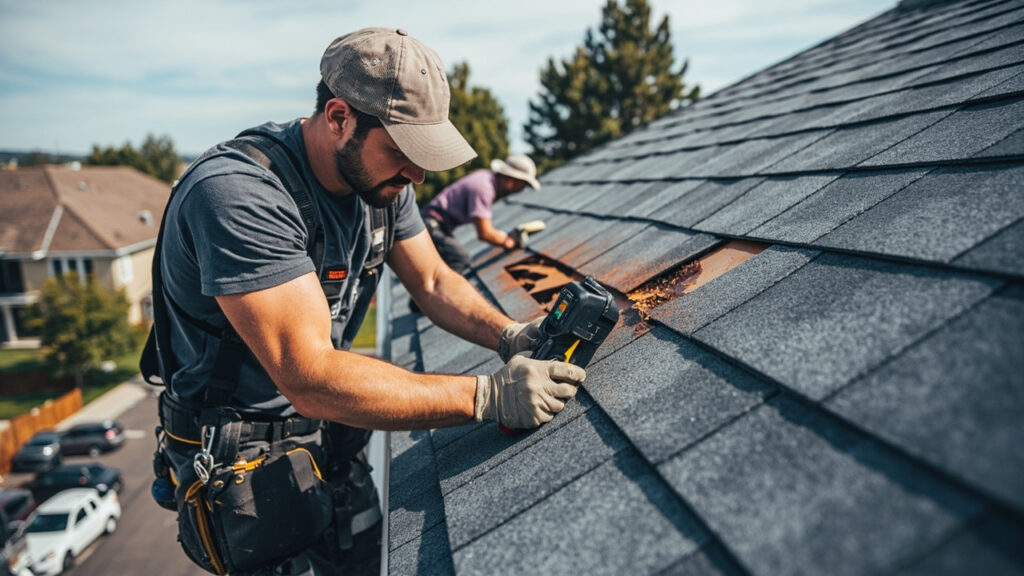
Who to Call for Emergency Roof Repair in Arvada After a Major Storm
A major storm just hit your Arvada home. You see missing shingles, water dripping inside, or visible hail damage on your roof. Your first instinct is panic. Stop. Your next instinct should be action. Call a roofing contractor who answers the phone at 2 a.m. and gets a crew to your West Woods, Olde Town Arvada, or Quincy Park address in under two hours.
This guide walks you through exactly what to do right now, what to expect from a professional emergency response, and how to manage your insurance claim without getting ripped off by storm chasers or underprepared contractors.
What to Do the Moment You Spot Roof Damage
The first 24 hours after a storm determine whether your damage gets worse or stays contained. Here is what you do immediately.
First, stay off your roof. Do not climb up to inspect the damage yourself. The roof is wet, you could slip, and you might cause additional damage. Instead, take photos and videos from the ground and from inside your attic if you can safely access it. These photos become critical documentation for your insurance claim.
Second, find any active leaks inside your home. Use a flashlight to scan your attic, ceilings, and walls for water stains or dripping water. Place buckets under active drips. Move furniture and belongings away from wet areas. Take more photos of the interior damage because insurance companies require proof of both roof damage and water intrusion.
Third, call an emergency roofing contractor before you call your insurance company. This seems backward, but it works in your favor. A licensed roofer can document the damage professionally, provide estimates, and advise you on temporary fixes. Insurance adjusters expect to see a professional assessment. Storm chasers show up uninvited after major hail events in the region, and many of them cut corners or disappear after payment.
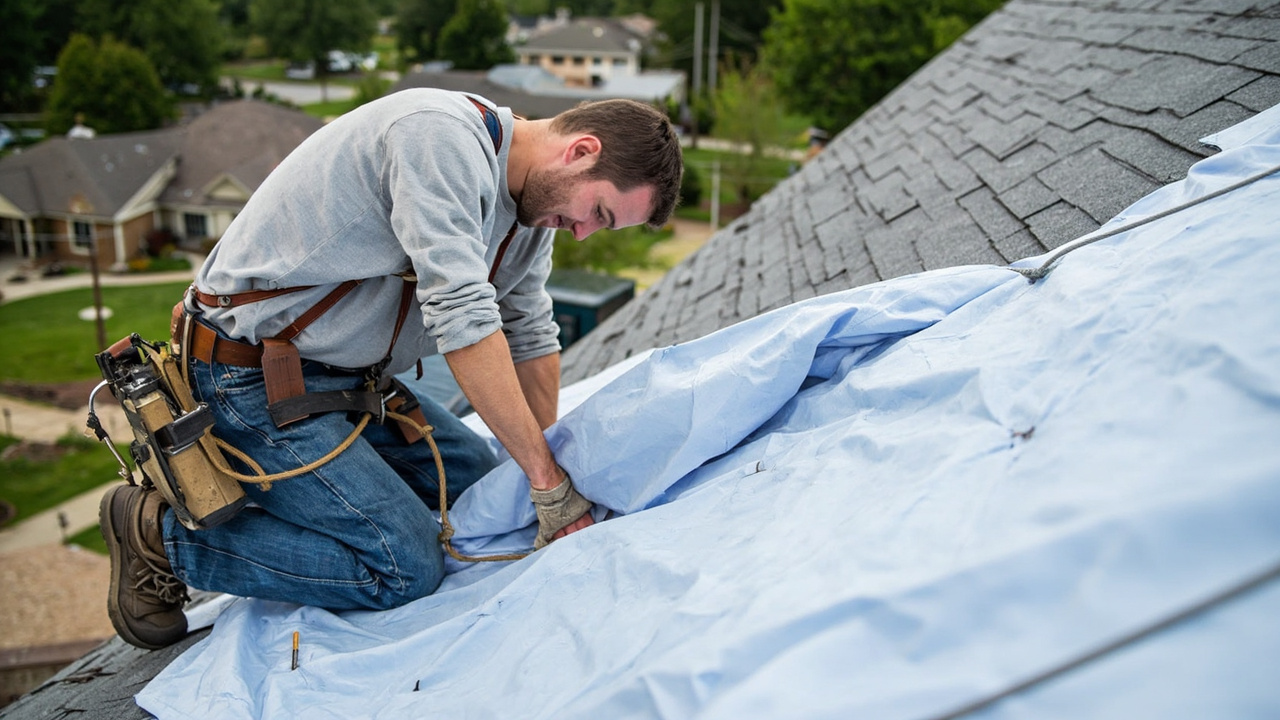
Fourth, if you have an active leak that is damaging the interior of your home and you cannot reach an emergency roofer immediately, you can apply a temporary tarp yourself. This is a stopgap measure only. Keep reading for the safe way to do this.
Temporary Roof Tarping While You Wait for a Professional Crew
If rain is actively leaking into your home and you are waiting for a contractor to arrive, a temporary tarp can minimize water damage. This is not a permanent fix and does not replace professional repair.
- Gather Materials
You need a heavy duty plastic tarp at least 6 by 8 feet, a hammer, galvanized nails or roofing nails, rope, and a ladder. Wear rubber-soled shoes for grip and use a stable, extended ladder. Have someone spot you from the ground.
- Position the Tarp
Climb to a safe section of the roof where you have solid footing. Unroll the tarp so it covers the damaged area with at least 4 feet of overlap on all sides. Position it so water runs down and away from the damaged section.
- Secure the Edges
Starting at one corner, nail the tarp to the roof deck using galvanized nails spaced every 12 inches. Do not nail through the tarp directly over the damaged area, as this can cause more water intrusion. Instead, nail the outer edges. Alternatively, use rope to tie the tarp to the roof frame or chimney if you cannot safely hammer nails.
- Create a Water Channel
Use rope or additional tarps to create a channel that directs water away from your home. This prevents water from pooling or running down interior walls.
- Inspect from Inside
Go to your attic and check whether the tarp is actually stopping the leak. Adjust the tarp if water still enters. Mark the affected area with bright tape so you remember to show the roofer.
A temporary tarp buys you time, yet it can fail in high winds or after a few days of sun exposure. The tarp material degrades, and nails work loose. You remove the temporary tarp once permanent repair is approved. Schedule professional repair within 24 to 48 hours of applying a temporary tarp. Professional tarping uses heavier materials, better fastening, and shrink wrap techniques that last weeks if necessary.
Common Roofing Emergencies in Arvada
Arvada sits in Hail Alley, a geographic zone where Front Range thunderstorms produce large-diameter hail multiple times per year. The elevation of 5,280 feet means intense UV radiation ages roofing materials faster than in lower elevations. Winter snow loads stress roof framing, and freeze-thaw cycles crack sealants and grout. The South Platte River valley drainage patterns and proximity to Barr Lake mean that spring snowmelt and flash flooding add pressure to roof systems in low-lying residential areas. Here are the emergency damage types you are most likely to encounter.
Hail Damage to Asphalt Shingles
Hail the size of golf balls or larger dents asphalt shingles, removes their granule coating, and weakens the sealant that holds shingles down. The damage looks like dark, circular bruises across the shingle surface. Rain exploits these bruises and seeps under the shingle layers.
Hail damage claims represent the largest category of roofing insurance payouts in Colorado. Your homeowner policy covers hail damage if your deductible is met. Class 4 impact resistant shingles, now required in some Arvada subdivisions per local building code amendments, resist hail better than standard shingles. If your current roof is older and uses standard shingles, your insurance adjuster may recommend replacement rather than repair.
High Wind Shingle Loss
Spring winds along the Front Range can exceed 60 miles per hour. Older roofs with weakened sealants lose shingles to wind. Missing shingles expose the underlayment and roof deck to rain and UV damage. One missing shingle can lead to water damage in multiple ceiling cavities.
If you see shingles in your yard after a storm, you have a roof exposure. Get a temporary fix applied the same day, even if you cannot schedule a full repair until later. Missing shingles turn into water damage very quickly in Colorado’s dry climate where brief, intense thunderstorms can drop inches of rain in minutes.
Fallen Tree Limbs and Debris Punctures
Neighborhoods like West Woods and Olde Town Arvada include mature trees that shed branches in storms. A tree limb punctures the roof, creating a hole rather than a dent. This is an emergency because water pours directly into your attic. You need temporary tarping and professional repair within 24 hours.
Document which tree caused the damage if it is a neighbor’s tree. Homeowner liability insurance may cover the repair cost. Do not cut down or trim the neighbor’s tree yourself. Work with your insurance company and an attorney if liability is disputed.
Flashing Failures and Chimney Leaks
Flashing is the metal strip that directs water around chimneys, vents, and valleys on your roof. High winds loosen flashing, and freeze-thaw cycles crack sealant around flashing. A failed flashing allows water to run behind the shingles and into the wall cavity.
You might not see obvious damage on the exterior. Instead, you notice water stains on the interior wall near the chimney or roof penetration. A professional roofer uses a leak detection process, which combines visual inspection with water testing, to identify the exact source of the leak. This saves time and prevents unnecessary shingle removal.
The Emergency Repair Process from Call to Completion
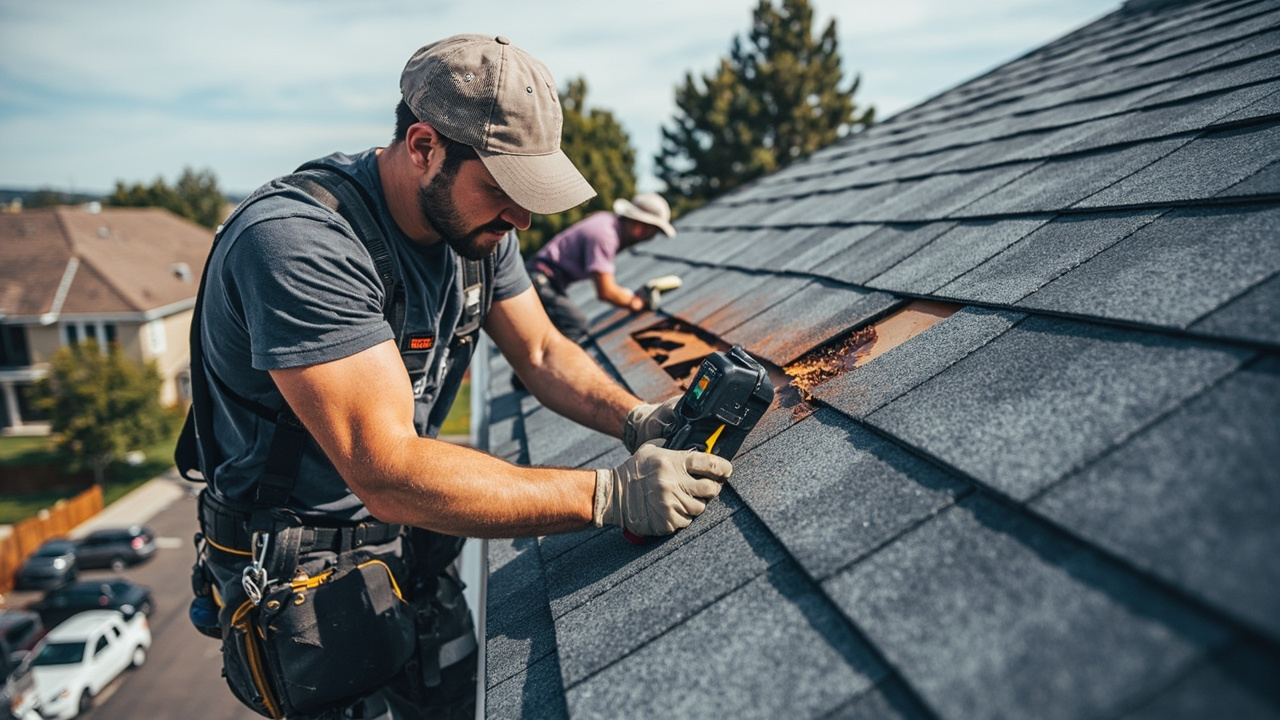
A professional emergency response follows a clear sequence. Understanding this timeline helps you manage expectations and coordinate with insurance adjusters.
| Phase | Timeframe | What Happens |
| Emergency Call and Dispatch | 0 to 2 hours | You call. A live person confirms your address in Arvada and dispatches a crew. Crews are stationed in the metro area for rapid response. You receive a callback with an ETA. |
| On-Site Inspection | 2 to 4 hours after call | A roofer inspects the roof from the ground and attic. Photos are taken. A temporary tarping plan is discussed. Safety hazards like downed power lines are identified and reported to utilities. |
| Emergency Tarping or Board Up | Same day as inspection | If water intrusion is active, tarping or shrink wrap is applied immediately. The goal is to stop interior water damage within 4 to 6 hours of your call. |
| Insurance Adjuster Meeting | 24 to 72 hours after emergency tarping | Your insurance company sends an adjuster. The roofer and adjuster walk the roof together. The roofer explains damage type and cause. Estimates and photos are submitted to your insurance company for approval. |
| Repair or Replacement | 5 to 14 days after insurance approval | Once your insurance company approves the estimate, the repair or replacement begins. A full roof repair takes 1 to 3 days. A full replacement takes 2 to 5 days depending on roof size. |
| Final Inspection and Cleanup | Same day as repair completion | A supervisor walks the finished roof. Shingles are aligned, flashing is sealed, and debris is removed. You walk the roof with the supervisor to confirm work quality. Photos document the finished job. |
The critical difference between a reputable roofer and a storm chaser is documentation and follow up. A professional crew takes time to inspect properly, communicates with your insurance company, and returns for warranty inspections. A storm chaser pressures you to sign paperwork immediately, collects a deposit, and disappears if problems arise.
Insurance Claims and Adjuster Meetings
Your homeowner insurance policy covers sudden, accidental damage from storms, hail, and wind. It does not cover damage from deferred maintenance, improper installation, or normal wear. Insurance adjusters determine whether your damage is covered and what the repair or replacement cost should be.
You have the right to hire a public adjuster or roofing contractor to represent you at the adjuster meeting. A roofing contractor serves this role because they document damage, explain technical details, and provide professional estimates. Your insurance company may dispute a high estimate, and having a contractor there ensures your estimate is reasonable and defensible.
Here is what to expect during an adjuster visit.
- The adjuster photographs the roof and interior damage.
- The adjuster asks you to describe the sequence of events, weather conditions, and when you first noticed damage.
- The adjuster asks for proof of earlier maintenance or repairs. Receipts showing recent roof inspections or gutter cleaning demonstrate that the damage is new, not pre existing.
- The adjuster reviews the contractor estimate. Large discrepancies between the contractor estimate and the adjuster estimate trigger further review or a second opinion.
- The adjuster determines whether the damage meets the policy deductible. In Colorado, hail damage deductibles often range from 1 percent to 5 percent of your home’s insured value. A 5,000 dollar estimate with a 5 percent deductible means you pay 250 dollars out of pocket.
Your insurance company typically has 30 to 45 days to approve or deny your claim. If the company denies coverage, you can appeal or hire a public adjuster to negotiate on your behalf. Many roofing companies offer to assist with insurance appeals because they want the claim approved so they can perform the repair.
Do not hire a roofer who asks you to file a claim for damage the adjuster has not approved. Do not sign contracts with contingencies like “subject to insurance approval.” These tactics expose you to financial risk if your claim is denied. Work with a roofer who understands Colorado insurance processes and does not pressure you during the claim stage.
Roofing Materials in Arvada Homes and Emergency Repair Differences
The repair process changes depending on your roof material. Most Arvada homes built between 1970 and 1990 feature ranch or split-level designs with asphalt shingle roofs. Knowing what material covers your home helps you understand repair timelines and costs.
| Material | Common in Arvada | Emergency Repair Approach | Hail Vulnerability |
| Asphalt Shingles (3 Tab) | Yes, older homes and ranch styles | Damaged shingles are replaced. 1 to 3 days for partial repair. | High. Bruising occurs at golf ball size hail. |
| Architectural Shingles | Yes, mid 2000s and newer split-level construction | Laminated shingles resist hail better yet still dent. Replacement takes 2 to 4 days depending on roof extent. | Moderate to high depending on product grade. |
| Impact Resistant Shingles (Class 4) | Increasingly common in new subdivisions per code | Denting occurs yet does not compromise integrity. Repair often involves repair rather than replacement. 1 to 2 days. | Low. Class 4 shingles withstand up to 2 inch diameter impacts. |
| Metal Roofing | Less common yet growing in Olde Town Arvada renovations | Hail creates dents yet does not remove coating or expose substrate. Cosmetic damage often is not claimed. Punctures are rare and sealed in 1 day. | Very low. Denting is cosmetic only. |
| Flat Roof (TPO, EPDM, Built Up) | Commercial buildings and some residential | Tears and punctures require membrane patching. Seams split under hail. Repair takes 1 to 2 days. Replacement takes 2 to 5 days. | Moderate. Membrane degrades under UV yet hail does not easily penetrate. |
Your roofing material also affects your eligibility for certain repair methods. If you have asphalt shingles manufactured more than 20 years ago, your insurance company may recommend replacement rather than repair. Modern shingles have better hail ratings and longer warranties. A full replacement costs more upfront, yet your roof lasts 25 to 30 years rather than 5 to 10 more years with patched original shingles.
Arvada Building Codes and Emergency Repair Permits
Arvada and Jefferson County require building permits for roof replacement and major roof repairs. The permit confirms that your work meets 2021 International Building Code standards adopted by the state of Colorado. The Arvada Building Department enforces compliance through permit review and final inspection.
Emergency tarping does not require a permit. You remove the temporary tarp once the permanent repair is approved and scheduled.
Once your insurance company approves the repair, the roofing contractor pulls a permit before work begins. The permit process takes 2 to 5 business days. A final inspection by Arvada Building Department occurs after the roof is finished. This inspection verifies that new materials meet code and that the roof is safe for occupancy.
Some homeowners avoid permitting to skip costs or speed up the project. This creates liability problems. If a non-permitted roof repair causes future water damage or fails during a storm, your insurance company may deny claims. Prospective home buyers can discover unpermitted work during title search or inspection, complicating sale negotiations.
A licensed roofing contractor handles permitting for you. The permit cost is included in your repair estimate. Choose a contractor who is familiar with Arvada Building Department staff and processes. This relationship speeds up permit approval.
Emergency Roof Damage Assessment Using Professional Tools
Professional roofers use several techniques to identify damage that is not visible to the untrained eye. Thermal imaging cameras detect moisture trapped under shingles. Water testing, also called dye testing, involves pouring water in specific areas while an observer watches for leaks from inside the attic. Moisture meters measure water content in roof decking and insulation.
These tools prevent unnecessary shingle removal. If a roofer has to tear off undamaged shingles to find a leak, your repair cost rises. A proper assessment pinpoints the exact leak source, minimizing invasive inspection and keeping costs lower.
Request a professional assessment, not a verbal estimate. A written assessment includes photos, findings, and a repair plan. This document becomes part of your insurance claim.
How to Identify and Avoid Storm Chaser Roofers
After major hail or wind events, roofers from out of state descend on neighborhoods with signs advertising free inspections and promising fast insurance payouts. These firms are storm chasers. Many are legitimate, yet many cut corners, use inferior materials, and disappear if problems arise.
Red flags include.
- Unsolicited door to door visits offering free inspections.
- Pressure to sign contracts before insurance approval.
- Promises of full repair with no out of pocket cost (unrealistic if your deductible is substantial).
- Out of state phone numbers and no local office or presence.
- Inability to provide local references or photos of completed work in Arvada.
- Requests for full payment upfront before work begins.
- No Colorado business license or workers compensation insurance.
- Reluctance to pull building permits.
A local, reputable roofer maintains an office in the Denver metro area, carries Colorado workers compensation insurance, holds a Colorado state roofing license, and provides references from Arvada residents. Call those references. Ask whether the roofer returned for warranty work and whether any issues arose after the repair.
Contact the Colorado Department of Regulatory Agencies (DORA) to verify that a contractor holds an active license and to check complaint history. This takes five minutes and can save you thousands of dollars. You can also check with the Arvada City Government building and development services to confirm permit requirements and contractor licensing status in your jurisdiction.
What Happens After Your Roof is Repaired
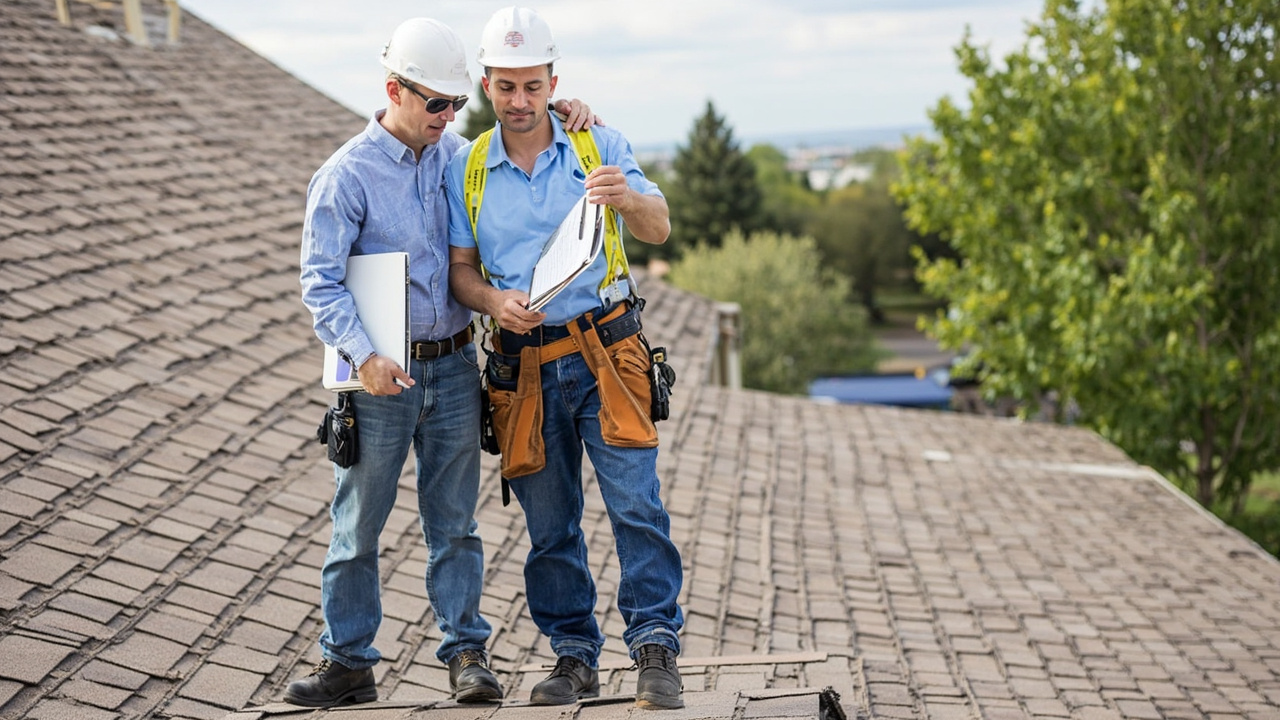
Once your repair is complete and the Arvada Building Department has issued a final inspection approval, your roof comes with a warranty. Most reputable roofers offer a two year to five year workmanship warranty. Material manufacturers like GAF and Owens Corning offer warranties on their products that last 20 to 30 years depending on material and product line.
A workmanship warranty covers labor and installation errors. A material warranty covers manufacturing defects. Your insurance claim typically covers the cost of materials and labor. If a defect emerges during the warranty period, the roofer fixes it at no charge.
Schedule annual roof inspections in the spring after winter snow and ice melt. An inspection catches minor damage before it becomes an emergency. Gutter cleaning, flashing maintenance, and vent caulking extend your roof’s lifespan. In Colorado’s high altitude and intense sun, maintenance is not optional. It is the difference between a 25 year roof and a 40 year roof.
Professional Emergency Response Standards in Arvada
Emergency tarping lasts 2 to 4 weeks if weather stays dry. Intense sun degrades the tarp material, and wind or ice can loosen fasteners. Plan to complete your permanent repair within 14 days of tarping. Do not leave a tarp in place for more than 30 days.
Most homeowner policies cover emergency tarping if the tarping prevents further water damage to the interior of your home. Some policies require that tarping be approved by an adjuster before the invoice is covered. Call your insurance company before tarping goes up so you understand your coverage.
You have the right to hire an independent appraiser or public adjuster to dispute the adjuster’s estimate. Your roofing contractor often provides this service. The appraisal process involves a third party review of the damage and estimates. If the appraisal amount differs significantly from the adjuster estimate, the insurance company and you split the difference or agree to the appraisal value.
You can file an insurance claim if your roof was not professionally inspected. The claim is stronger with professional documentation. A professional inspection report with photos and a detailed damage description speeds up the claim process. Insurance adjusters expect thorough documentation, and providing it reduces the risk of claim denial.
Insurance companies compare repair cost to replacement cost. If repair cost exceeds 70 percent of replacement cost, insurers typically recommend replacement. Roofs nearing the end of their lifespan also trigger replacement recommendations. Your roofer and insurance adjuster work together to make this determination.
Taking Action After Storm Damage
When hail or wind damages your Arvada roof, the first decision matters most. A roofer who understands Colorado code and does not pressure you during claims is the one to call. Find someone with a local office in the Denver metro area, workers compensation insurance, and references from West Woods, Olde Town Arvada, or other Arvada neighborhoods. Verify their Colorado roofing license through DORA. Ask whether they handle permitting and warranty work without shortcuts. The best emergency response comes from a contractor who has repaired hundreds of Arvada roofs and knows the Arvada Building Department process by heart. That roofer treats your claim as their claim and stays with you from the first water intrusion through the final inspection.