





Menu

Water Stains on Ceiling in Denver – Expert Diagnosis Stops Hidden Roof Damage Before It Spreads

Those brown spots on ceiling panels are not just cosmetic problems. Apex Roofing Denver identifies the exact source of water stains on ceiling surfaces and executes surgical repairs that protect your home from structural decay and mold growth.

Slider Image 1
Slider Image 2
Slider Image 3
Slider Image 4
Slider Image 5
Slider Image 7
Slider Image 8
Slider Image 9
Slider Image 10
Slider Image 11

Why Denver Homes Get Ceiling Water Marks (And Why They Spread Fast)

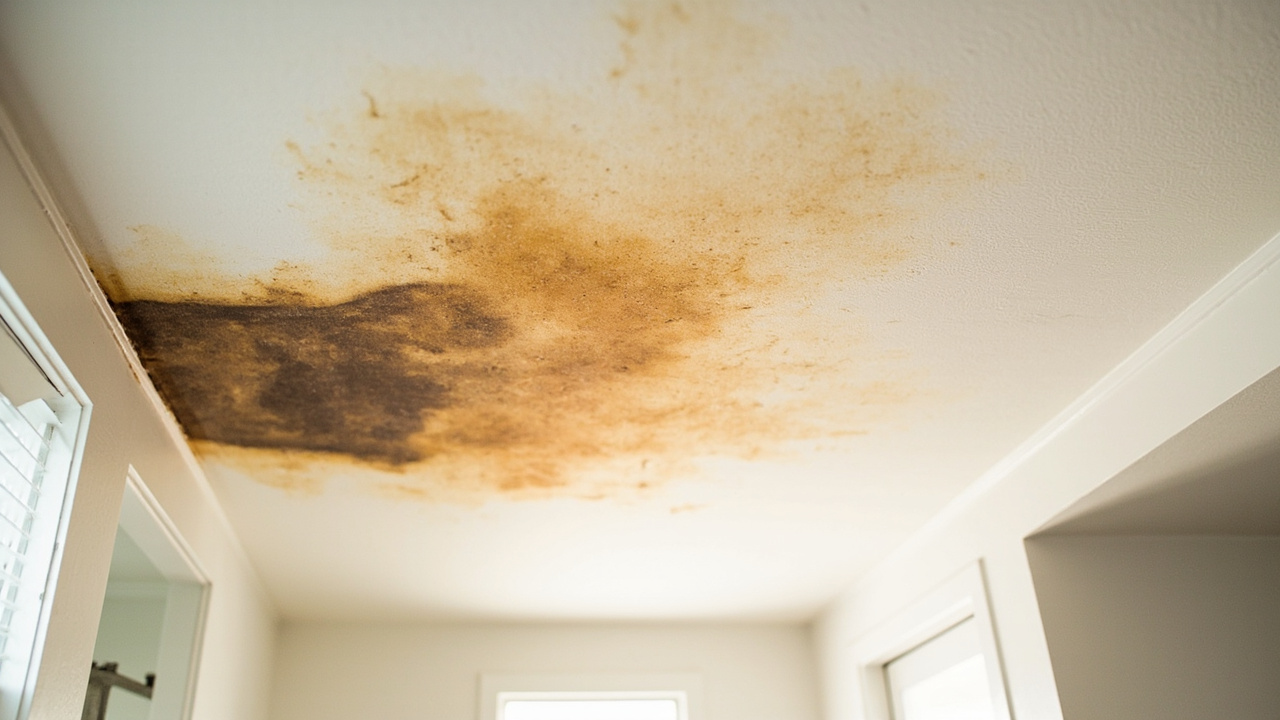
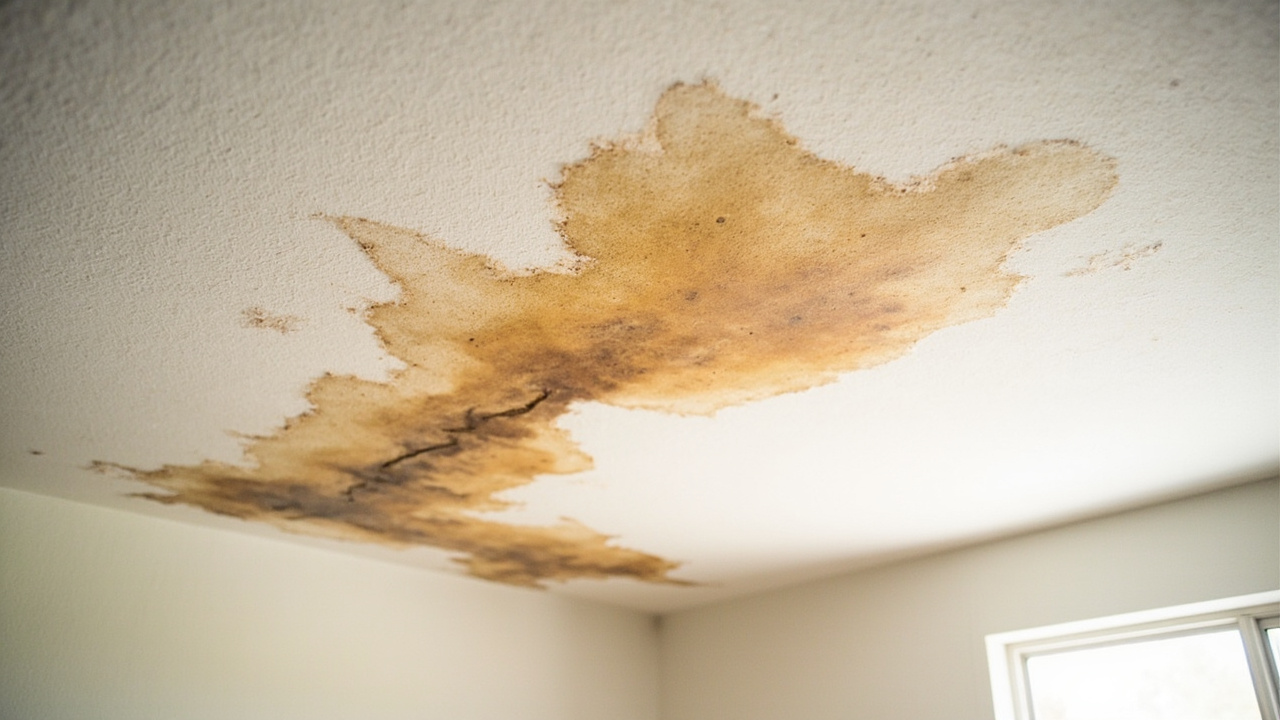
You walk into your living room and notice yellow ceiling stains that were not there last week. Maybe you see damp ceiling patches after a snowstorm or brown spots on ceiling tiles in the bathroom. These ceiling discoloration patterns are not random. They are symptoms of active water infiltration, and in Denver, they escalate quickly.

Denver's elevation and intense UV exposure create rapid freeze-thaw cycles from October through April. Snow melts on your roof during the day, refreezes at night, and forces water under shingles, through flashing gaps, and into the decking. That moisture travels through attic insulation and eventually appears as ceiling water marks in your bedrooms, hallways, or kitchen.

The clay soil common across Denver shifts with seasonal moisture changes. This movement can crack foundation walls and stress roof framing connections, creating new entry points for water. When you add Denver's sudden spring hailstorms and afternoon thunderstorms during summer, your roof takes constant punishment. A single compromised valley or missing shingle can funnel gallons of water into your ceiling cavity before you see the first stain.

Most homeowners ignore small brown spots on ceiling surfaces, assuming they will dry out. They do not. The stain you see is often weeks old. The wood above it is already saturated, and mold spores are colonizing in the dark. Waiting turns a $400 flashing repair into a $4,000 decking replacement. Denver's dry climate masks the problem because surface moisture evaporates quickly, but the damage continues inside the structure where you cannot see it.

Why Denver Homes Get Ceiling Water Marks (And Why They Spread Fast)
How We Trace Ceiling Water Marks to the Exact Roof Failure Point

How We Trace Ceiling Water Marks to the Exact Roof Failure Point

Water does not fall straight down. It travels along rafters, drips onto joists, and emerges through ceiling drywall far from the actual roof breach. Apex Roofing Denver uses a methodical tracing protocol that eliminates guesswork.

We start in the attic with moisture meters and thermal imaging cameras. Wet insulation shows up as cold spots on thermal scans, revealing the water path. We mark each damp area with flags, then move to the roof to identify the breach. Common culprits include cracked pipe boots, separated step flashing along chimneys, and nail pops where wind has lifted shingles.

On Denver roofs with multiple layers of old shingles (common in homes built before 2005), we sometimes find water pooling between layers. The top layer looks fine, but the bottom layer has gaps that funnel snowmelt directly onto the decking. We document everything with photos and measurements so you see exactly what failed and why.

Once we confirm the source, we inspect the decking for soft spots. A moisture meter reading above 20 percent means the plywood is compromised and needs replacement. We also check roof ventilation. Denver's temperature swings create condensation in poorly vented attics, which mimics a roof leak. If your ridge vent is blocked or your soffit vents are painted shut, you will get ceiling discoloration even with a perfect roof membrane.

We never patch blindly. Every repair plan includes the penetration point, the moisture migration path, and the interior damage scope. You get a written breakdown that separates the roof repair from any ceiling restoration work. This clarity prevents scope creep and ensures you are not paying to fix the wrong problem.

What Happens During Your Ceiling Stain Investigation

Water Stains on Ceiling in Denver – Expert Diagnosis Stops Hidden Roof Damage Before It Spreads
01

Attic and Ceiling Inspection

We enter your attic and map the stain location to roof geometry. Using moisture meters and thermal cameras, we trace damp insulation and framing back to the likely breach point. We photograph every wet area and measure moisture content in the decking. This data tells us whether the leak is active or dormant and how much drying time the structure needs before sealing.
02

Roof Surface Diagnosis

We inspect shingles, flashing, valleys, and penetrations above the stain. Denver roofs fail at transition points where two planes meet or where metal meets shingle. We check for granule loss from hail, lifted edges from wind, and cracked sealant around vents. We also test drainage flow to confirm water is exiting the roof plane correctly and not pooling in low spots.
03

Repair Plan and Execution

You get a written summary with photos, moisture readings, and repair scope. We replace damaged decking, install new underlayment, and seal the breach with matching shingles and code-compliant flashing. If hail damage is present, we document it for your insurance adjuster. After the roof is sealed, we revisit the attic to confirm moisture levels are dropping and no secondary leaks exist.

Why Denver Homeowners Choose Apex Roofing for Water Stain Diagnosis

Most roofers walk your roof, spot a bad shingle, and call it done. That approach fails in Denver because our weather creates complex failure patterns. A missing shingle might be the visible symptom, but the real problem could be ice damming from poor attic ventilation or flashing separation caused by thermal expansion.

Apex Roofing Denver has repaired water damage across Park Hill, Highlands, and Stapleton for years. We know the common weak points in 1980s ranch homes with low-slope additions. We know that stucco homes in Wash Park often have hidden flashing gaps where the roof meets the parapet wall. We know that Northglenn properties near open space get wind-driven rain that penetrates sidewall step flashing. This local pattern recognition lets us diagnose faster and more accurately than out-of-state crews running service calls between cities.

We also understand Denver's building codes for roof repairs. If your decking replacement exceeds 25 percent of the roof area, the city requires a permit and an upgrade to current code ventilation ratios. We handle the permit process and ensure your repair passes inspection the first time. You do not get surprise stop-work orders or failed inspections that delay the project.

Our trucks carry moisture meters, thermal cameras, and replacement decking. When we arrive for a diagnosis, we are ready to execute the repair the same day if the scope allows it. That speed matters in Denver, where a repaired roof on Monday can face a hailstorm by Wednesday. We do not schedule your repair two weeks out and hope the weather holds. We close the breach immediately and protect your home from the next storm.

You also get a written moisture log. We record decking moisture at the start and recheck it seven days after the repair. This log proves the structure is drying correctly and gives you documentation if you ever sell the home.

What to Expect When You Call Apex Roofing Denver

Same-Day Diagnostic Visits

We schedule attic and roof inspections within 24 hours of your call. Most appointments happen the same day if you contact us before noon. The inspection takes 45 to 90 minutes depending on attic access and roof complexity. You get a verbal summary on-site and a written report with photos within two hours. If the repair is minor (a single flashing reset or shingle replacement), we can often complete it during the same visit. Larger jobs requiring decking replacement or valley reconstruction get scheduled within three business days.

Transparent Moisture Assessment

We measure moisture content in your decking, rafters, and insulation with calibrated meters. You see the readings in real time. Anything above 19 percent moisture content requires either replacement or extended drying time before we seal the roof. We never trap moisture under new shingles. If your attic ventilation is inadequate, we explain how to correct it (either through ridge vent installation or additional soffit vents) so condensation does not create future stains. You get a clear explanation of what is wet, why it is wet, and how long drying takes.

Surgical Roof Repairs

We do not rip off half your roof to fix a two-square-foot problem. Our crews remove only the damaged section, replace compromised decking, and install new underlayment and shingles that match your existing roof. We use the same fastener spacing and sealant application your original roof received so the repair blends invisibly. On older roofs with discontinued shingle colors, we source the closest match and position the repair in a low-visibility area when possible. The finished repair is watertight, code-compliant, and virtually undetectable from the street.

Post-Repair Moisture Monitoring

We return seven days after the repair to recheck moisture levels in the attic. This follow-up visit confirms the structure is drying and no secondary leaks exist. You get an updated moisture log showing the percentage drop. We also inspect your ceiling from inside the home to confirm the stain is not expanding. If you plan to repaint the ceiling, we tell you exactly when the drywall is dry enough to prime. This follow-up is included in your repair cost, and it eliminates the anxiety of wondering whether the leak is truly fixed.

Frequently Asked Questions

You Have Questions,
We Have Answers

How do you get rid of water stains on the ceiling? +

First, stop the water source. Check for active roof leaks, plumbing issues, or condensation problems. Once dry, scrape off any loose paint or texture. Apply a stain-blocking primer like Kilz or Zinsser to prevent bleed-through. This step is critical in Denver's dry climate where stains oxidize quickly. After the primer dries, repaint with matching ceiling paint. If the stain returns after treatment, the leak is still active. You need a professional to find the hidden source before cosmetic fixes will hold.

Is a water stain on a ceiling serious? +

Yes. A water stain signals moisture intrusion, which threatens your home's structure. In Denver, rapid freeze-thaw cycles can turn a small leak into major damage fast. Water weakens drywall, rots framing, and invites mold growth within 24 to 48 hours. Even old stains deserve attention. They indicate a past breach that may reactivate during spring snowmelt or summer storms. Ignoring stains leads to ceiling collapse, electrical hazards, and expensive repairs. Address the source immediately, not just the cosmetic mark.

Why do I have water spots on my ceiling but no leak? +

You likely have condensation or a hidden plumbing issue. In Denver's low humidity climate, temperature swings cause moisture to condense in attics or around poorly insulated ductwork. Bathroom exhaust fans venting into attics create spots without obvious leaks. Slow drips from second-floor plumbing or HVAC drain lines also appear as mystery stains. Check your attic insulation and ventilation first. If you spot dampness without a clear source, call a plumber or roofer to trace the moisture path before it worsens.

Can I just paint over a water stained ceiling? +

No. Paint alone will not seal the stain. Tannins and minerals in the water will bleed through fresh paint within days, leaving ugly yellow or brown marks. You must use a stain-blocking primer first. Denver's dry air accelerates stain oxidation, making bleed-through worse. If moisture is still present, paint will bubble and peel. Always confirm the area is bone dry and the leak is fixed before priming. Skipping primer wastes time and money. Do it right the first time.

Should I call a plumber for a ceiling stain? +

It depends on the stain location. If the stain sits directly below a bathroom, kitchen, or near plumbing lines, call a plumber. They will inspect supply lines, drain pipes, and fixtures for leaks. If the stain appears near exterior walls or under the roof, call a roofer first. In Denver, spring snowmelt often causes roof leaks that mimic plumbing issues. A roofer can rule out shingle damage, flashing failures, or ice dam penetration before you pay for unnecessary plumbing diagnostics.

What are the common signs of a roof leak? +

Look for water stains on ceilings or walls, especially near chimneys and skylights. Check attic spaces for dampness, dark spots on decking, or daylight peeking through. Missing, curled, or cracked shingles signal trouble. In Denver, hail damage and UV degradation weaken roofs faster than in humid climates. Watch for granule loss in gutters, sagging rooflines, or peeling exterior paint. Interior mold or musty odors also point to hidden leaks. Inspect after heavy snow or wind events. Early detection prevents major structural damage.

How do you tell the difference between water stains and mold on ceiling? +

Water stains appear yellow, brown, or rust-colored with defined edges. They dry flat against the surface. Mold grows as fuzzy patches in black, green, or gray. It sits on top of the surface and spreads in irregular patterns. Mold smells musty. Water stains do not. In Denver's dry climate, mold needs sustained moisture to grow, so if you see fuzzy growth, the leak is active or recent. Test by dabbing the spot with bleach. Mold lightens. Stains do not change color.

How much does it cost to fix a wet spot in a ceiling? +

Costs vary widely based on the leak source and damage extent. Simple drywall patching and painting runs a few hundred dollars. If framing is rotted or insulation is soaked, expect higher costs. Roof repairs depend on whether you need flashing work, shingle replacement, or full decking repair. Denver's hail-prone weather often means insurance covers storm damage. Get a professional inspection first to document the full scope. Avoid cheap quick fixes. They mask problems and lead to bigger bills later when hidden damage spreads.

What does an old water stain on a ceiling look like? +

Old water stains look faded, yellowish-brown, or tan. Edges are well-defined but soft, not sharp. The surface feels dry and firm, not spongy. Paint may have bubbled and flaked in the past, leaving a rough texture. In Denver homes, old stains often show concentric rings where water dried in stages during spring thaw cycles. If you press the area and it feels solid, the leak likely stopped long ago. Still, verify the source is truly fixed before repainting to avoid reactivation.

How do I know if it's mold or water stain? +

Mold is three-dimensional. It grows outward as fuzzy or slimy patches. Water stains are flat discolorations that do not rise off the surface. Mold smells damp and earthy. Stains have no odor once dry. Touch the spot lightly. Mold feels textured or slick. Stains feel like normal drywall or paint. Apply diluted bleach to a small area. Mold lightens within minutes. Stains remain unchanged. Denver's arid climate slows mold growth, so visible mold means a serious, active moisture problem. Address it immediately.

How Denver's Freeze-Thaw Cycles Turn Small Roof Gaps Into Ceiling Water Damage

Denver sits at 5,280 feet, where daytime temperatures in March can hit 60 degrees and nighttime lows drop to 20 degrees. This daily swing creates a freeze-thaw cycle that destroys roof seals. Snow melts during the day, seeps under shingles, and refreezes at night. The ice expands, lifting shingle edges and cracking flashing sealant. Over weeks, these tiny gaps widen into channels that funnel meltwater directly onto your roof decking. By the time you see yellow ceiling stains or damp ceiling patches, the decking has absorbed dozens of freeze-thaw cycles. This is why Denver ceiling water marks appear suddenly after a warm week following a heavy snow. The damage was building silently for months.

Apex Roofing Denver works exclusively in the Front Range and understands the specific failure modes Denver roofs experience. We know that south-facing slopes fail first because they get more solar heating and faster freeze-thaw action. We know that homes near Sloan's Lake or Berkeley Park face higher moisture loads from proximity to open water. We also know the local inspectors at Denver Community Planning and Development and the permit requirements for roof repairs in historic districts like Curtis Park. This local expertise means faster permits, fewer surprises, and repairs that match neighborhood standards. When you hire a local crew, you get someone who has fixed the same problem on your neighbor's roof and knows exactly what works in Denver's climate.

Roofing Services in The Denver Area

Looking for trusted roofing services near you? Apex Roofing Denver proudly serves homeowners and businesses across the greater Denver area with expert roof repairs, replacements, inspections, and storm damage restoration. From Aurora to Lakewood and Thornton to Centennial, our experienced roofing team is ready to deliver fast, dependable solutions. Use the map below to explore our service areas and find top-rated roofing help near your neighborhood.

Address:
Apex Roofing Denver, 2301 Blake St, Denver, CO, 80205

Additional Services We Offer

Our news updates

Latest Articles & News from The Blogs

Lorem ipsum dolor sit amet. Aut expedita quaerat quo eligendi numquam et laudantium perspiciatis qui minima expedita rem consequatur ducimus.…

Test Blog 4

Lorem ipsum dolor sit amet. Aut expedita quaerat quo eligendi numquam et laudantium perspiciatis qui minima expedita rem consequatur ducimus.…

Test Blog 3

Lorem ipsum dolor sit amet. Aut expedita quaerat quo eligendi numquam et laudantium perspiciatis qui minima expedita rem consequatur ducimus.…

Test Blog 2

Lorem ipsum dolor sit amet. Aut expedita quaerat quo eligendi numquam et laudantium perspiciatis qui minima expedita rem consequatur ducimus.…

Contact Us

Call Apex Roofing Denver at (720) 484-8300 right now. We will inspect your attic and roof today, trace the leak to its source, and give you a written repair plan with no surprises. Every day you wait, the damage spreads.