





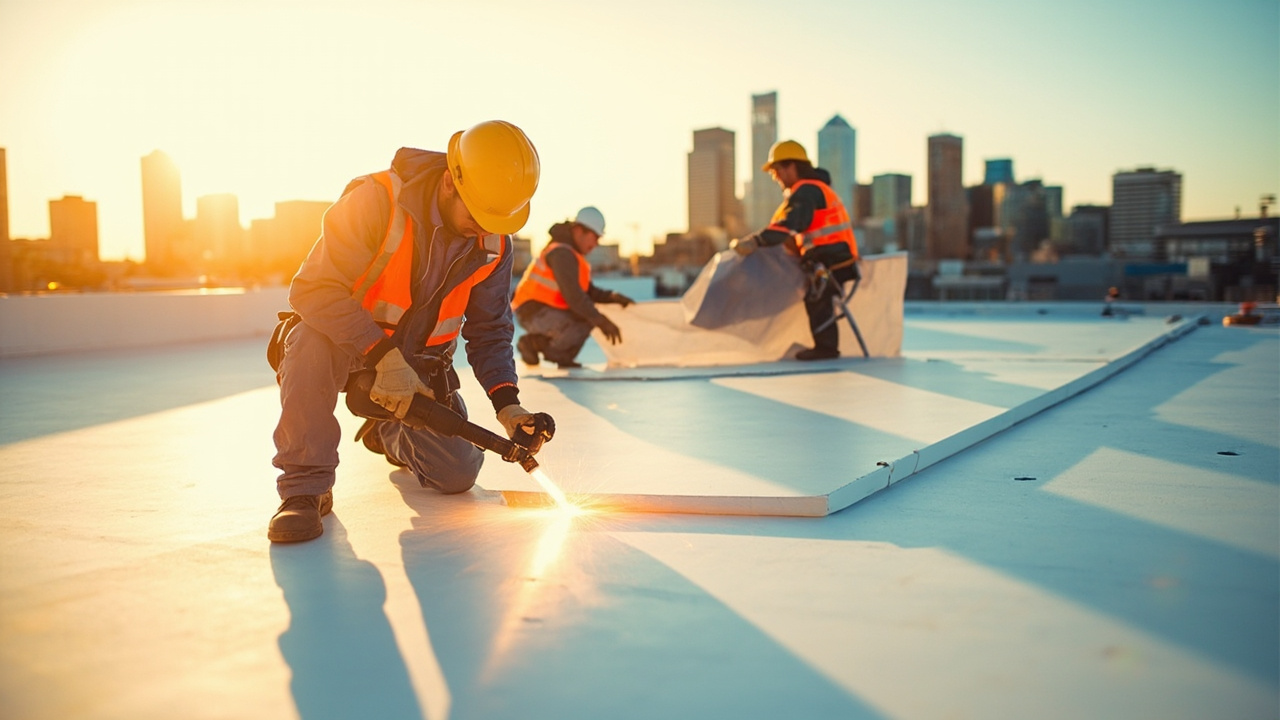


Denver receives 300 days of sunshine annually, and UV intensity at 5,280 feet is significantly higher than at lower elevations. This accelerates chalking and embrittlement in roofing membranes not designed for high-altitude exposure. Commercial TPO roof systems use UV stabilizers and reinforced scrim layers that resist degradation from constant sun exposure. Single-ply TPO roofing also handles Denver's temperature extremes, where rooftop surfaces can reach 160 degrees in summer and drop to -10 degrees in winter. This thermal cycling causes expansion and contraction that can crack brittle membranes, but TPO remains flexible across this range, preventing seam failure and membrane splitting.
Denver's commercial building codes require roof systems to meet FM Global wind uplift ratings for the Front Range wind zone. TPO flat roof installation allows for mechanically fastened systems that distribute wind loads across the deck, which prevents membrane blow-offs during Chinook wind events that can gust to 100 mph. Local building inspectors verify fastener spacing, edge securement, and parapet flashing details during permit inspections. Working with a contractor who understands Denver's inspection requirements prevents failed inspections and project delays. Apex Roofing Denver maintains relationships with city building departments and knows the specific documentation required for commercial reroofing permits in Denver, Aurora, and Lakewood.