
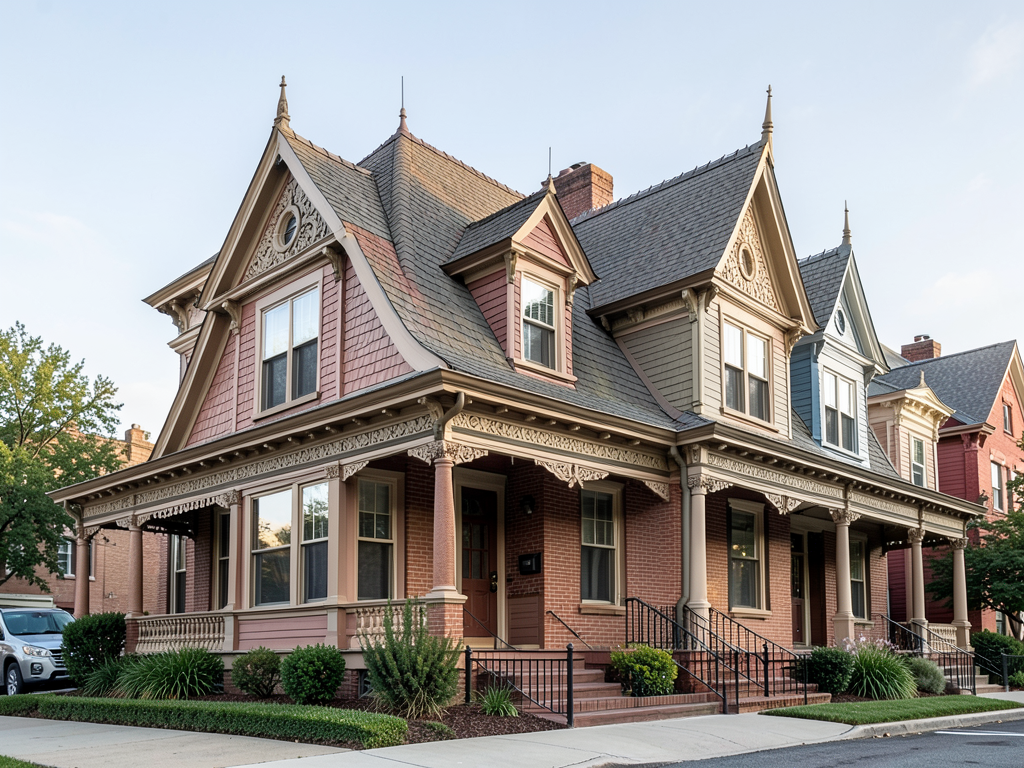
Understanding Victorian Roof Architecture in Denver’s Baker Neighborhood
Victorian homes in Denver’s Baker neighborhood face unique roofing challenges because of their age and architectural complexity. Built primarily between 1880 and 1920, these homes feature intricate rooflines with multiple gables, turrets, and decorative elements that need specialized knowledge to maintain properly. Denver Landmark Preservation Commission.
The Baker neighborhood sits on the western edge of downtown Denver at approximately 5,300 feet elevation. This high-desert climate creates extreme temperature swings that can damage older roofing materials. Winter temperatures often drop below zero while summer days routinely exceed 90 degrees Fahrenheit. These conditions stress historic roofing systems that weren’t designed for such variations. Denver Weather Data.
Victorian homes in Baker typically feature wood shake or slate roofing systems. Many original wood shake roofs have been replaced multiple times over the past century. The neighborhood’s proximity to downtown means these homes experience higher pollution levels and more foot traffic than suburban areas, accelerating wear on roofing materials. Cedar Shake Roof Restoration for Homes in Ken Caryl.
Common Structural Issues in Historic Denver Roofs
Older Victorian homes often have structural issues that become apparent only after removing existing roofing materials. Many Baker neighborhood homes were built using dimensional lumber that doesn’t meet modern building code requirements. Rafter spans may be inadequate for current snow load requirements in Denver’s climate. Roofing Sheridan.
Roof deck deterioration represents another common problem. Original wood decking often consists of 1×6 or 1×8 boards with significant gaps between them. These gaps allow moisture penetration and create air infiltration that reduces energy efficiency. Modern building codes require solid decking, meaning many Victorian homes need complete deck replacement during roof projects. How Much a Full Roof Replacement Actually Costs in Denver Right Now.
Attic ventilation poses unique challenges in historic homes. Many Baker Victorians lack proper soffit ventilation because they were built before building codes required it. Adding ventilation while maintaining the home’s historic character requires creative solutions that don’t damage original architectural features.
Material Selection for Victorian Roof Restoration
Material selection for Victorian roof restoration requires balancing historical accuracy with modern performance requirements. The Denver Landmark Preservation Commission maintains strict guidelines for visible exterior modifications in historic districts. Materials must match the home’s original appearance while providing adequate protection against Denver’s harsh climate.
Wood shake roofing remains popular for Victorian restoration projects. Modern wood shakes offer better fire resistance than original materials while maintaining the authentic appearance. However, wood requires more maintenance than synthetic alternatives and may not be suitable for all homeowners.
Synthetic slate and composite materials provide alternatives that mimic traditional materials while offering superior durability. These products resist impact damage from Denver’s frequent hailstorms and require less maintenance than natural materials. The initial cost exceeds traditional materials, but the extended lifespan often justifies the investment.
Metal roofing offers another option for Victorian homes. Standing seam metal roofs can be installed in colors that complement historic architecture while providing excellent durability and energy efficiency. Modern metal roofing systems include insulation layers that improve the home’s thermal performance.
Denver’s Preservation Guidelines
The Denver Landmark Preservation Commission requires a Certificate of Appropriateness for any exterior modifications to homes in historic districts. This process ensures that changes maintain the neighborhood’s historic character. The commission reviews material selections, color schemes, and installation methods to verify compliance with preservation standards.
Application requirements include detailed drawings showing existing conditions and proposed changes. The commission may require samples of proposed materials and documentation of the home’s original construction. Approval typically takes 30-60 days, though complex projects may require additional review time.
Working with experienced contractors familiar with Denver’s preservation guidelines can streamline the approval process. These professionals understand the commission’s requirements and can prepare applications that address potential concerns before submission. This expertise often prevents costly delays and redesigns.
Addressing Weather-Related Damage in Historic Roofs
Denver’s weather creates specific challenges for historic roof preservation. Hail damage represents the most common insurance claim for Victorian homes in the Baker neighborhood. Hailstones can crack slate tiles, split wood shakes, and damage metal roofing systems. The frequency of severe hailstorms has increased in recent years, making impact-resistant materials more important than ever.
Freeze-thaw cycles cause additional damage to historic roofing systems. Water penetrates small cracks and expands when frozen, creating larger openings over time. This process accelerates deterioration of mortar joints in slate roofs and causes wood shakes to split and warp.
UV radiation at Denver’s elevation damages roofing materials more quickly than at lower altitudes. The intense sunlight breaks down organic materials and causes color fading in synthetic products. UV-resistant coatings and proper ventilation help extend material lifespans in this challenging environment.
Cost Factors for Victorian Roof Restoration
Victorian roof restoration typically costs 30-50% more than standard roof replacement because of the complexity and specialized requirements. The intricate rooflines require more labor hours for installation and repair. Steep pitches common in Victorian architecture increase safety requirements and installation time. Industrial Roof Replacement.
Material costs vary significantly based on selection. Natural slate costs $15-25 per square foot installed, while synthetic alternatives range from $8-15 per square foot. Wood shake installation costs $12-20 per square foot, though ongoing maintenance adds to the lifetime cost.
Permit fees for historic districts often exceed standard permit costs. The Denver Landmark Preservation Commission charges additional review fees, and some projects require structural engineering analysis. These fees typically add $1,000-3,000 to project costs.
Insurance considerations affect material selection. Some historic districts require Class A fire-rated materials, eliminating certain wood products. Insurance companies may offer premium discounts for impact-resistant materials, offsetting some of the higher initial costs.
Case Study: Victorian Restoration in Baker
A recent Victorian restoration project in the Baker neighborhood demonstrates the complexity of these repairs. The 1905 home featured original wood shake roofing that had reached the end of its service life. The owner wanted to maintain the home’s historic character while improving durability and energy efficiency.
The project required complete roof deck replacement because of extensive rot in the original decking. Structural reinforcement was necessary to meet current snow load requirements. The owner selected synthetic slate that matched the appearance of the original material while providing superior durability.
The restoration included upgrading attic ventilation and adding insulation to improve energy efficiency. The project took six weeks to complete and cost approximately $45,000, including permits and structural upgrades. The owner reported a 20% reduction in heating and cooling costs after completion.
Maintenance Strategies for Historic Roofs
Regular maintenance extends the life of historic roofing systems and prevents costly repairs. Annual inspections identify problems before they cause significant damage. Key inspection points include checking for loose or damaged shingles, examining flashing around chimneys and valleys, and inspecting attic spaces for moisture intrusion.
Cleaning gutters and downspouts prevents water backup that can damage roofing materials and cause leaks. Denver’s frequent afternoon thunderstorms can overwhelm clogged drainage systems, leading to water infiltration under roofing materials. Fixing Flat Roof Leaks in LoHi and Modern Denver Homes.
Trimming overhanging tree branches prevents damage from falling limbs and reduces debris accumulation on the roof. Tree debris holds moisture against roofing materials, accelerating deterioration. In the Baker neighborhood, mature trees planted during the Victorian era often create these maintenance challenges.
Addressing minor repairs promptly prevents them from becoming major problems. Replacing a few damaged shingles costs significantly less than repairing water damage to interior finishes and structural components.
Choosing the Right Contractor for Victorian Restoration
Selecting a contractor with experience in historic restoration ensures proper handling of Victorian roofing systems. These projects require specialized knowledge of historic construction methods and materials. Contractors must understand Denver’s preservation guidelines and have relationships with suppliers of specialty materials.
Verify contractor credentials including licensing, insurance, and references from similar projects. Ask to see examples of completed Victorian restorations and speak with previous clients about their experiences. Experience with the Denver Landmark Preservation Commission’s approval process is particularly valuable.
Request detailed proposals that outline the scope of work, material specifications, and project timeline. The proposal should address how the contractor will handle unexpected issues common in historic restoration projects. A well-prepared contractor will identify potential challenges and propose solutions during the planning phase.
Communication throughout the project prevents misunderstandings and ensures the restoration meets both preservation standards and homeowner expectations. Regular progress updates and prompt responses to questions indicate a contractor committed to customer satisfaction.
Future Considerations for Victorian Homeowners
Victorian homeowners in Denver’s Baker neighborhood should plan for ongoing maintenance and eventual restoration. The age of these homes means that roofing systems will require attention more frequently than in newer construction. Planning for these expenses helps homeowners budget appropriately and avoid financial stress when repairs become necessary.
Energy efficiency improvements often accompany roof restoration projects. Adding proper insulation and ventilation while maintaining historic character can significantly reduce utility costs. These improvements may qualify for energy efficiency rebates, offsetting some project costs.
Climate change considerations affect long-term planning for historic homes. Increasing frequency of severe weather events may require more frequent roof inspections and earlier replacement of roofing materials. Selecting materials with higher impact resistance and longer warranties provides better protection against these changing conditions.
Preserving Denver’s architectural heritage requires commitment from homeowners, contractors, and preservation organizations. Each restored Victorian roof contributes to maintaining the character of neighborhoods like Baker while ensuring these historic homes remain viable for future generations.
Frequently Asked Questions
How long does a Victorian roof restoration typically take?
Most Victorian roof restorations in Denver require 4-8 weeks for completion, depending on the project’s complexity and weather conditions. Factors affecting timeline include structural repairs, material availability, and permit approval processes.
Can I install solar panels on my historic Victorian home?
Solar panel installation on historic homes requires approval from the Denver Landmark Preservation Commission. Panels must be installed in locations that minimize visual impact from public rights-of-way. Some homeowners install solar on detached garages or use solar shingles that maintain the roof’s historic appearance.
What permits are required for Victorian roof restoration in Denver?
Historic roof restoration requires a building permit and a Certificate of Appropriateness from the Denver Landmark Preservation Commission. Additional permits may be needed for structural modifications or electrical work associated with the project.
How do I know if my Victorian roof needs restoration versus replacement?
Professional inspection determines whether restoration or replacement is appropriate. Signs that replacement may be needed include extensive rot, multiple layers of roofing materials, and structural damage. Restoration may be possible if the roof deck is sound and damage is limited to surface materials.
Are there tax benefits for preserving historic homes in Denver?
Colorado offers state income tax credits for certified rehabilitation of historic structures. The federal government provides tax credits for income-producing historic properties. These programs have specific requirements and application processes that must be followed to qualify for benefits. For more information, visit National Park Service Preservation Briefs.