
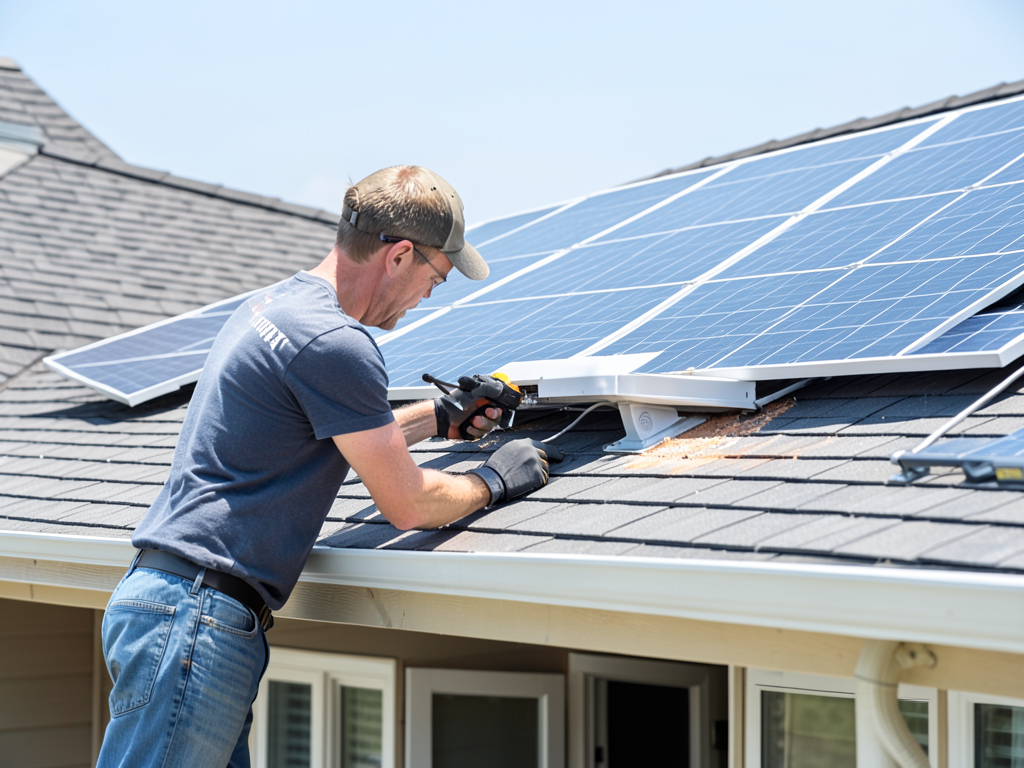
Should You Install a Solar Attic Fan in Your Wheat Ridge Home This Summer?
The Denver metro area experiences over 300 sunny days per year. That sunshine heats your attic to extreme temperatures during summer months. A solar attic fan uses that same sunlight to power a ventilation system that pulls hot air out of your attic space.
Wheat Ridge homes built before 2000 often lack proper attic ventilation. The combination of aging insulation and sealed attic spaces creates heat traps. Temperatures in these attics can reach 150°F on summer afternoons. This heat radiates down into living spaces making your air conditioning work harder.. Read more about Comparing Ridge Vents and Powered Attic Ventilators for Better Airflow in Thornton.
A solar attic fan mounts on your roof and uses a small photovoltaic panel to power a fan motor. The fan runs whenever the sun shines on the panel. No wiring or electrical connection is needed. The system pulls air through existing soffit vents creating continuous airflow through your attic.. Read more about Protecting Your Roof Vents from Curious Raccoons and Squirrels in University Park.
The question becomes whether this investment makes sense for your specific Wheat Ridge home. Several factors affect the decision including your roof orientation, existing ventilation, and local energy costs.
How Solar Attic Fans Work in Denver’s Climate
Denver’s high altitude creates unique conditions for solar attic fans. At 5,280 feet elevation the sun’s UV intensity is 25% stronger than at sea level. This means solar panels produce more power here than in most other U.S. locations. U.S. Department of Energy on solar energy systems.
The intense sunlight combined with our dry climate creates perfect conditions for solar attic fans. The fans typically move 800 to 1,500 cubic feet per minute of air depending on the model size. This airflow rate matches the ventilation needs of most Wheat Ridge homes with 1,500 to 3,000 square feet of attic space.
During summer months when attic temperatures peak the solar panels produce maximum power. The fan runs at full speed exactly when you need it most. This self-regulating feature means the fan never wastes energy pulling cool air out of your attic on mild days.
Winter operation provides unexpected benefits. The fan continues to move air through your attic preventing moisture buildup from bathroom fans and other sources. This airflow helps prevent ice dam formation along roof edges during freeze-thaw cycles common in Wheat Ridge.
Benefits of Installing a Solar Attic Fan
Energy savings represent the primary benefit most homeowners seek. A solar attic fan can reduce your cooling costs by 10% to 30% depending on your home’s characteristics. The fan removes superheated air from your attic before it can radiate into your living spaces.
Roof protection extends the life of your shingles. Asphalt shingles installed over hot attics deteriorate faster due to constant heat exposure. Keeping your attic closer to outdoor temperatures reduces thermal cycling stress on roofing materials. Roofing Sheridan.
Moisture control prevents mold growth and wood rot. Attics trap moisture from bathroom exhaust fans, kitchen vents, and even breathing. This moisture condenses on cool surfaces during temperature swings. Proper ventilation keeps humidity levels low enough to prevent condensation.
Ice dam prevention becomes critical during Wheat Ridge winters. Snow melts on warm roof sections then refreezes at colder eaves creating ice dams. These dams force water under shingles causing interior leaks. A solar attic fan keeps roof temperatures uniform reducing this freeze-thaw cycle. Fixing Flat Roof Leaks in LoHi and Modern Denver Homes.
Cost Factors and Financial Incentives
Solar attic fan prices vary based on capacity and features. Basic models with 10-watt panels cost $300 to $500. Premium units with 20-watt panels and thermostat controls range from $600 to $900. Professional installation adds $200 to $400 depending on roof complexity.
The federal solar tax credit applies to solar attic fans. You can claim 30% of the total cost including installation as a tax credit. For a $700 fan with $300 installation the credit equals $300. This credit applies to your federal income taxes for the year of installation.
Xcel Energy offers rebates for energy efficiency improvements. While specific attic fan rebates vary by year you may qualify for $50 to $150 in additional incentives. Check current Xcel Energy programs before purchasing. Xcel Energy efficiency rebates.
The payback period typically ranges from 2 to 4 years. This calculation assumes electricity costs of $0.15 per kilowatt-hour and annual cooling savings of $150 to $300. Your actual savings depend on your home’s insulation levels and local climate conditions.
Installation Process and Timeline
Professional installation ensures proper sealing and flashing integration. The process begins with attic inspection to verify existing ventilation and identify any moisture issues. Technicians measure your attic to determine the optimal fan location and size.
Roof preparation involves removing shingles in the installation area. Technicians cut a hole matching the fan housing dimensions. They install a waterproof membrane around the opening extending several inches beyond the fan base.
Flashing installation creates the critical waterproof seal. Aluminum or galvanized steel flashing integrates with existing roofing materials. The flashing extends under upper shingles and over lower shingles creating a water-shedding surface. Roofing Englewood.
Fan mounting secures the unit to roof framing. The fan housing includes mounting brackets that attach to roof rafters or trusses. Technicians level the fan and verify proper alignment before final fastening.
Final sealing uses roofing cement or silicone around all penetration points. Technicians replace removed shingles and verify the installation blends with existing roof patterns. The entire process typically requires 2 to 4 hours for a single fan installation.
Solar vs Electric Attic Fans Comparison
| Feature | Solar Fan | Electric Fan |
|---|---|---|
| Operating Cost | $0 annual | $30-$60 annual |
| Installation Complexity | Simple, no wiring | Requires electrical connection |
| Environmental Impact | Zero emissions | Grid electricity use |
| Performance in Outages | Unaffected | Stops working |
| Government Incentives | 30% tax credit available | Typically no incentives |
| Maintenance Requirements | Clean panel annually | Check motor bearings |
Solar fans provide distinct advantages for Denver homeowners. The zero operating cost means savings begin immediately. No electrical wiring eliminates potential failure points and reduces installation time.
Electric fans offer higher consistent airflow rates. Models with 1,500 to 2,500 CFM ratings move more air than most solar units. They include thermostat controls that activate only when attic temperatures exceed set points.
Weather reliability differs between types. Solar fans depend on sunlight availability. They produce less airflow on cloudy days or during early morning hours. Electric fans provide consistent performance regardless of weather conditions.. Read more about Choosing Between a Sun Tunnel and a Traditional Skylight for Your Platt Park Kitchen.
Determining the Right Size for Your Home
Attic ventilation follows the 1/300 rule for homes with vapor barriers. This means you need 1 square foot of net free ventilation area for every 300 square feet of attic floor space. Half of this ventilation should be intake at the soffits and half should be exhaust at the roof peak.
Calculate your attic area by measuring the home’s footprint including attached garages. A typical Wheat Ridge ranch home with 2,000 square feet of living space has approximately 2,000 square feet of attic area.
Solar fans are rated by CFM (cubic feet per minute) airflow capacity. General guidelines suggest:
- 1,000 CFM for homes under 1,500 square feet
- 1,200 to 1,500 CFM for homes 1,500 to 2,500 square feet
- 1,500 to 2,000 CFM for homes over 2,500 square feet
Roof pitch affects fan performance. Steeper roofs create more natural convection helping the fan move air. A 6:12 pitch roof might require 10% less fan capacity than a 4:12 pitch roof.
Existing ventilation impacts sizing decisions. Homes with continuous soffit vents need less fan capacity than homes with only gable vents. A professional assessment can determine your specific ventilation requirements.
Common Installation Questions
Roof warranty concerns often arise during the decision process. Quality solar attic fans include mounting hardware that preserves roofing warranties. The flashing installation follows manufacturer guidelines preventing warranty voidance.
Noise levels remain minimal with modern solar fans. Units operate at 35 to 45 decibels at one foot distance. This equals quiet conversation volume. The sound becomes inaudible inside your home when the fan mounts on the rear roof slope.
Snow and ice conditions in Wheat Ridge rarely affect fan operation. The photovoltaic panel sits at an angle that sheds snow naturally. Brief snow coverage reduces fan speed but does not stop operation completely. The black panel surface absorbs heat helping melt surrounding snow.
Hail resistance varies by model. Premium fans use tempered glass panels rated for 1-inch hail impact. The fan housing typically withstands impacts from larger hail stones. Most manufacturers offer hail damage coverage under their warranties.
Maintenance Requirements
Solar attic fans require minimal maintenance. The primary task involves cleaning the photovoltaic panel surface annually. Dust and pollen accumulation reduces power output by up to 25%. A simple rinse with garden hose water restores full efficiency.
Bearing inspection occurs every 2 to 3 years. Most quality fans use sealed ball bearings lasting 10 to 15 years. Signs of bearing wear include increased noise or reduced fan speed during peak sunlight hours.
Flashing inspection should happen annually. Check for gaps or separation between flashing and roofing materials. Seal any openings with roofing cement to maintain waterproof integrity.
Attic inspection every few years verifies proper ventilation balance. Look for signs of moisture accumulation or inadequate intake ventilation. Soffit vents should remain clear of insulation and debris.
Frequently Asked Questions
Will a solar attic fan work during Denver’s cloudy days?
Solar fans produce reduced power during cloudy conditions. They typically generate 10% to 25% of maximum output under heavy cloud cover. This reduced airflow still provides ventilation benefits even if not at peak capacity.
How many solar attic fans does my home need?
Most Wheat Ridge homes need only one fan for adequate ventilation. Homes exceeding 2,500 square feet or with complex roof designs might benefit from two fans placed at different roof sections. A professional assessment determines the optimal number.
Can I install a solar attic fan myself?
DIY installation is possible but carries risks. Roof work creates fall hazards and improper flashing installation causes leaks. Professional installation includes proper sealing and warranty preservation. The cost difference between DIY and professional installation rarely justifies the risks.
Do solar attic fans work in winter?
Solar fans operate year-round in Denver. Winter operation prevents moisture accumulation and reduces ice dam formation. The fan moves less air during shorter winter days but still provides ventilation benefits.
Will a solar attic fan interfere with my existing roof vents?
Solar fans integrate with existing ventilation systems. They enhance rather than replace soffit and ridge vents. The fan creates active ventilation supplementing passive ventilation from other roof features.
What happens if the fan stops working?
Most solar attic fans include 5 to 10 year warranties covering motor and panel failures. Without the fan your attic ventilation returns to passive levels through existing vents. This represents the same ventilation you had before installation.
Making Your Decision
Solar attic fans provide measurable benefits for Wheat Ridge homeowners. The combination of high altitude sunlight and dry climate creates ideal operating conditions. Energy savings, roof protection, and moisture control justify the investment for most homes.
Consider your specific situation when making the decision. Homes with minimal insulation or poor attic ventilation see the greatest benefits. Newer homes with good insulation might see smaller but still worthwhile improvements.
The federal tax credit and potential utility rebates improve the financial case significantly. These incentives reduce the effective cost by 30% to 45% making the payback period more attractive.
Professional installation ensures proper integration with your existing roofing system. Quality installation prevents leaks and preserves roofing warranties. The small additional cost provides peace of mind and long-term reliability.
Summer heat in Wheat Ridge creates uncomfortable living conditions and high cooling costs. A solar attic fan addresses both issues using free energy from the sun. The technology has matured to provide reliable performance with minimal maintenance requirements. Reliable Gutter Installation for New Builds in Central Park.
Ready to improve your home’s comfort and efficiency? Contact Apex Roofing Denver at (720) 484-8300 to schedule a free attic ventilation assessment. Our experienced technicians will evaluate your specific needs and provide honest recommendations for your Wheat Ridge home.
Don’t wait until summer heat arrives. Take action now to enjoy cooler temperatures and lower energy bills this season.