
How to Find a Reliable Roofing Company in Denver Without Getting Ripped Off
A storm hits Denver. Your roof takes damage. Within hours, your phone buzzes with text messages from roofing companies offering instant quotes and “free inspections.” You feel the pressure to act fast. You know you need help, but you also know that not every roofer in Denver operates with your best interests in mind.
Finding a reliable roofing company in Denver is not about luck. It is about knowing what to look for, understanding how Denver’s unique climate and building codes affect roofing work, and recognizing the red flags that separate legitimate contractors from storm chasers.
After 15 years of roofing work across the Front Range, I have seen what separates trustworthy companies from ones that cut corners or disappear after the check clears. This guide gives you the tools to make a confident decision.
Why Denver Roofing Differs From Other Markets
Denver sits at 5,280 feet elevation, and that altitude changes everything about roofing. The thin atmosphere means extreme UV radiation that degrades shingles faster than in coastal cities. Temperatures swing wildly. A roof can experience a 50-degree temperature drop overnight, causing materials to contract and expand in ways that stress seams and fasteners.
Hail poses the biggest threat. Denver and the surrounding Front Range sit in Hail Alley, positioned directly east of the Front Range mountains. This geographic location creates the perfect conditions for large hail stones to strike roofs regularly, causing impact damage that sometimes takes months to become visible. Insurance claims for hail damage are common, but they are also complex. Adjusters require evidence, and roofers who understand Colorado insurance code navigate these claims far more effectively than contractors from out of state.
Snow loads matter here too. The IRC and IBC building codes adopted by Denver include amendments for high-altitude snow accumulation. Your roofer must understand these local structural requirements, as a roof system built to handle Denver snow loads might fail in a warm climate and vice versa.
Expansive clay soils in the Denver area shift with moisture changes, sometimes moving your foundation slightly. When foundations move, roof systems experience stress that manifests as cracking, leaking, or fastener failure. Good Denver roofers account for this when designing repairs or replacements.
What Legitimate Denver Roofing Companies Have in Common
Before you call anyone, understand what separates legitimate operators from problem contractors.
Colorado License and Local Business Registration
Every roofer working in Colorado must hold a Colorado roofing license issued by the Division of Professions and Occupations. You can verify this license on the Colorado Division of Professions website. Legitimate Denver roofing companies display their license number on contracts and marketing materials. They operate under a registered Denver business address, not a cell phone number and a post office box.
Storm chasers often work under new or temporary licenses. They establish a company after a major hail event, complete jobs quickly, and disappear when warranty claims or disputes arise. Run the license check yourself. If a company is evasive about their license number or registration, walk away.
Manufacturer Certifications and Factory Training
Major shingle manufacturers like GAF and Owens Corning offer contractor certification programs. A GAF Master Elite certification or Owens Corning Platinum Preferred status means the roofer has met specific training, quality, and financial standards. More importantly, these certifications require audits and annual renewal, which keeps contractors accountable.
Ask your potential roofer which certifications they hold. The answer matters because manufacturer certifications often unlock extended warranties that protect you. A non-certified contractor might install the same shingles, but without factory certification, your warranty is limited.
BBB Accreditation and Local Reputation
The Better Business Bureau does not guarantee quality, but it does reflect accountability. A BBB-accredited company has agreed to follow complaint resolution standards and advertises honestly. Check the Better Business Bureau website for Denver roofing companies. Look at complaint history, not just the letter grade. Legitimate businesses get complaints sometimes. The question is how they resolve them.
Local reviews on Google Maps and Yelp matter, but weigh them carefully. Generic praise (“Great company, highly recommend”) tells you little. Specific reviews (“They found ice damming under our eaves that other roofers missed, explained the problem clearly, and fixed it the right way”) signal real experience. Fake reviews often sound too polished or generic.
Years of Local Operation and Crew Stability
A roofing company that has operated continuously in Denver for 10 or more years has survived economic downturns, warranty claims, and reputation challenges. They have roots here. They face real consequences for shoddy work because neighbors and contractors know them.
A company that appeared after a major hail storm and operates only during peak season carries higher risk instead. Ask how long they have been in Denver specifically, not just how long they have been “in the roofing business.” Ask whether they have in-house crews or rely entirely on subcontractors. Companies with stable, trained in-house crews tend to deliver more consistent quality.
Denver Neighborhoods and Roofing Considerations
Roofing needs vary by neighborhood based on age, architecture, and exposure. Three neighborhoods in the south and southwest Denver area demonstrate these differences well.
Englewood and Sheridan Residential Areas
Englewood and Sheridan feature older Craftsman and mid-century modern homes with varying roof pitches and architectural complexity. Many have lived through multiple hail events. Homeowners in these neighborhoods understand the value of impact-resistant shingles, which qualify for insurance discounts in Colorado when they meet Class 4 impact rating standards.
Roofing companies serving Englewood and Sheridan work frequently with insurance claims. They understand that an impact-resistant shingle installed on a 1970s home not only protects against future hail but often qualifies homeowners for a 20-30 percent insurance discount. This single factor can offset the cost difference between standard asphalt shingles and Class 4 impact-resistant options.
Gutters and downspouts carry extra importance in these neighborhoods because older gutters cannot always handle the volume of snowmelt common to Denver springs. Roofers familiar with Englewood and Sheridan understand drainage patterns specific to these areas and recommend gutter upgrades when replacement happens.
Cherry Creek and Higher-Altitude Exposures
Cherry Creek and similar higher-elevation Denver neighborhoods experience even more severe UV exposure and temperature swings. Roofing materials here fail faster than in lower areas. Premium shingle brands with advanced UV protection justify their cost in these zones because they simply last longer.
Metal roofing becomes a viable option in higher areas due to durability under extreme UV and temperature cycling. Stone-coated steel roofing, for example, resists both impact and UV damage while offering a traditional shingle appearance. These premium materials make sense in Cherry Creek and similar neighborhoods where material lifespan directly impacts home value and long-term cost of ownership.
Understanding Hail Damage and Insurance Claims
Hail damage claims represent the largest category of roofing work in Denver. Understanding the process protects you from overpricing and unnecessary recommendations.
How Hail Damage Occurs and Why It Is Hard to Spot
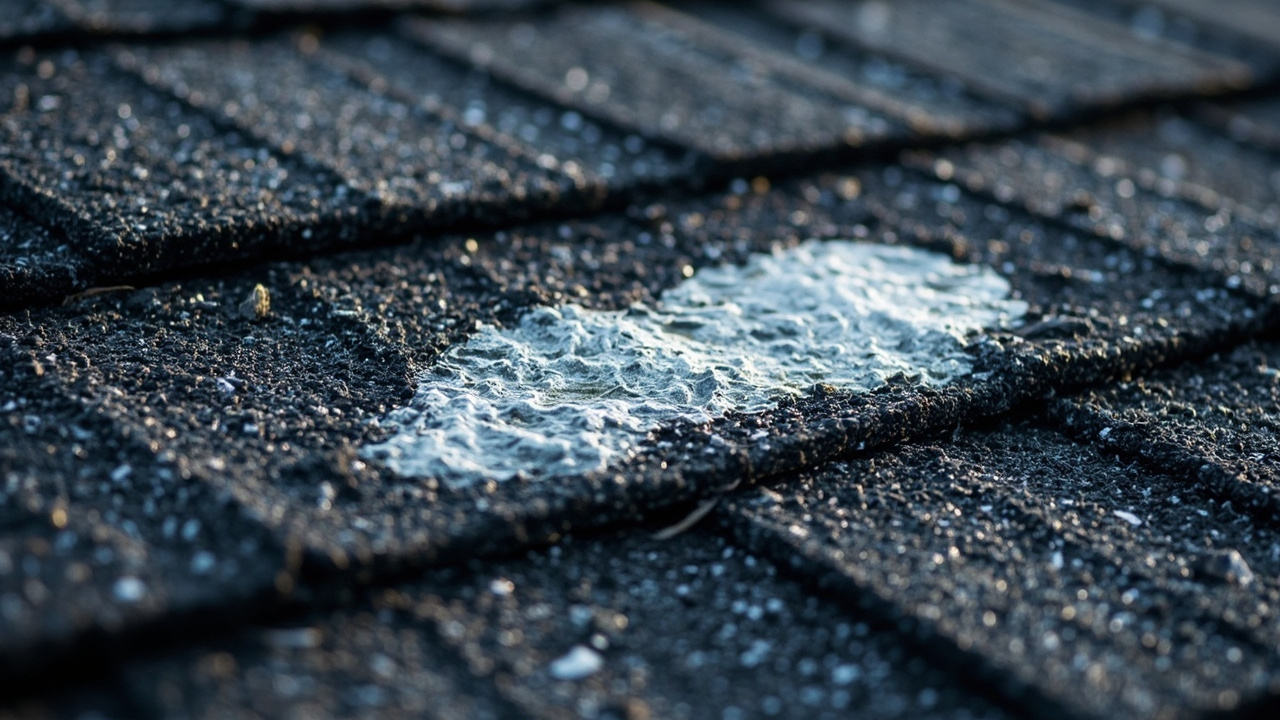
Hail creates impact bruises on shingle surfaces. Fresh damage looks like small dents or black marks where the protective granule coating has been knocked off. Within weeks, these damaged areas begin to leak as water seeps under shingles. Within months, you might see water stains on ceilings or attic framing before the roof starts actively dripping.
Insurance adjusters look for evidence. Photographs of impact marks, count of damaged shingles, and documentation of the hail event itself all matter. A roofer who specializes in hail claims knows how to present evidence in a way that adjusters accept. They understand what photos adjusters need, what documentation strengthens your claim, and how to work within the adjuster’s timeline.
Repair Versus Replacement Under Insurance
Insurance adjusters prefer repairs to full replacement whenever possible. If 15 percent of your roof shows impact damage, the insurer might approve a patch repair rather than a full replacement. But if damage is spread across multiple areas or structural issues underlie the impact damage, replacement becomes the logical choice.
Here is where many homeowners get taken advantage of. A dishonest roofer tells you that “the insurance company will only approve replacement,” encouraging you to accept an inflated replacement quote when a repair would actually save money. A trustworthy contractor gives you the repair versus replacement analysis. They evaluate the damage, estimate both options, and let you decide with full information. That approach takes longer and requires honesty, which is why reputable companies do it.
Insurance deductibles matter too. A hail damage claim with a one-percent deductible on a $300,000 home means you pay $3,000 out of pocket before insurance covers the rest. Some homeowners opt for repairs of obvious damage while leaving minor impact marks unrepaired to avoid the deductible entirely. A roofer familiar with Denver insurance practices helps you make this cost-benefit calculation.
Red Flags That Signal a Problem Contractor
Certain behaviors predict problems. Watch for these warning signs.
Unsolicited Inspections and Pressure Sales
A roofer who shows up at your door after a storm offering a “free hail damage inspection” and pushing you to sign a contract on the spot is not operating in your interest. Legitimate companies respond to calls and inquiries. They do not chase leads aggressively in the hours after a hail event.
Pressure tactics include offering a discount that expires within 24 hours, insisting that you must decide immediately, or suggesting that other roofers are already “booked up” so you must act now. These are sales tactics designed to prevent you from comparing options or asking questions. Step back from any company that uses them.
Quoting Prices Over the Phone Without Site Inspection
No honest roofer quotes a roof replacement price without visiting your home, measuring the roof, and assessing structural conditions. If a company gives you a price estimate based on a phone conversation alone, they are guessing. That guess often comes in low to win the job, then change orders appear mid-project as “unforeseen conditions” surface.
Unwillingness to Put Promises in Writing
Verbal promises mean nothing. Any warranty, timeline guarantee, or scope-of-work commitment must appear in writing on the contract. A roofer who brushes off your request for written documentation or claims that “the standard contract covers everything” is cutting corners.
Read every line of a contract before signing. Look for vague language. Specific language says “Install GAF Timberline HD shingles in Weathered Wood color to 25-year manufacturer specifications.” Vague language says “Install quality shingles to standard specifications.” The difference protects you if disputes arise later.
No Clear Timeline or Project Manager Assigned
A legitimate company gives you a specific start date, estimated completion date, and the name of a project manager who oversees your job and serves as your single point of contact. If a company cannot provide this information or changes project managers midway through work, communication and quality control are likely problems.
Materials That Work in Denver
Denver roofing materials must tolerate UV exposure, temperature extremes, and occasional high wind loads. Not all materials perform equally here.
| Material Type | Lifespan in Denver | Impact Resistance | Best For | Key Limitation |
| Asphalt Shingles (Standard) | 15-20 years | Class 1 | Budget-conscious homeowners | UV breakdown accelerated at altitude |
| Asphalt Shingles (Impact Resistant) | 20-25 years | Class 4 | Hail-prone areas, insurance savings | Higher upfront cost offset by discounts |
| Stone-Coated Steel | 40-50 years | Class 4 | Long-term ROI, extreme weather | Specialized installation required |
| Standing Seam Metal | 40-60 years | Class 4 | Modern homes, commercial buildings | Visible fasteners require maintenance |
| Slate (Natural) | 75+ years | Class 4 | High-end restoration, historic homes | Expensive, requires specialty roofers |
Standard asphalt shingles cost the least upfront but break down faster under Denver UV exposure. Impact-resistant asphalt shingles cost more initially but qualify for insurance discounts that often recover the premium within five years while also providing better hail protection.
Metal roofing makes economic sense if you plan to stay in your home long-term. The higher installation cost pays dividends over decades of lower maintenance and longer lifespan. Colorado building codes support metal roofing for snow load requirements, making it a legitimate choice here.
The Role of Building Permits and Code Compliance
Denver requires building permits for roof replacement and most roof repairs exceeding a certain threshold. This is not a minor bureaucratic hurdle. It is a protection for you.
A permit triggers a city inspection after installation. The inspector verifies that the roofer followed Denver Green Building Ordinance requirements for buildings over 25,000 square feet, installed proper flashing and ventilation, and anchored the roof to current code standards. Many problems emerge only during inspection, which saves you from inheriting a non-compliant roof.
Some roofers push back against permits or suggest they can “handle it without the permit process.” This is a red flag. Either they do not understand code compliance, or they are cutting corners to save time. Legitimate Denver roofers budget the permit cost and timeline into every quote.
Comparing Quotes From Multiple Contractors
Never hire the first roofer you call. Get at least three written quotes. Comparing them reveals whether you are dealing with honest contractors or outliers.
What an Apples-to-Apples Comparison Looks Like
Each quote should specify the exact shingle brand, color, and grade. Each should list the roofing system components like underlayment, flashing type, and ventilation plan. Each should include labor hours and timeline. Each should state whether permit and inspection fees are included or separate.
If one quote is significantly lower than the other two, ask why. Is the roofer using a lower-grade material? Cutting corners on underlayment? Planning to skip ventilation work? A quote that is too low predicts problems later.
The highest quote is not necessarily the best option instead. Sometimes premium pricing reflects superior customer service and warranty terms rather than better materials or workmanship. Your job is to understand what each quote includes and decide whether the extra cost justifies the added value to you.
Questions to Ask During the Quote Process
Legitimate contractors welcome detailed questions. Ask these questions of every contractor you interview.
- How long have you operated in Denver specifically?
- What manufacturer certifications do you hold?
- Who will be my project manager, and can I meet them before signing?
- What happens if structural issues are discovered mid-project?
- How do you handle insurance claims if one arises?
- What is included in your warranty, and what does the manufacturer warranty cover?
- Can you provide three references from Denver-area projects completed in the past two years?
- How do you handle weather delays or project timeline changes?
Answers matter. A roofer who fumbles these questions or sounds defensive is not someone you want on your home.
Specialized Services Worth Verifying
Beyond basic roof replacement, confirm that your potential roofer can handle specialized work Denver homes often need.
Emergency and Weekend Roofing Service
When a storm strikes at night or on a Saturday, your roof might have a breach that sends water into your attic. A roofer offering weekend emergency roofing service can tarp the damage, prevent further water intrusion, and schedule permanent repair for a weekday. Not all Denver roofers offer this service. Verify availability before an emergency hits.
Gutter Installation and Repair
Gutters and downspouts are part of your roof system. A roofer who only replaces the roof itself but ignores deteriorated gutters leaves a half-finished job. The best contractors evaluate gutters during the roof inspection and recommend upgrades if drainage cannot handle snowmelt or heavy rain runoff. Denver gutters clogged with debris lead to water backing up under eaves, which accelerates shingle failure. A contractor who cleans and upgrades gutters as part of the overall project prevents future problems.
Insurance Claim Assistance
Some roofers partner with insurance adjusters and handle all the documentation and negotiation for you. Others require you to navigate the claim yourself, then present you with a quote based on what the insurance company approved. The first approach saves you stress and often results in better claim outcomes. Ask directly whether your contractor provides this service.
Commercial Roofing and Industrial Work
If you manage a commercial property or industrial facility in Denver, standard residential roofing practices do not apply. Industrial roof replacement on a warehouse or manufacturing facility requires expertise in flat roof systems, long-span structural loads, and code compliance specific to commercial buildings.
Commercial properties need roofers who understand business continuity and operational downtime. An extended roof replacement causes interruptions that cost money. A contractor experienced with commercial projects minimizes downtime through careful scheduling and staging of work.
Ask whether a contractor has commercial experience. Small residential-only crews lack the equipment, insurance coverage, and crew size to handle large commercial projects safely and efficiently. Mismatched scope leads to delays and cost overruns.
The Final Decision and Next Steps
After gathering quotes and doing your research, you have enough information to choose confidently. Look for a contractor who demonstrates all of these qualities. They should hold current Colorado licensing and manufacturer certifications. They should have operated in Denver for years. They should ask thoughtful questions about your roof’s history and current needs before recommending a solution. They should provide detailed, specific written quotes with clear timelines. They should welcome your questions without defensiveness.
A trustworthy roofer in Denver does not rush you. They understand that a roof replacement is a significant investment and an important decision. They earn your trust through transparency, local expertise, and a genuine commitment to solving your roofing problem the right way rather than the fast way.
Avoid the trap of choosing based on price alone. The cheapest quote often reflects skipped steps and lower-quality materials. The right roofer delivers lasting protection for your home or facility at a price that reflects fair value for quality work and expertise.
Frequently Asked Questions
Can I stay in my home during roof replacement in Denver?
Yes, you can stay home during roof replacement. The work is noisy and disruptive, so plan accordingly. Expect loud hammering and debris removal throughout the day. Some homeowners prefer to stay elsewhere during the project, especially if they work from home. Ask your contractor about typical daily schedules and whether they can coordinate around your work requirements.
Does Denver require permits for roof repair?
Denver requires permits for roof replacement and most repairs exceeding a certain threshold. Minor repairs like replacing a few damaged shingles may not require a permit, but anything involving structural changes, system overhaul, or significant material replacement does. Your roofer should clarify permit requirements for your specific project. Never work with a roofer who avoids permits, as this creates liability for you and voids potential insurance coverage.
How much does a roof replacement cost in Denver?
Roof replacement cost depends on size, material choice, roof pitch, structural conditions, and whether work requires special equipment. An average residential roof in Denver ranges from moderate to premium pricing depending on shingle grade and accessibility. Always request written quotes from multiple contractors rather than accepting phone estimates. A quote that seems unusually low should trigger questions about what is being cut.
What is Class 4 impact resistant shingles?
Class 4 is the highest impact rating for asphalt shingles, designated by the Underwriters Laboratories impact resistance standard. These shingles withstand high-velocity impact from hail better than standard shingles. Installing Class 4 shingles on a home in Denver often qualifies you for a homeowner’s insurance discount because the shingles reduce future claim likelihood. The discount often offsets the premium price of impact-resistant shingles.
Should I get a roof inspection before storm season?
Yes. A professional roof inspection before Denver’s hail and summer storm season identifies weak points, loose flashing, or deteriorated areas that a major storm might exploit. An inspection costs far less than emergency repairs or dealing with water damage. Spring is the ideal time to schedule an inspection before peak storm season arrives.
Take Action Now
Do not wait for a crisis to find your roofer. If you have never had your roof inspected, or if you suspect damage from a previous storm, contact a reputable Denver roofing contractor today for a free professional inspection. Ask about their Denver experience, certifications, and approach to repair versus replacement analysis. Request written references from recent projects in neighborhoods near yours, like Englewood or Sheridan. Compare at least three detailed written quotes before making your decision. A small investment of time now prevents expensive mistakes and gives you the peace of mind that comes with knowing your roof is in capable, trustworthy hands. Your home protection depends on it.