
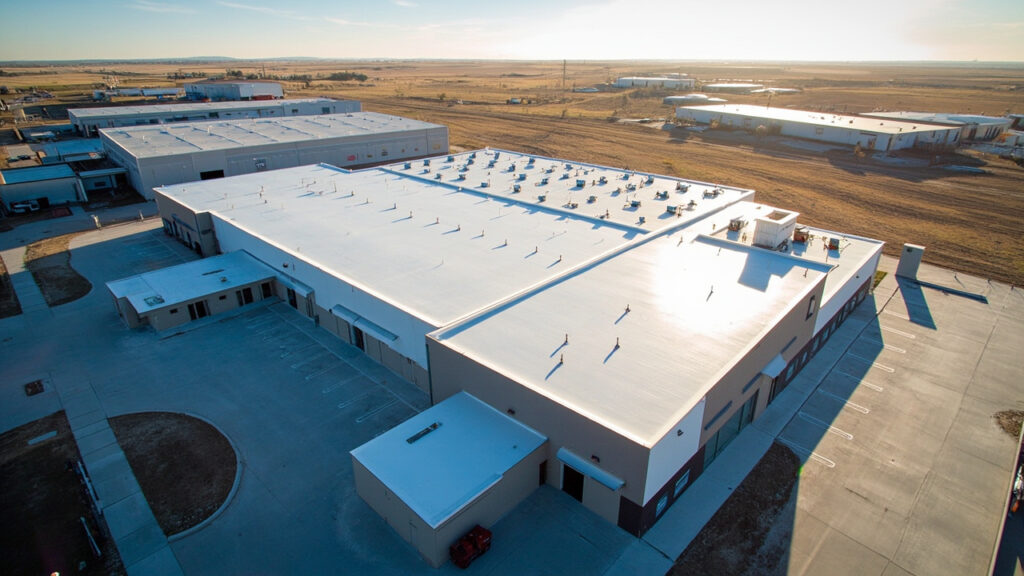
Expert Industrial Roofing Solutions for Commerce City Warehouses
Commerce City’s industrial corridor demands roofing systems that can handle more than just snow and hail. With the Suncor refinery nearby and heavy manufacturing traffic along I-270, your facility needs industrial-grade solutions that resist chemical fallout, thermal cycling, and 24/7 operational stress. The right roofing system protects your inventory, equipment, and bottom line.
Specialized Industrial Roofing Solutions for Commerce City Facilities
Commerce City’s industrial landscape includes everything from chemical processing plants near the refinery to massive distribution centers along the I-76 corridor. Each facility type faces unique challenges. Manufacturing plants deal with chemical emissions that can degrade standard membranes. Distribution centers need systems that can handle constant rooftop traffic from HVAC maintenance crews. Cold storage facilities require high R-value insulation to maintain temperature control and reduce energy costs.
The industrial zone’s proximity to the South Platte River also means many facilities must comply with stricter environmental regulations. Your roofing system needs to prevent chemical runoff and meet Adams County stormwater requirements. We design solutions that work with your facility’s specific operational needs while staying compliant with local industrial zoning codes.. Read more about Fixing Standing Water on Your Commercial Flat Roof in Arvada.
Industrial Systems We Install & Repair
Thermoplastic Polyolefin (TPO) systems dominate Commerce City’s newer industrial construction. These white reflective membranes handle Colorado’s UV exposure and reduce cooling costs by up to 30% compared to dark surfaces. TPO’s heat-welded seams create a monolithic barrier that resists the chemical fallout common in the industrial corridor. Most facilities choose 60-mil thickness for the added durability against foot traffic and equipment maintenance.
Ethylene Propylene Diene Terpolymer (EPDM) remains popular for older facilities and those needing dark surfaces for heat absorption. This synthetic rubber membrane handles Commerce City’s freeze-thaw cycles exceptionally well. The material’s flexibility prevents cracking when temperatures swing from summer heat to winter cold. EPDM works best for facilities that don’t need the reflective properties of TPO.
Metal roofing systems serve facilities needing maximum durability and fire resistance. Standing seam metal handles the heavy snow loads common in Commerce City winters and provides excellent wind uplift resistance. Many industrial clients choose metal for its 40+ year lifespan and ability to integrate solar panel mounting systems. The initial investment pays off through reduced maintenance and energy savings over decades of service.
Material Comparison for Commerce City Industrial Applications
| Material | Best For | Lifespan | Key Advantage |
|---|---|---|---|
| TPO | Warehouses, distribution centers | 25-30 years | Energy efficiency, chemical resistance |
| EPDM | Cold storage, manufacturing | 20-25 years | Flexibility, cost-effectiveness |
| Metal | Heavy industry, solar-ready buildings | 40+ years | Durability, fire resistance |
Navigating Commerce City Building Codes & Compliance
Adams County industrial building codes differ from Denver’s requirements. Commerce City facilities must meet specific wind uplift ratings due to the open plains exposure along I-270. Most industrial buildings require Class 3 or 4 wind uplift ratings, depending on building height and location within the industrial corridor.
Fire safety codes in the industrial zone are more stringent than in other areas. Facilities near the refinery must use Class A fire-rated materials and maintain specific clearances from chemical storage areas. The Adams County Building Department reviews industrial roofing plans for compliance with both local codes and federal EPA regulations regarding runoff management.
Energy codes have tightened in recent years. New industrial construction in Commerce City must meet Colorado’s commercial building energy standards, which often require cool roof technology or specific insulation R-values. Existing facilities undergoing major renovations face similar requirements when replacing more than 50% of their roof area.
Case Studies: Recent Projects in the Commerce City Industrial Corridor
A 120,000-square-foot distribution center along Vasquez Boulevard needed emergency roof replacement during peak season. The existing TPO system had failed due to chemical degradation from nearby industrial processes. We installed a new 80-mil TPO system with enhanced chemical-resistant seams and completed the project in three weeks while the facility remained operational. The new system included upgraded insulation to meet current energy codes.
A manufacturing plant near the Suncor refinery required a complete roof overhaul after 15 years of service. The EPDM system had developed multiple leak points from chemical exposure and UV damage. We replaced it with a PVC system specifically chosen for its superior chemical resistance. The project included installing new crickets for improved drainage and adding a walk pad system for maintenance access. The facility manager reported zero leaks during the first year of operation.
A cold storage facility on East 104th Avenue needed a specialized solution for temperature control and moisture management. We installed a modified bitumen system with high R-value insulation and a vapor barrier to prevent condensation. The project required careful scheduling to maintain the facility’s temperature during installation. The new system reduced energy costs by 18% in the first year.
Preventative Maintenance & Emergency Industrial Repair
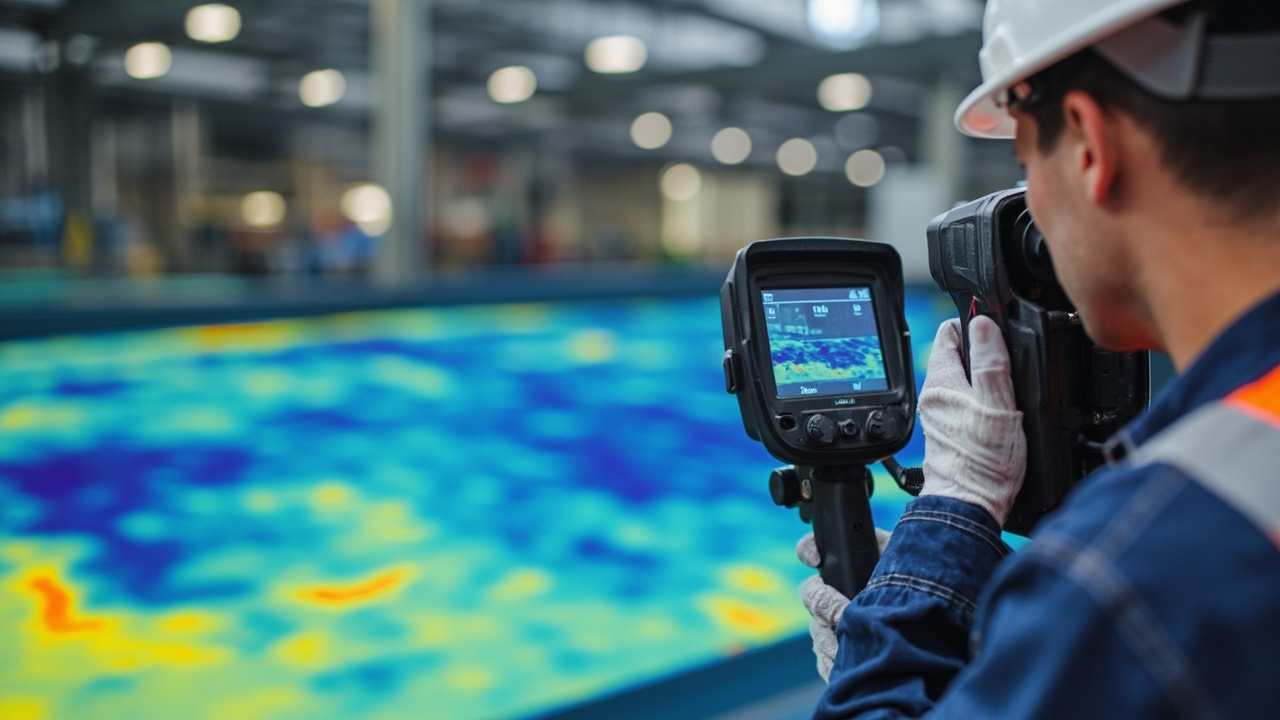
Industrial facilities can’t afford unexpected roof failures. Our preventative maintenance programs include quarterly inspections, infrared moisture scanning, and debris removal from drainage systems. We document all findings with photos and moisture readings, providing you with a clear picture of your roof’s condition and maintenance needs.
Emergency response times matter when production stops due to roof leaks. We maintain 24/7 availability for Commerce City industrial clients, with average response times under two hours for emergency calls. Our emergency crews carry the materials needed for temporary repairs to stop active leaks and protect your inventory.
Regular maintenance extends your roof’s life by 5-10 years and prevents the costly production interruptions that come with major failures. Our maintenance clients receive priority scheduling for repairs and discounted rates on materials and labor. We track your roof’s condition over time, helping you plan for eventual replacement when the numbers make financial sense.
Industrial Roof Maintenance Schedule
- Quarterly inspections – Check for membrane damage, seal integrity, and drainage issues
- Post-storm assessments – Evaluate hail damage and wind uplift effects
- Annual infrared scanning – Detect moisture intrusion before visible damage appears
- Bi-annual cleaning – Remove industrial fallout and debris that can degrade materials
- Emergency response availability – 24/7 coverage for active leaks and storm damage
Energy Efficiency & Environmental Considerations
Commerce City’s industrial buildings consume significant energy for heating, cooling, and production processes. Your roof plays a crucial role in energy efficiency. Cool roof technology can reduce summer cooling costs by reflecting up to 85% of solar radiation. For facilities with large rooftop HVAC units, proper insulation and reflective surfaces can cut energy bills by thousands annually.
Environmental compliance extends beyond energy efficiency. Many industrial facilities must manage stormwater runoff to prevent contamination. We design roofing systems with integrated drainage solutions that direct water to proper collection points and prevent chemical mixing. Some facilities benefit from rainwater harvesting systems that capture and reuse roof runoff for non-potable applications.
Material selection impacts both energy performance and environmental footprint. TPO and PVC membranes are recyclable at the end of their service life. Metal roofing contains recycled content and is fully recyclable. We help you balance initial costs against long-term energy savings and environmental benefits when selecting your industrial roofing system.
Common Industrial Roofing Problems in Commerce City
Chemical fallout from the industrial corridor accelerates membrane degradation. Standard TPO systems may fail in 10-12 years instead of the expected 20-25 years when exposed to refinery emissions. We address this by specifying chemical-resistant formulations and adding protective coatings that extend system life.
Drainage issues plague many industrial facilities. Flat roofs collect debris from the surrounding area, and industrial fallout can create a sticky residue that blocks drains. Poor drainage leads to ponding water, which accelerates membrane deterioration and creates leak risks. We solve this with properly sized drainage systems and regular cleaning schedules.
Thermal cycling causes expansion and contraction that stresses roof seams and flashings. Commerce City’s temperature swings from summer heat to winter cold create movement that can separate seams over time. We use heat-welded seams for TPO systems and properly sized fasteners for metal roofing to accommodate this movement without failure.
Investment Considerations for Industrial Roofing
Industrial roofing represents a significant capital investment, but the right system pays dividends through energy savings, reduced maintenance, and protected inventory. A quality industrial roof can last 20-40 years with proper maintenance, compared to 10-15 years for cheaper alternatives that fail under industrial conditions.
Energy savings often offset much of the initial cost. A reflective TPO system can reduce cooling costs by 20-30% in summer months. For a 100,000-square-foot facility, this translates to thousands in annual savings. Over a 20-year lifespan, energy savings can equal or exceed the initial roofing investment.
Insurance considerations also factor into your decision. Many insurers offer premium discounts for Class 4 impact-resistant materials and fire-rated systems. Some industrial facilities qualify for additional discounts when they install energy-efficient roofing that reduces their carbon footprint and energy consumption.
Why Local Experience Matters
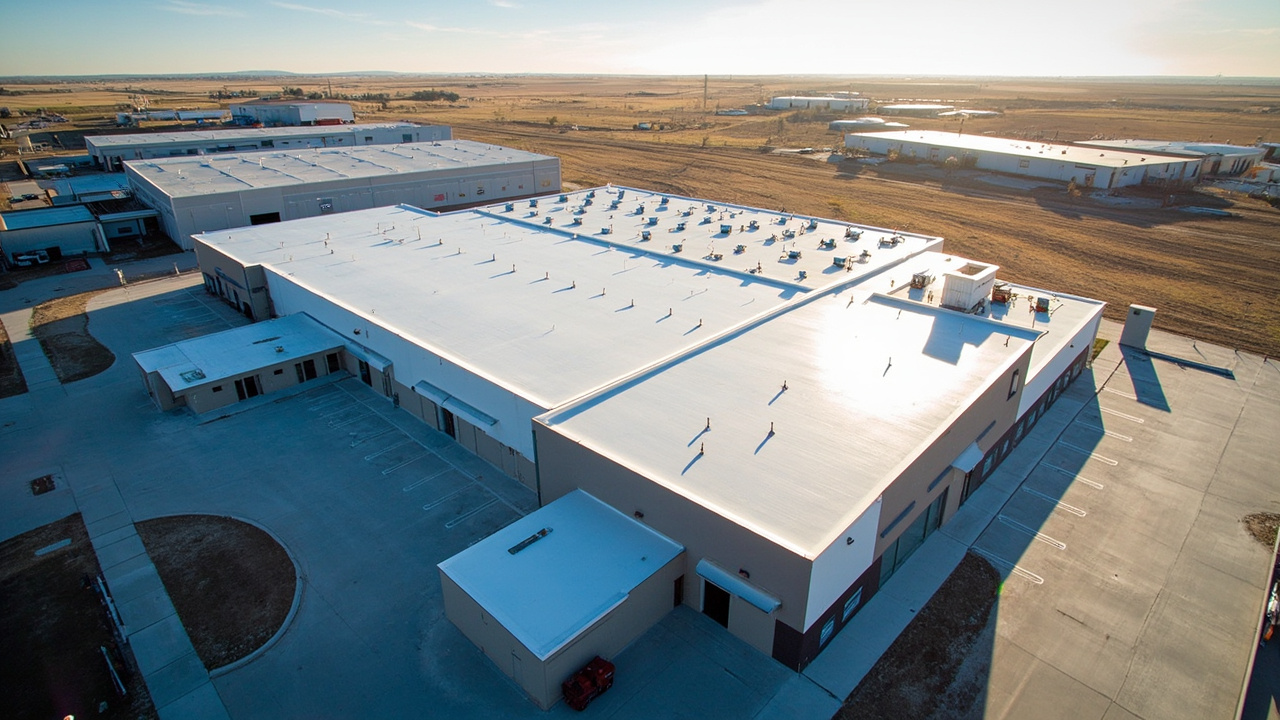
Commerce City’s industrial environment requires specific expertise that general commercial roofers lack. The chemical exposure near the refinery, the wind patterns along the open plains, and the specific building codes in Adams County all factor into proper system design. We’ve worked in this industrial corridor for over 15 years, handling everything from small manufacturing plants to massive distribution centers.
Our local relationships with suppliers mean we can source materials quickly for emergency repairs. We understand the permitting process in Commerce City and can navigate the specific requirements for industrial facilities. Our crews are familiar with the security protocols at industrial sites and can work efficiently within your operational constraints.
We provide detailed documentation for your maintenance records and insurance purposes. Our reports include material specifications, installation details, and warranty information that facility managers need for their records. We stand behind our work with manufacturer-backed warranties and our own performance guarantees.
Getting Started with Your Industrial Roofing Project
The first step is a comprehensive facility assessment. We evaluate your current roof condition, review your operational requirements, and discuss your budget constraints. Our assessment includes thermal imaging to detect moisture intrusion, core sampling to evaluate insulation condition, and a detailed inspection of all roof penetrations and flashings.
We provide a written proposal that outlines your options, from repair to complete replacement. Our proposals include cost breakdowns, material specifications, and projected energy savings. We help you understand the total cost of ownership over the system’s lifespan, not just the upfront price.
Once you approve the proposal, we handle all permitting and coordinate with your facility management team to minimize operational disruption. We provide a detailed project timeline and regular updates throughout the installation process. Our goal is to complete your project on time and within budget while maintaining the highest quality standards.

Frequently Asked Questions
How long does an industrial roof replacement take?
Most industrial roof replacements take 2-4 weeks depending on the facility size and weather conditions. We can often work around your production schedule to minimize disruption. Some facilities require phased installation to maintain operations in certain areas during the project.
What’s the best roofing material for a warehouse near the Suncor refinery?
For facilities near the refinery, we typically recommend PVC or chemically enhanced TPO systems. These materials resist the chemical fallout common in that area better than standard membranes. The specific choice depends on your building’s structure, energy requirements, and budget.
Do you handle the permitting process for industrial roofing in Commerce City?
Yes, we manage all permitting through Adams County and Commerce City. We understand the specific requirements for industrial facilities, including fire ratings, wind uplift calculations, and environmental compliance documentation. We submit all necessary plans and coordinate inspections with the building department.
Ready to Protect Your Commerce City Facility?
Your industrial facility deserves a roofing system built to handle Commerce City’s unique challenges. From chemical resistance near the refinery to energy efficiency for your warehouse operations, we design solutions that protect your investment and improve your bottom line. Our 15+ years of local experience means we understand exactly what your facility needs.
Don’t wait for a major leak to force emergency repairs. Contact us today for a comprehensive facility assessment and discover how the right industrial roofing system can save you money and prevent costly production interruptions. We’re ready to help you make the best investment for your Commerce City facility.
- Schedule Assessment
Call us or fill out our online form to request a comprehensive facility evaluation. We’ll inspect your current roof and discuss your operational needs.
- Review Options
We provide a detailed proposal with material options, cost breakdowns, and energy savings projections. We help you understand the total cost of ownership.
- Plan Installation
Once you approve, we handle all permitting and create a project schedule that works with your facility’s operations. We keep you updated throughout the process.