





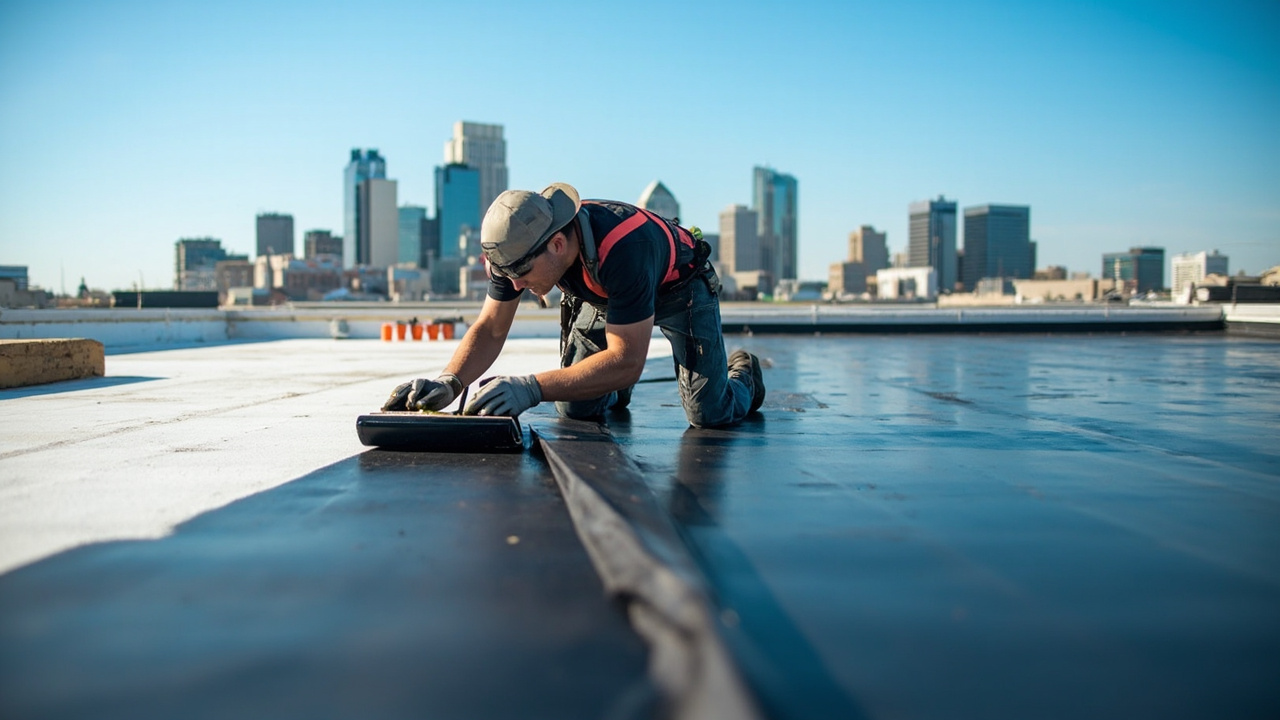
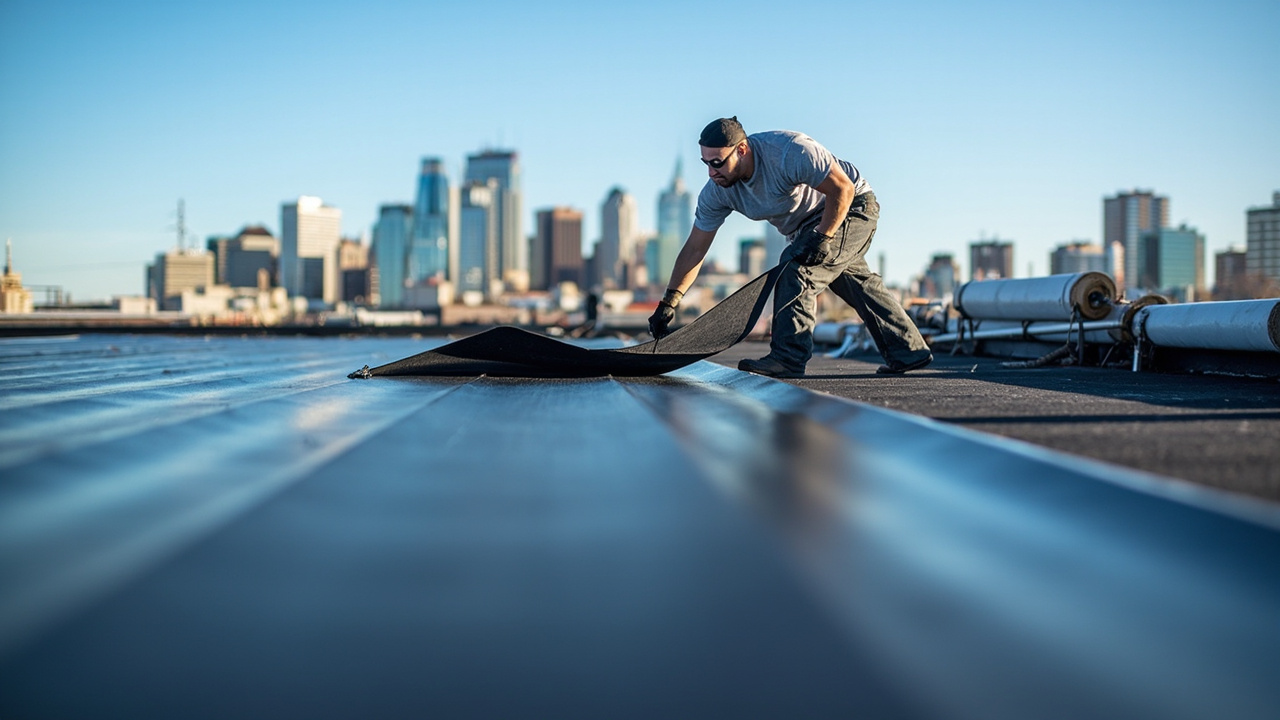
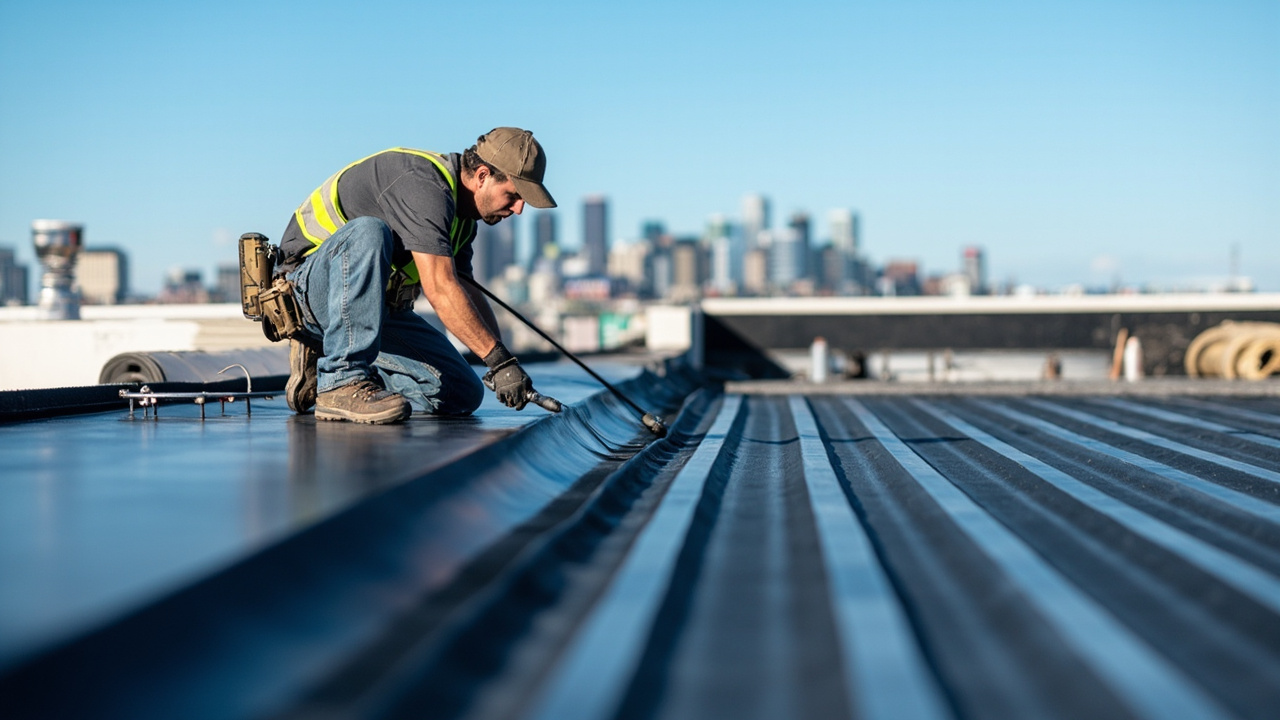
Denver's elevation intensifies ultraviolet radiation by 25 percent compared to coastal cities, which breaks down the polymer chains in low-quality EPDM membrane. Standard 45-mil membranes degrade faster under this UV load, which is why we specify 60-mil or thicker sheets for Denver installations. The ozone concentration at altitude also attacks rubber compounds not formulated with carbon black stabilizers. EPDM manufactured to ASTM D4637 standards includes these stabilizers, but not all contractors verify material certifications before installation. We source only membrane with certified UV and ozone resistance, ensuring your roof survives Denver's unique atmospheric conditions without premature chalking or cracking.
Denver's commercial building stock includes many facilities built during the 1970s and 1980s with original tar and gravel roofs now at end of life. These buildings often have structural decks that were not designed for modern insulated roofing systems. Local building officials require engineering review for any reroofing project that adds insulation weight, a code enforcement pattern specific to Denver's aging industrial infrastructure. Apex Roofing Denver works with local structural engineers who understand these permit requirements and can expedite approval. Our familiarity with Denver's inspection process prevents delays that could leave your building exposed during construction.