





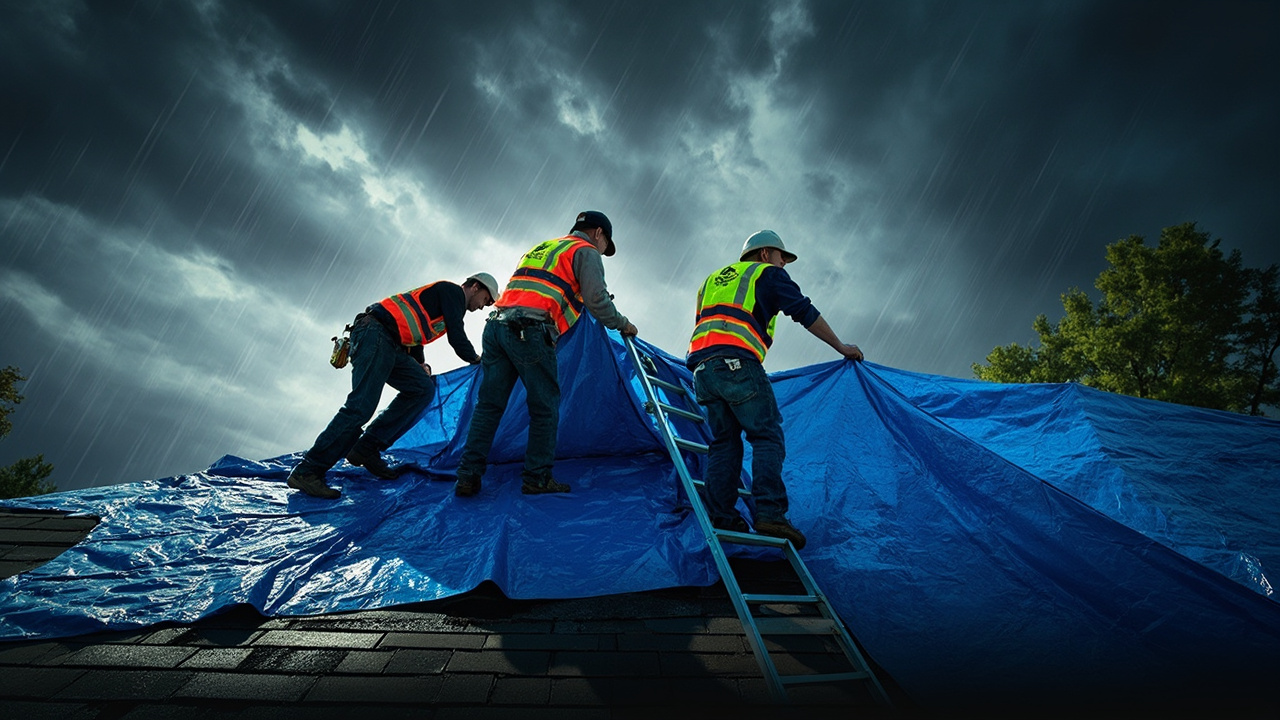
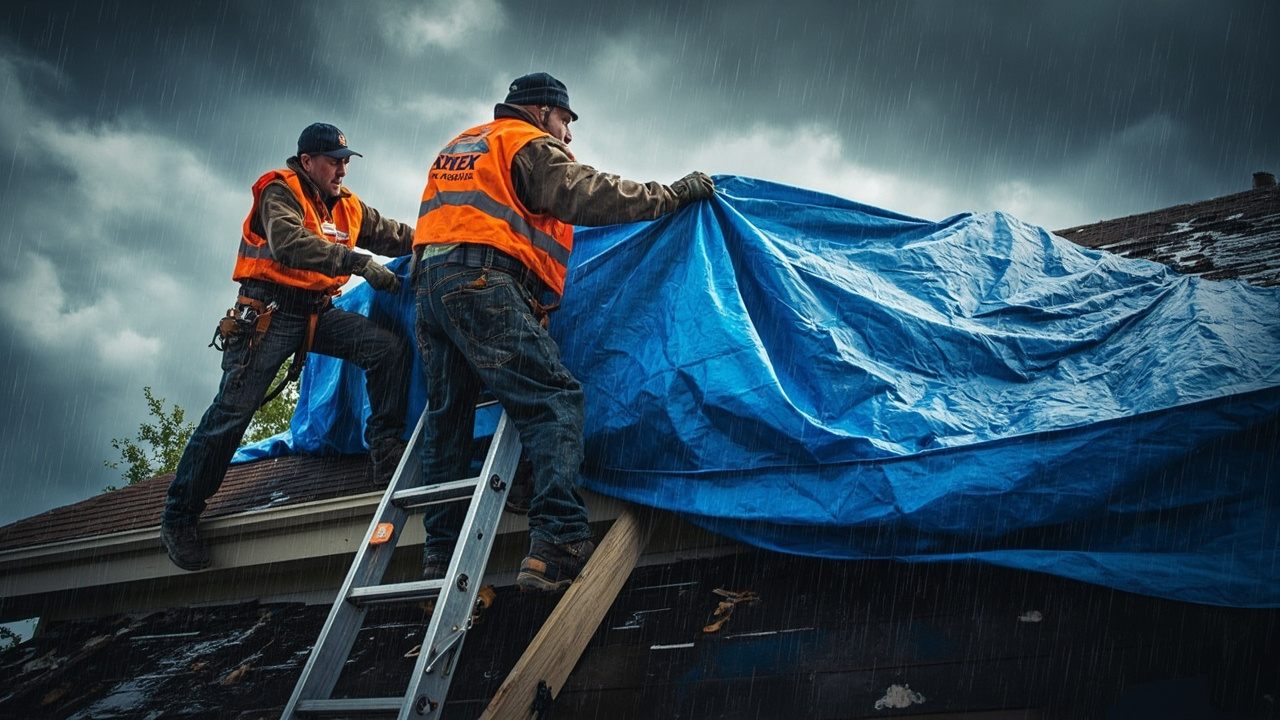
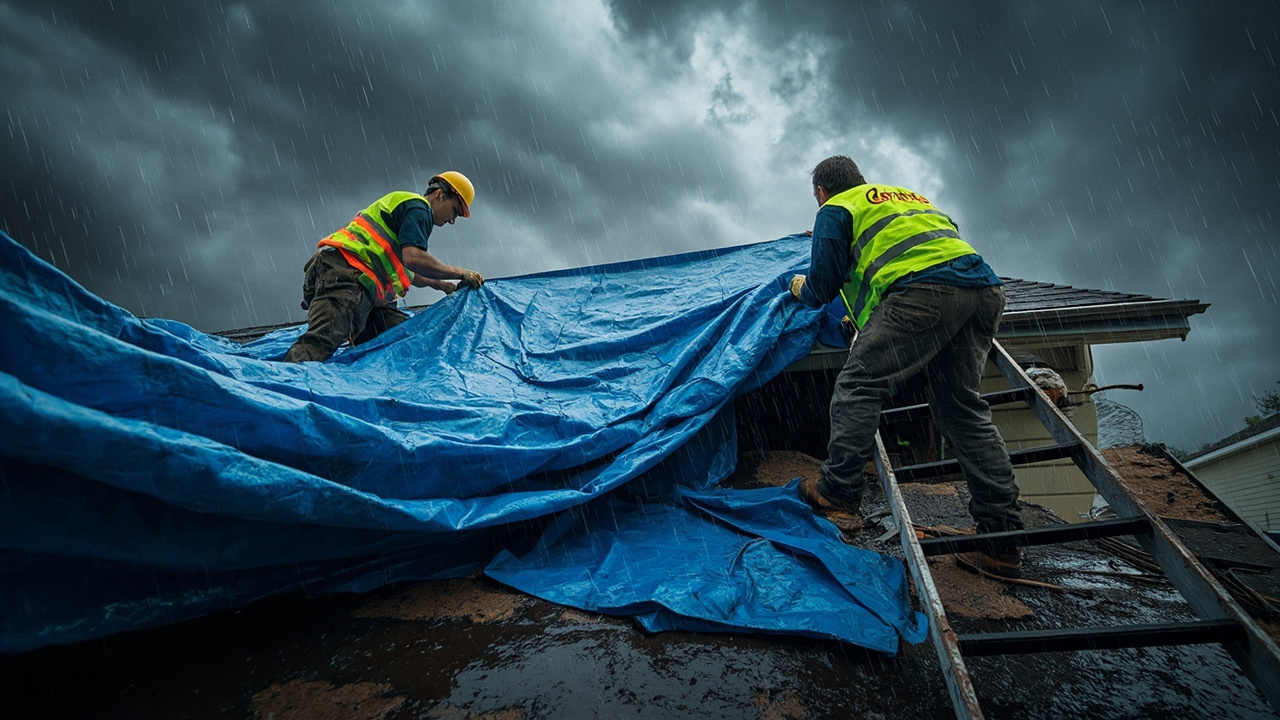
Denver experiences over 300 days of sunshine, but when storms hit, they hit hard. The city sits at the convergence of multiple weather patterns. Hailstorms form rapidly when warm plains air collides with cold mountain downdrafts. These storms produce hail large enough to puncture shingles and crack flashing in minutes. The high UV index at 5,280 feet already degrades roofing materials faster than at sea level. When a storm breaches that weakened surface, water intrusion happens fast. Emergency roof tarp installation becomes the only barrier between a repairable roof and a total replacement. The Front Range experiences sudden temperature drops of 40 degrees in hours. Wet building materials freeze, expand, and cause additional cracking. Every hour without protection compounds the damage.
Denver building codes require specific wind uplift ratings for roofing systems due to frequent high wind events. Emergency tarping must meet similar standards to remain effective. Local contractors understand these requirements. We know which neighborhoods experience the worst hail damage based on storm track patterns. We have worked with every major insurance carrier that operates in the Denver metro. Adjusters recognize our documentation standards and trust our damage assessments. Choosing a local emergency tarping service means working with professionals who understand Colorado weather, Denver building codes, and the insurance claim process specific to this market. National chains dispatch crews from out of state during major events. Those teams do not know local conditions and often install tarps that fail during the next weather system.