
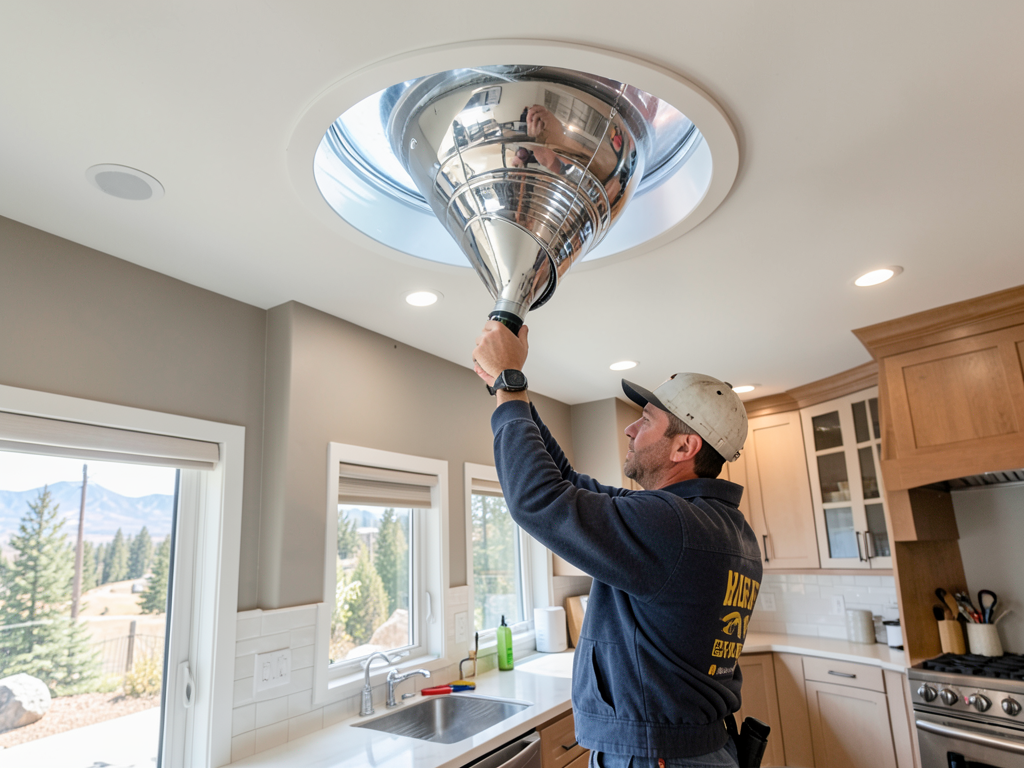
Choosing Between a Sun Tunnel and a Traditional Skylight for Your Platt Park Kitchen
Platt Park homeowners face a common dilemma when adding natural light to their kitchens: should you install a sun tunnel or a traditional skylight? This decision affects not only the brightness of your space but also your energy bills, roof integrity, and long-term maintenance needs. Denver’s high-altitude sun, heavy hail seasons, and dramatic temperature swings make this choice even more critical for your home. Energy Department skylight guide.
Sun tunnels capture sunlight through a rooftop dome and channel it down a reflective tube to diffuse light into your room. Traditional skylights mount directly in your roof plane to provide a clear view of the sky and direct sunlight. Both options work well in Platt Park’s historic craftsman and bungalow-style homes but serve different purposes.
Let me walk you through the key differences so you can make the right choice for your kitchen renovation or new construction project.
Core Differences Between Sun Tunnels and Traditional Skylights
Sun tunnels excel at bringing soft, diffused light into smaller spaces without changing your roofline. The tubular design works perfectly for hallways, closets, and bathrooms where you want brightness without a view. Traditional skylights provide both illumination and a visual connection to the outdoors, making them ideal for kitchens, living rooms, and master suites where you want to see the sky.
The installation process differs significantly between these options. Sun tunnels require a small roof penetration typically 10-14 inches in diameter. Traditional skylights need a much larger opening that matches the unit size, often 2-4 feet wide. This larger footprint means more extensive roofing work and potential structural considerations. Roofing Sheridan.
Light quality also varies between the two systems. Sun tunnels produce even, glare-free illumination that spreads across your space. Traditional skylights create brighter spots directly beneath them with more dramatic shadows and heat gain throughout the day.
Cost Comparison for Denver Homeowners
Sun tunnels typically cost between $800 and $1,500 installed in the Denver metro area. This includes the unit, flashing kit, and professional installation by a certified roofing contractor. The lower cost comes from simpler installation and fewer materials. Roofing Englewood.
Traditional skylights range from $2,500 to $5,000 or more installed. Higher-end models with venting options, remote controls, or impact-resistant glass push costs toward the upper end. Custom sizes or unusual roof pitches add to the total investment.
Energy efficiency impacts long-term costs for both options. Sun tunnels lose minimal heat through their small ceiling penetration and reflective tube. Traditional skylights create larger thermal bridges unless you choose models with low-E coatings and insulated frames.
Federal tax credits may apply to certain solar-powered venting skylights, potentially offsetting 30% of the unit cost. Sun tunnels typically don’t qualify for these credits since they don’t generate electricity.
Denver Climate Considerations: Hail, Snow, and UV Exposure
Denver’s location in the hail belt makes impact resistance crucial for any roof penetration. Traditional skylights need Class 4 impact-resistant glass to withstand Colorado’s frequent hailstorms. This glass costs more but prevents expensive replacements after severe weather events. How Much a Full Roof Replacement Actually Costs in Denver Right Now.
Sun tunnel domes made from acrylic or polycarbonate can crack under large hail impacts. However, replacement domes cost significantly less than replacing an entire skylight assembly. Many homeowners accept this trade-off for the lower initial investment. Industrial Roof Replacement.
Heavy snow loads affect both systems differently. Traditional skylights must meet specific snow load ratings for Denver’s climate. The flat mounting surface can accumulate snow, requiring manual clearing after major storms. Sun tunnels’ domed shape naturally sheds snow and ice.
High-altitude UV exposure accelerates material degradation. Both systems need UV-resistant components, but traditional skylights with clear glass allow more UV transmission into your home. This can fade kitchen fabrics and increase cooling costs during Denver’s hot summers.
Installation Process and Roof Integrity
Sun tunnel installation takes 2-4 hours for a typical kitchen project. The small penetration means minimal disruption to your roof structure and faster weatherproofing. Most installations complete in a single day without affecting your home’s interior.
Traditional skylight installation requires 1-2 days and involves more complex steps. The larger opening needs proper framing support, ice and water shield installation, and careful flashing integration with your existing roofing material. Weather delays can extend the timeline.
Both systems require proper flashing to prevent leaks. Denver’s freeze-thaw cycles make watertight seals critical. Professional installation includes step flashing, counter flashing, and sealant application specific to your roof type. Fixing Flat Roof Leaks in LoHi and Modern Denver Homes.
Roof age matters when choosing between these options. Older roofs in Platt Park’s historic district may not support the weight or flashing requirements of traditional skylights. Sun tunnels work better on aging roofs since they distribute weight more evenly.
Best Use Cases for Platt Park Kitchens
Sun tunnels work best for small to medium kitchens where you want ambient light without heat gain. They’re perfect for galley kitchens, breakfast nooks, and pantries where space is limited. The diffused light reduces glare on countertops and prevents hot spots.
Traditional skylights excel in larger kitchens with vaulted ceilings or open floor plans. They create dramatic lighting effects and make spaces feel more expansive. Venting models also provide valuable moisture control for cooking areas.
Consider your kitchen’s orientation when making your choice. South-facing kitchens benefit from sun tunnels since they reduce heat gain during Denver’s intense afternoon sun. North-facing kitchens might prefer traditional skylights to maximize the limited natural light available.
Your roof’s pitch and material affect the decision. Steep roofs work better with traditional skylights since the angle provides optimal light entry. Flat or low-slope roofs in Platt Park’s ranch-style homes often suit sun tunnels better.
Energy Efficiency and Thermal Performance
Sun tunnels minimize thermal bridging through their small ceiling penetration and insulated tube design. The reflective interior keeps heat transfer minimal, maintaining your kitchen’s temperature year-round. This matters in Denver’s climate where heating and cooling costs add up quickly.
Traditional skylights create larger thermal bridges unless you select high-performance models. Look for units with U-factors below 0.30 and Solar Heat Gain Coefficients under 0.25 for Colorado’s climate zone. These numbers indicate better insulation and less heat transfer.
Condensation control becomes important with traditional skylights. Denver’s dry air can cause moisture to condense on cold glass surfaces during winter. Venting models help manage this issue by allowing air circulation.
Both systems benefit from proper attic insulation. The light path through your attic affects overall efficiency. Uninsulated attics can create heat loss around sun tunnel tubes or increase heat gain around traditional skylights.
Maintenance Requirements and Longevity
Sun tunnels require minimal maintenance beyond occasional cleaning of the exterior dome. The sealed tube design prevents dust and debris accumulation inside. Most systems last 15-20 years with basic care.
Traditional skylights need more attention to maintain their appearance and function. The larger glass surface shows dirt and water spots more readily. Vented models have moving parts that need periodic lubrication and adjustment.
Denver’s weather creates specific maintenance challenges. Hail can crack acrylic domes or chip glass surfaces. Snow and ice accumulation can damage seals or flashing. Regular inspections after severe weather prevent small issues from becoming major leaks.
Both systems benefit from professional inspections every 2-3 years. A roofing contractor can check flashing integrity, seal condition, and overall performance before problems develop.
Making Your Final Decision
Choose a sun tunnel if you want affordable, low-maintenance lighting for a small kitchen or secondary space. This option works best when heat gain is a concern or your roof structure limits larger penetrations.
Select a traditional skylight when you want both light and views, have a larger kitchen budget, and value the aesthetic impact of a ceiling opening. This choice makes sense for primary kitchens where you spend significant time cooking and entertaining.
Consider your long-term plans for the home. Sun tunnels offer better ROI for resale since they provide functional lighting without major roof modifications. Traditional skylights add architectural interest that some buyers value highly.
Talk with a local roofing contractor who understands Denver’s specific building codes and climate challenges. They can assess your roof structure, recommend appropriate products, and ensure proper installation for years of trouble-free operation.
Frequently Asked Questions
Will a sun tunnel provide enough light for cooking tasks?
Sun tunnels produce 200-300 lumens per square foot, which works well for ambient kitchen lighting. However, you’ll likely need supplemental task lighting for detailed cooking work. The even light distribution reduces shadows on countertops.
How do Denver building codes affect skylight installation?
Denver requires permits for any roof penetration over 12 inches in diameter. Traditional skylights need engineering approval for structural modifications. Both systems must meet current energy code requirements for thermal performance and moisture control.
Can I install these systems myself to save money?
Professional installation ensures proper flashing and waterproofing critical for Denver’s climate. DIY installation voids most manufacturer warranties and risks leaks that cause expensive interior damage. The cost savings rarely justify the potential problems.
What happens if my sun tunnel or skylight leaks?
Small leaks around flashing often develop from ice damming or failed seals. Early detection prevents major damage. Professional repair includes resealing, replacing damaged flashing, and checking for underlying roof issues that contributed to the leak.
Are there HOA restrictions for these installations in Platt Park?
Some Platt Park neighborhoods have design review requirements for visible roof modifications. Traditional skylights are more likely to require approval since they change your home’s exterior appearance. Check with your HOA before starting any installation.
- Assess Your Kitchen Needs
Measure your space, evaluate natural light requirements, and consider your cooking habits. Small galley kitchens often suit sun tunnels better than large open kitchens.
- Evaluate Your Roof Structure
Have a roofing contractor inspect your attic space, roof pitch, and structural integrity. Older roofs may limit your options for traditional skylights.
- Consider Denver’s Climate Factors
Factor in hail resistance, snow load requirements, and UV exposure. Class 4 impact glass becomes essential for traditional skylights in Colorado.
- Compare Long-term Costs
Look beyond initial installation costs to include energy efficiency, maintenance needs, and potential repair expenses over 15-20 years.
- Get Professional Installation Quotes
Request detailed proposals from certified roofing contractors who understand Denver’s specific building codes and weather challenges.
Ready to brighten your Platt Park kitchen with natural light? Call Apex Roofing Denver at (720) 484-8300 for a free consultation. Our team understands Denver’s unique roofing challenges and can help you choose the perfect lighting solution for your home. We serve homeowners throughout the Denver metro area with expert installation and long-lasting results.
Don’t wait until another cloudy Denver day to transform your kitchen. Contact us today to schedule your assessment and take the first step toward a brighter, more inviting cooking space. For more information, visit Florida Solar Energy Center research on tubular daylighting.