





Menu

Apartment Complex Roofing in Denver – Minimize Downtime and Protect Your Property Investment

Apex Roofing Denver delivers industrial-grade apartment complex roofing solutions that keep your multi-family housing operational during installation, protect tenant safety, and extend asset lifespan in Colorado's harsh climate.

Slider Image 1
Slider Image 2
Slider Image 3
Slider Image 4
Slider Image 5
Slider Image 7
Slider Image 8
Slider Image 9
Slider Image 10
Slider Image 11

Why Multi-Family Housing Roofing Demands Different Specifications in Denver

Your apartment building roof is not a residential project scaled up. Multi-family housing roofing requires code compliance for occupancy loads, fire ratings, and drainage capacity that single-family systems cannot meet. In Denver, you face a unique combination of extreme UV exposure at 5,280 feet elevation, freeze-thaw cycling that averages 90 cycles per winter, and sudden hailstorms that generate insurance claims across entire property portfolios.

The cost of failure is not just repair expense. You lose rental income when units become uninhabitable. You face liability exposure when water intrusion creates mold or structural hazards. You deal with tenant turnover and reputation damage that affects occupancy rates across your entire portfolio.

Denver's building codes require Class A fire-rated roofing assemblies for multi-unit structures over three stories. Your system must handle snow loads exceeding 30 pounds per square foot while maintaining proper drainage to prevent ice damming along north-facing sections. Commercial apartment roofing in this market demands engineered solutions that account for building movement, thermal expansion at altitude, and the accelerated material degradation caused by intense high-plains sunlight.

Your tenants do not care about your capital expenditure schedule. They expect a dry, safe living environment regardless of weather conditions. When your multifamily roofing system fails, you are managing crisis response across dozens of units simultaneously. The complexity multiplies with every floor and every occupant.

Property managers who treat apartment building roofing as a residential job scaled up consistently face cost overruns, extended timelines, and code violations that delay certificate of occupancy renewals.

Why Multi-Family Housing Roofing Demands Different Specifications in Denver
How Commercial-Grade Multi-Unit Roofing Installation Protects Business Continuity

How Commercial-Grade Multi-Unit Roofing Installation Protects Business Continuity

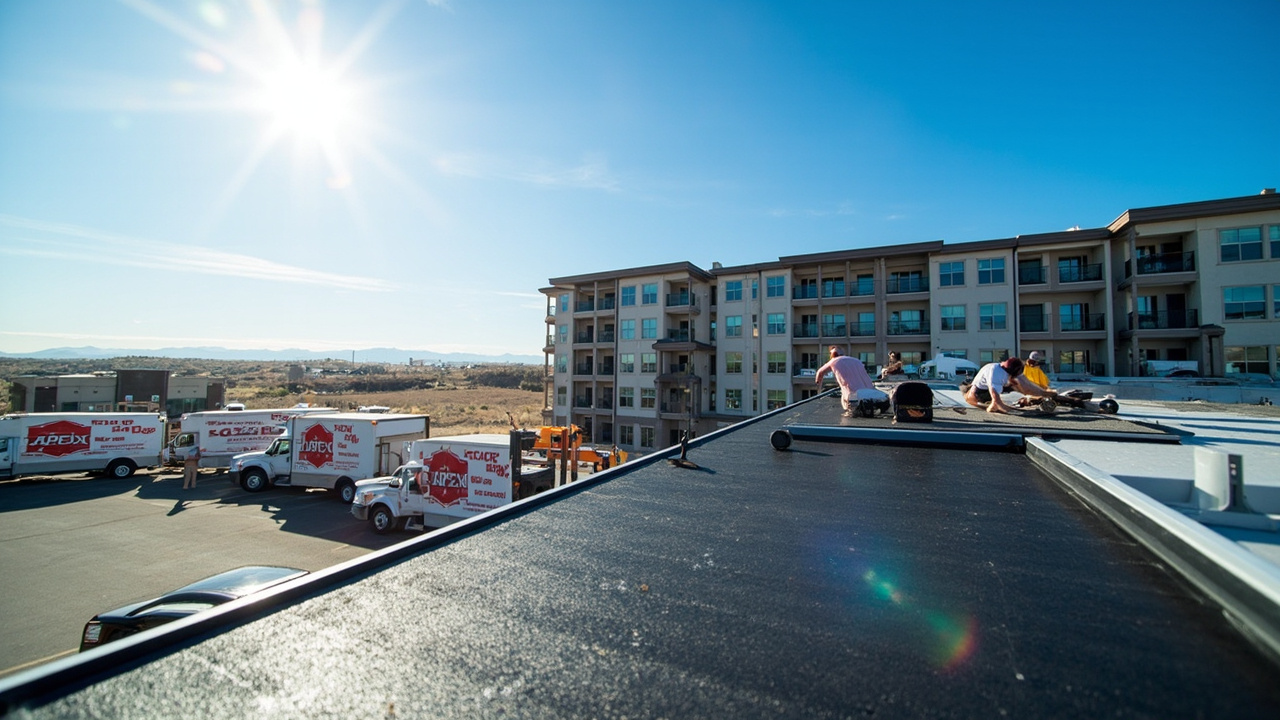
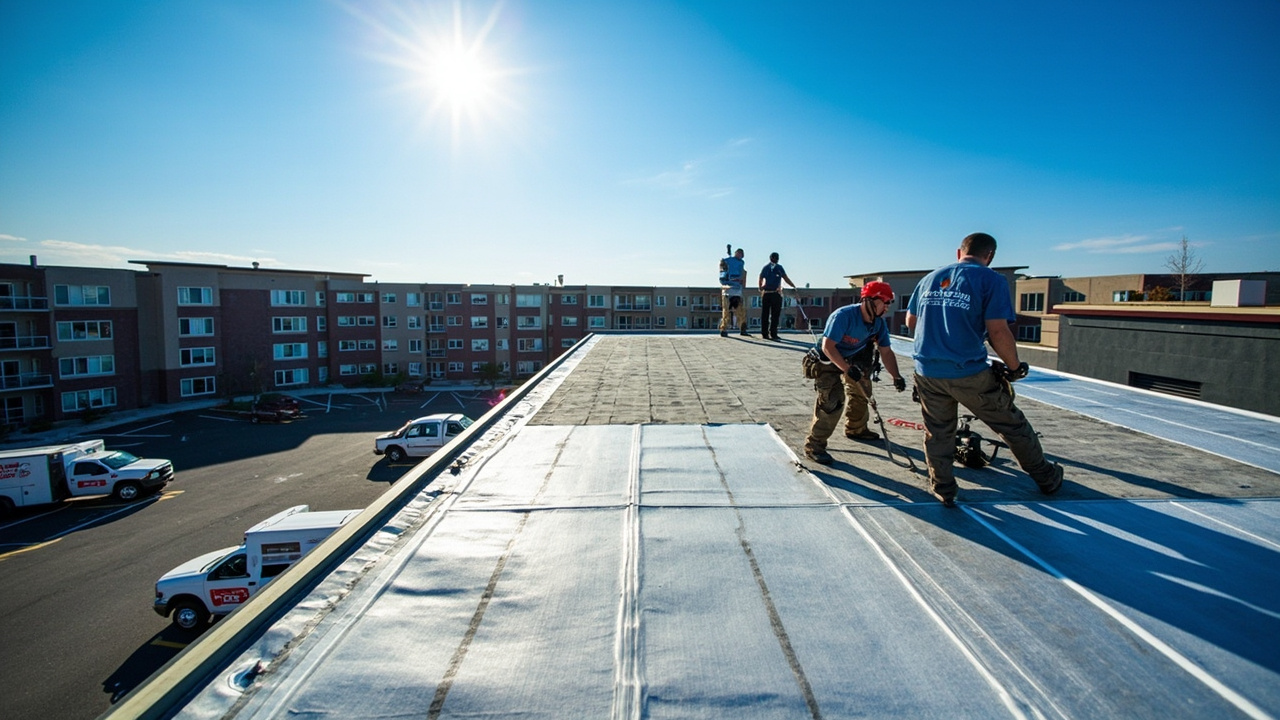
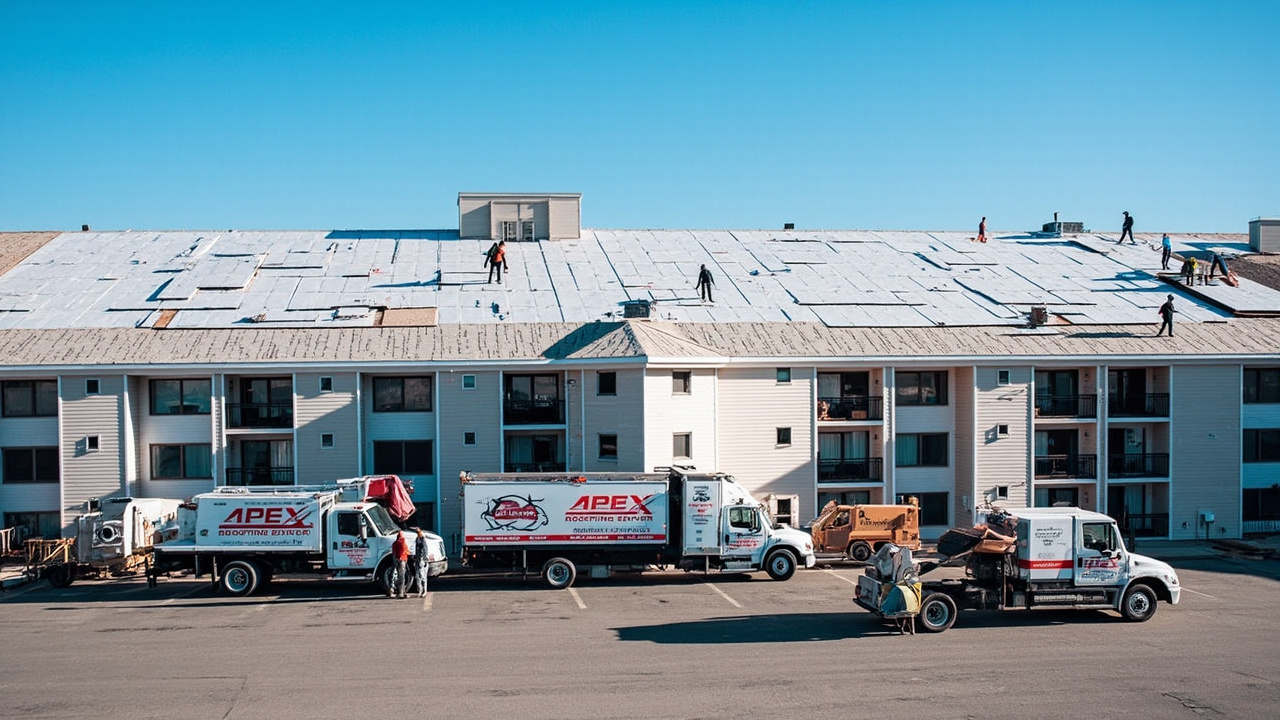
Apex Roofing Denver uses phased installation protocols that keep buildings operational during construction. We section the roof into zones, complete tear-off and installation within the same day per zone, and maintain watertight integrity across the entire structure overnight. This approach eliminates the risk of weather exposure and minimizes noise disruption to occupied units.

We specify membrane systems based on your building configuration and budget requirements. TPO and EPDM single-ply membranes offer cost efficiency for low-slope apartment buildings with mechanical equipment loads. Modified bitumen provides superior puncture resistance for properties with frequent rooftop access. Built-up roofing systems deliver maximum longevity for buildings where you plan to hold the asset for 20-plus years.

Your drainage design determines whether you face chronic maintenance issues or years of trouble-free performance. We engineer tapered insulation systems that create positive drainage to interior drains and scuppers, eliminating ponding water that accelerates membrane degradation. In Denver's climate, proper drainage is not optional. Standing water freezes, expands, and creates failure points that compromise the entire assembly.

Flashing details at parapet walls, penetrations, and expansion joints represent the highest-risk areas for water intrusion. We use prefabricated corner boots, mechanically fastened edge metal, and fully adhered membrane terminations that meet or exceed FM Global wind uplift ratings for Denver's wind zone classification.

Your roofing system includes more than the membrane. We coordinate with HVAC contractors for equipment curb installations, install walkway pads to protect high-traffic areas, and integrate fall protection anchor points that meet OSHA requirements for maintenance access.

What Happens During Your Apartment Complex Roof Replacement

Apartment Complex Roofing in Denver – Minimize Downtime and Protect Your Property Investment
01

Property Assessment and Tenant Coordination

We conduct a full structural evaluation to verify deck integrity, identify asbestos-containing materials in older buildings, and assess insulation R-value for energy code compliance. You receive a detailed scope document that outlines phasing schedules, noise mitigation strategies, and tenant notification protocols. We coordinate with your property management team to minimize disruption during peak leasing seasons and schedule work around resident concerns.
02

Phased Installation and Quality Control

Our crews tear off existing materials, inspect and repair substrate damage, install new insulation to meet current energy codes, and apply the membrane system using manufacturer-specified fastening patterns. Each phase is completed and made watertight before moving to the next section. Third-party inspectors verify seam welds, flashing details, and fastener spacing to ensure warranty compliance. You receive daily progress reports and photo documentation of all concealed work before it is covered.
03

Final Inspection and Documentation

We conduct a final walkthrough to verify all penetrations are properly sealed, drainage is functioning correctly, and rooftop equipment is reconnected and operational. You receive as-built drawings, manufacturer warranty certificates, and a maintenance manual that outlines inspection intervals and cleaning procedures. Our team coordinates the final building department inspection to secure your certificate of completion and maintain your occupancy permit without interruption.

Why Denver Property Owners Choose Apex Roofing for Multi-Family Projects

You need a contractor who understands the difference between completing the work and protecting your business operations. Apex Roofing Denver specializes in occupied building construction, with crew training focused on noise control, debris containment, and tenant safety protocols that residential contractors do not provide.

We maintain relationships with all major roofing manufacturers, which gives you access to extended warranty options and preferential pricing on materials. Our status as a certified applicator for GAF, Firestone, and Carlisle means your installation meets the exact specifications required for 20-year NDL warranties that transfer to future buyers when you sell the property.

Denver's permitting requirements for commercial roofing include structural calculations, fire rating documentation, and stormwater management plans that most contractors cannot provide in-house. We handle the full permit process, coordinate inspections, and ensure your project closes out properly with the building department. This matters when you refinance or sell the property and due diligence reviewers examine your building records.

Your insurance carrier evaluates your roof condition during underwriting renewals. A properly documented commercial roof replacement with current code compliance can reduce your property insurance premiums and improve your loss history rating. We provide the detailed documentation and photo records that insurance adjusters require to verify proper installation standards.

We have completed projects across Denver's multi-family corridors, from Capitol Hill's vintage courtyard buildings to the new construction along the light rail corridors in Highlands and RiNo. Each property type presents different challenges, and our crews have the experience to adapt installation methods to your specific building configuration and occupancy requirements.

What to Expect From Your Multi-Unit Roofing Project

Project Timeline and Staging

Most apartment complex roof replacements take two to six weeks depending on building size and weather conditions. We provide a detailed construction schedule before work begins and update it weekly as conditions change. Our crews work extended hours when weather permits to compress the timeline and reduce overall disruption. You will know exactly when each building section will be under construction and when normal operations resume. We coordinate material deliveries to minimize staging area requirements and maintain emergency vehicle access throughout the project.

Pre-Construction Inspection and Planning

Before any work begins, we conduct core samples to verify existing roof assembly composition and identify any hidden damage to the substrate. You receive a written report with photos documenting current conditions and our recommendations for repairs beyond the base scope. This eliminates surprise change orders once the project starts. We also perform a pre-construction building survey to document any existing cracks or damage, protecting both parties from liability disputes. Your property management team receives our detailed tenant communication plan and door hanger templates for resident notifications.

Quality Standards and Performance

Your new roof will meet or exceed FM Global wind uplift requirements for Denver's wind zone, provide Class A fire rating, and include a fully adhered or mechanically attached membrane with heat-welded seams that eliminate leak paths. All flashing terminations use stainless steel fasteners and termination bars to prevent corrosion failure. We install tapered insulation to create positive drainage and eliminate ponding water. The completed system will pass thermographic scanning to verify proper insulation installation and electronic leak detection testing to confirm membrane integrity before we demobilize from your site.

Maintenance and Long-Term Support

Your manufacturer warranty requires annual inspections to remain valid. We offer maintenance agreements that include twice-yearly inspections, drain cleaning, minor repairs, and detailed photo documentation that you can provide to your insurance carrier during renewals. Our team responds within 24 hours for emergency leak calls and maintains a full inventory of matching materials to make repairs without visible patches. We also provide training for your maintenance staff on proper rooftop access procedures and what signs of damage to report before they become major problems.

Frequently Asked Questions

You Have Questions,
We Have Answers

What type of roof do apartment buildings have? +

Most apartment buildings in Denver use flat or low-slope roofing systems due to cost efficiency and structural demands. Common materials include TPO, EPDM, modified bitumen, and built-up roofing. TPO dominates newer construction for its energy efficiency and reflectivity, which helps with Denver's high-altitude sun exposure. Older complexes often have built-up roofing or EPDM. The choice depends on building age, budget, and performance requirements. Denver's freeze-thaw cycles and intense UV radiation make membrane durability critical. Multi-family properties need systems that balance longevity, maintenance access, and code compliance with fire ratings.

How much should a 2000 sq ft roof cost? +

Cost estimates depend on system type, not square footage alone. For commercial apartment roofing, focus on cost per square (100 sq ft). TPO runs higher than EPDM, while modified bitumen falls mid-range. In Denver, expect material costs to reflect high-altitude transport and local labor rates. Roof complexity matters more than size: penetrations, parapets, drainage systems, and accessibility drive costs. Factor in tear-off requirements, substrate repairs, and code-mandated insulation upgrades. Request detailed per-square pricing and line-item breakdowns. Avoid contractors who quote by total square footage without assessing structural conditions or existing damage from Denver's weather patterns.

How often do apartment roofs need to be replaced? +

Commercial apartment roofs in Denver last 15 to 30 years depending on material and maintenance. TPO averages 20 to 25 years, EPDM reaches 25 to 30 years with proper care, and built-up roofing lasts 15 to 20 years. Denver's intense UV exposure, hail events, and freeze-thaw cycles accelerate wear. Deferred maintenance shortens lifespan. Schedule biannual inspections to catch membrane splits, flashing failures, and ponding water early. Replacement timing hinges on leak frequency, energy costs from poor insulation, and tenant complaints. Budget for replacement when repair costs exceed 30 percent of a new system's cost.

How to tell if a roofer is lying? +

Verify claims with documentation. Request proof of Denver permits, manufacturer certifications, and detailed material specs. Red flags include vague estimates without line items, pressure to sign immediately, or cash-only demands. Check references from other apartment complex owners in the metro area. Ask for photos of substrate conditions and explanations of repair scope. A legitimate contractor explains Denver building code requirements, discusses drainage solutions, and identifies underlying issues like rotted decking. Avoid contractors who skip infrared scans or moisture surveys on occupied buildings. Cross-check contractor details with the Better Business Bureau and state licensing boards.

Which is better, EPDM or TPO? +

TPO outperforms EPDM for Denver apartment complexes prioritizing energy efficiency and reflectivity. TPO's white membrane reduces cooling loads during high-altitude sun exposure and resists UV degradation better. EPDM costs less upfront and handles ponding water well, making it suitable for buildings with drainage challenges. TPO seams are heat-welded for superior waterproofing, while EPDM uses adhesive or tape, which can fail in freeze-thaw cycles. For multi-family properties, TPO delivers better long-term ROI through energy savings and lower maintenance. EPDM works for budget-conscious projects with shorter hold periods. Evaluate based on building orientation and tenant utility structures.

How to tell if your roof has asbestos? +

Asbestos appears in roofing materials installed before the 1980s, common in older Denver apartment buildings. Look for corrugated panels, felt paper, or mastic adhesives with a fibrous texture. Asbestos cannot be identified visually with certainty. Hire an accredited inspector to collect samples and conduct lab testing before any demolition or repair work. Disturbing asbestos without proper abatement violates EPA and Colorado regulations, creating liability exposure. If confirmed, you need a licensed abatement contractor before roofing work begins. Factor abatement costs and extended timelines into replacement budgets. Never allow tenants or maintenance staff near suspected materials during construction.

What is the most expensive part of replacing a roof? +

Labor and tear-off dominate replacement costs for apartment complexes. Removing existing roofing, disposing of materials, and repairing substrate damage consume 40 to 50 percent of budgets. In Denver, structural repairs from freeze-thaw damage or water infiltration add costs. Insulation upgrades to meet current energy codes increase expenses but reduce long-term utility costs. Complex roof designs with multiple penetrations, skylights, or parapet walls require custom flashing and detailing, driving up labor hours. Material costs remain significant but predictable. Control expenses by addressing maintenance issues early and scheduling projects during contractor off-peak seasons when labor rates drop.

Will roofing prices go down in 2025? +

Roofing costs will not drop in 2025. Material prices remain elevated due to petrochemical costs affecting TPO and EPDM production. Tariffs on imported components and labor shortages in Denver's construction market keep prices stable or rising. Apartment complex owners face additional pressure from updated energy code requirements mandating higher insulation R-values, increasing material costs. Inflation in transportation and disposal fees compounds expenses. Lock in pricing with early contracts if planning a 2025 project. Delaying replacement to wait for price drops risks further substrate damage and higher emergency repair costs. Budget for current market rates and prioritize value over lowest bid.

How long does it take to replace a 2000 sq ft roof? +

A 2000 sq ft apartment roof takes three to seven days depending on complexity and weather. Simple single-membrane tearoffs with minimal penetrations finish faster. Multi-level buildings, extensive flashing details, or substrate repairs extend timelines. Denver weather delays are common: morning rain, afternoon thunderstorms, or early snow in shoulder seasons halt work. Commercial projects require coordination with property management to minimize tenant disruption. Factor in permit approval time and material delivery schedules. Occupied buildings need phased work to maintain habitability. Expect longer timelines for buildings requiring asbestos abatement or structural reinforcement. Quality installation cannot be rushed without compromising waterproofing integrity.

How old may a roof be before insurance claims it's too old? +

Most insurance carriers limit coverage on roofs older than 20 years for apartment complexes. Policies often require roof inspections or certifications for coverage renewal on buildings with roofs aged 15 years or older. In Denver, hail damage claims face increased scrutiny on aging roofs, with carriers depreciating payouts based on remaining lifespan. Some insurers mandate replacement as a condition of policy renewal. Document all maintenance, repairs, and inspections to demonstrate proactive care. Older roofs may only qualify for actual cash value coverage instead of replacement cost. Budget for replacement before the 20-year mark to avoid coverage gaps or forced policy changes.

How Denver's Altitude and Climate Impact Multi-Family Roofing Performance

Denver's 5,280-foot elevation creates UV radiation levels 25 percent higher than sea-level locations, which accelerates membrane degradation and reduces expected lifespan for roofing materials not rated for high-altitude exposure. The 90-plus freeze-thaw cycles each winter cause thermal cycling that stresses membrane seams and flashing terminations. Your apartment building roof also handles snow loads that can exceed 40 pounds per square foot during heavy spring storms, requiring structural capacity verification before any re-roofing project. Commercial apartment roofing systems in Denver must account for these combined stressors or face premature failure and costly emergency repairs during occupied conditions.

Denver requires commercial roofing permits for all multi-family buildings, with plan review that verifies fire ratings, wind uplift calculations, and drainage design before any work begins. Local building inspectors focus on parapet wall flashing details and HVAC curb installations because these are the most common failure points in occupied buildings. Apex Roofing Denver maintains direct relationships with plan reviewers in Denver's Community Planning and Development department, which expedites permit approval and reduces project delays. We also understand Denver's stormwater regulations for large roof areas and coordinate detention requirements with civil engineers when your project triggers site development review thresholds.

Roofing Services in The Denver Area

Looking for trusted roofing services near you? Apex Roofing Denver proudly serves homeowners and businesses across the greater Denver area with expert roof repairs, replacements, inspections, and storm damage restoration. From Aurora to Lakewood and Thornton to Centennial, our experienced roofing team is ready to deliver fast, dependable solutions. Use the map below to explore our service areas and find top-rated roofing help near your neighborhood.

Address:
Apex Roofing Denver, 2301 Blake St, Denver, CO, 80205

Additional Services We Offer

Our news updates

Latest Articles & News from The Blogs

Lorem ipsum dolor sit amet. Aut expedita quaerat quo eligendi numquam et laudantium perspiciatis qui minima expedita rem consequatur ducimus.…

Test Blog 4

Lorem ipsum dolor sit amet. Aut expedita quaerat quo eligendi numquam et laudantium perspiciatis qui minima expedita rem consequatur ducimus.…

Test Blog 3

Lorem ipsum dolor sit amet. Aut expedita quaerat quo eligendi numquam et laudantium perspiciatis qui minima expedita rem consequatur ducimus.…

Test Blog 2

Lorem ipsum dolor sit amet. Aut expedita quaerat quo eligendi numquam et laudantium perspiciatis qui minima expedita rem consequatur ducimus.…

Contact Us

Protect your property investment and maintain business continuity with a roofing system designed for Denver's climate. Call Apex Roofing Denver at (720) 484-8300 for a detailed assessment and project proposal. We respond within 24 hours to all property owner inquiries.